


A new product assortment can change pallet dimensions, storage demand, replenishment frequency, and warehouse traffic. Before introducing new SKUs, verify that the existing AGV forklift operation can handle the changed workload and physical requirements.
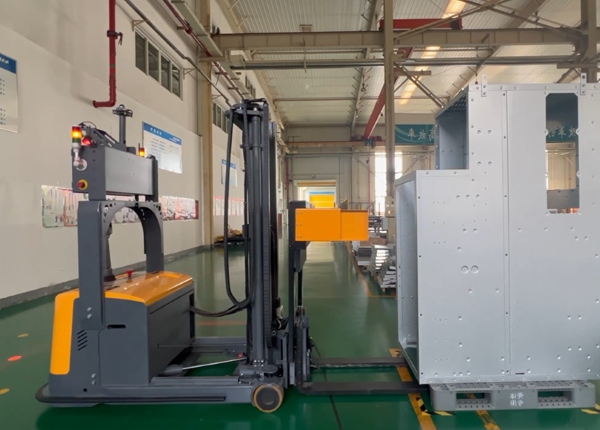
Warehouse automation is often designed around an established product assortment. Over time, a business may add new SKUs, discontinue slow-moving products, change packaging, or shift demand toward different product categories.
These changes can affect more than inventory volume. A new SKU may use a different pallet footprint, require a different storage condition, create more frequent retrievals, or introduce handling constraints that were not part of the original operating plan.
Before a major assortment change, warehouse and automation teams should evaluate whether the existing storage rules, vehicle capabilities, and material flow remain suitable.
Start by identifying what is changing. Different changes create different operational risks, so a single volume forecast is not enough.
New SKU introduction: Adds a product with new dimensions, packaging, handling attributes, or demand characteristics.
SKU discontinuation: Releases storage capacity but may leave residual inventory or locations that need to be reassigned.
Packaging change: Changes pallet dimensions, load stability, height, weight, or the position of the handling surface.
Demand shift: Changes the frequency of putaway, retrieval, replenishment, or outbound movement.
Assortment consolidation: Reduces the number of SKUs but may increase inventory depth for the remaining products.
Product segmentation: Introduces new storage or handling restrictions for selected products.
Document the affected SKUs, expected effective date, forecast volume, and responsible business owner. This gives the warehouse a defined scope for reviewing storage and transport implications.
Do not assume that a new product can be handled simply because it fits within the nominal weight capacity of the AGV forklift. The complete load must meet the vehicle's approved handling envelope.
Check:
Pallet length, width, and overall loaded height.
Total load weight and weight distribution.
Pallet entry direction and fork-pocket accessibility.
Load overhang, packaging protrusions, and stability.
Required lifting height and clearance at the destination.
Any product-specific handling restrictions.
Where a new packaging configuration differs materially from the established load profile, arrange a physical handling assessment before routine operation. The test should confirm pickup, transport, placement, and retrieval under representative conditions.
For high-bay storage, verify the loaded height and the clearances available at the intended rack position. A load that can be transported along the floor may still be unsuitable for a particular storage position.
SKU changes affect both the number of storage positions required and the distribution of inventory across the warehouse. A reduction in SKU count does not automatically mean less storage pressure if the remaining products require greater stock depth.
Estimate the impact using:
Forecast stock quantity for each affected SKU.
Expected number of pallets per SKU.
Required separation by batch, status, or product attribute.
Peak inventory rather than average inventory alone.
Available storage positions suitable for the new load profile.
Expected future growth and seasonal demand.
Check whether the revised inventory can fit into approved locations without violating rack load limits, handling clearances, or storage policies. If existing locations are unsuitable, define the necessary location changes before releasing the new SKU into routine warehouse operations.
Two product assortments with the same total pallet count can generate very different AGV forklift workloads. High-turnover products may require frequent replenishment and retrieval, while slow-moving products may remain in reserve storage for long periods.
Compare the previous and expected operating profiles:
Daily and peak-period pallet movements.
Putaway and retrieval frequency by storage area.
Replenishment requirements for frequently picked SKUs.
Travel distances between reserve storage and delivery points.
Concentration of tasks in particular aisles or time windows.
Additional handling caused by new inspection or segregation requirements.
Use the expected movement profile to determine whether task-release rules, storage assignments, or operating schedules need adjustment. If workload is becoming concentrated in a small number of aisles, the issue may be traffic distribution rather than total fleet capacity.
New and discontinued SKUs need controlled transitions. Introducing a product without validated handling information can create unsuitable tasks, while retiring a product may leave inventory, open movements, and obsolete storage assignments unresolved.
For a new SKU, confirm that:
Product and load attributes are complete and approved.
The intended storage locations are suitable.
Required handling and inspection rules are defined.
Test movements have been completed where necessary.
The warehouse team understands any special restrictions.
For a discontinued SKU, confirm that remaining inventory and outstanding work have been addressed before releasing its storage locations for other products. Do not remove a product from the operational catalogue while unresolved stock or tasks still depend on it.
Key checkpoint
A SKU change is ready for automated operation only when its physical load profile, storage eligibility, expected movement demand, and operating rules have been reviewed.
After introducing the revised assortment, compare actual warehouse performance with the assumptions used during planning. This helps identify changes that were not visible in the initial forecast.
Monitor:
Failed or rejected transport tasks involving affected SKUs.
Storage utilization and unsuitable-location attempts.
Retrieval and replenishment frequency.
Vehicle waiting time and task completion time.
Manual interventions related to load handling.
Inventory discrepancies during the transition.
Review the data after a representative operating period and include peak activity where possible. Adjust storage assignments or task rules only after identifying the cause of the observed issue.
All affected SKUs and effective dates are documented.
Load dimensions, weight, stability, and handling access are verified.
Storage capacity is assessed using peak inventory requirements.
New storage locations meet applicable load and clearance limits.
Expected pallet movements and traffic concentration are reviewed.
New SKUs are tested before routine automated handling where required.
Discontinued SKUs have no unresolved stock or tasks.
Post-change performance is monitored against the planning assumptions.
Product assortment changes should trigger a review of physical handling, storage capacity, and transport demand. Planning these changes before the new stock arrives reduces the risk of unsuitable locations, unnecessary rehandling, and unexpected pressure on automated warehouse operations.
Contact ZCNest Robotics to discuss your pallet specifications, high-bay storage requirements, and AGV forklift handling capabilities.












 Chinese
 English





