


When an automated warehouse incident occurs, teams need to know who responds first, who can authorize recovery, and when the issue must move to technical specialists. A documented escalation matrix turns these decisions into a repeatable operating process.
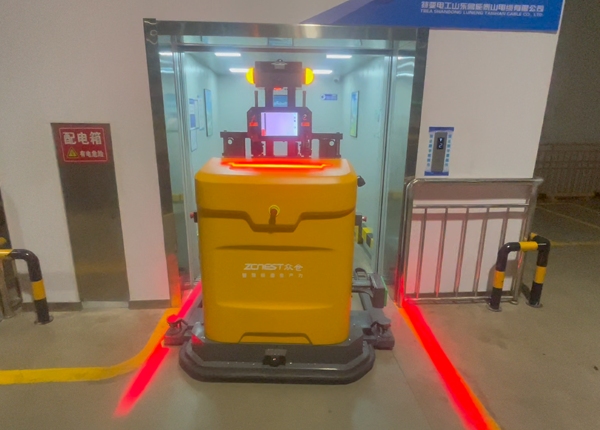
An AGV forklift incident can affect one vehicle, several tasks, an entire aisle, or the safety of people working nearby. Without a clear escalation process, warehouse staff may spend time contacting the wrong person, repeating checks, or waiting for a decision that nobody has formally accepted.
An escalation matrix defines the response path according to the incident's impact. It should identify the initial owner, the actions permitted at each level, the conditions for escalation, and the person authorized to approve the next step.
Severity should be based on operational and safety consequences, not only on the alarm code or how complicated the technical issue appears.
Critical: A safety concern or major operational disruption requiring immediate action under the applicable emergency or safety procedure.
High: A significant interruption affecting multiple vehicles, an important storage area, or time-sensitive warehouse commitments.
Medium: A localized issue affecting a vehicle or task that can be contained without a wider shutdown.
Low: A non-urgent issue or recurring condition that requires investigation but does not currently prevent essential operations.
Define severity examples for your actual warehouse. A blocked high-bay aisle may be high impact if it prevents access to critical stock, while the same type of blockage in an isolated area may have a smaller effect. Any safety concern must follow the appropriate safety procedure regardless of its effect on throughput.
The following is a starting framework. Assign the actual job titles, response targets, and decision authority according to your organization's staffing and supplier support agreement.
| Severity | First owner | Escalation condition | Decision focus |
|---|---|---|---|
| Critical | Designated safety or operations lead | Immediate notification through the approved safety process. | Protect people and secure the affected area. |
| High | Shift supervisor | Impact exceeds local recovery authority or the agreed response threshold. | Contain disruption and coordinate technical support. |
| Medium | Trained fleet operator | Approved checks fail or the task remains blocked. | Complete permitted checks and restore the affected task safely. |
| Low | Assigned operations owner | Repeated occurrence or increasing operational impact. | Record the issue and arrange corrective investigation. |
Include a named backup for each responsible role. An escalation process is incomplete if it depends on one individual who may be off duty or unavailable.
The person who identifies a technical problem is not necessarily the person authorized to approve a warehouse recovery decision. Keep these responsibilities explicit.
For each incident category, specify:
Who collects the initial facts and confirms the affected task.
Who performs the permitted first-line checks.
Who diagnoses technical or software-related causes.
Who authorizes task cancellation, reassignment, or inventory correction.
Who decides whether affected operations may resume.
Who records the final resolution and verifies the result.
For example, technical support may identify why a vehicle stopped, while the warehouse supervisor decides how to manage the delayed pallet movement. Inventory control may need to verify a physical load before any stock record is corrected.
Never use the escalation matrix to justify bypassing safety devices or performing an action outside the person's training and authorization.
Escalation should occur when a defined condition is met, rather than depending entirely on individual judgment. Use both time-based and impact-based triggers.
The incident remains unresolved beyond the agreed response threshold.
More vehicles or tasks become affected.
A critical storage or dispatch area becomes unavailable.
The approved recovery procedure fails.
The same fault recurs after a previous recovery.
The required decision or technical skill is outside the current owner's authority.
The issue occurs when the designated support person is unavailable.
Use shorter response expectations for issues with greater operational consequences. Safety-critical incidents must follow the applicable safety procedure immediately and should never wait for an ordinary escalation timer to expire.
Each escalation should include enough information for the next owner to act without restarting the investigation from the beginning.
Capture:
Incident reference, start time, and current severity.
Vehicle, task, and physical location involved.
Observed symptoms and exact system messages where available.
Operational impact and any known safety concerns.
Checks already completed and their results.
Actions attempted and whether they changed the condition.
Current restrictions and decisions still required.
Name of the current owner and the next required response.
Distinguish observed facts from suspected causes. A clear statement that the cause is not yet confirmed is more useful than an unsupported diagnosis that sends the next team in the wrong direction.
Key checkpoint
Every significant incident needs one accountable owner at a time, a clear next action, and a defined condition for escalation. Multiple people may contribute, but responsibility must not become ambiguous.
Do not rely only on a written procedure. Run tabletop exercises or controlled tests to confirm that staff can identify the correct owner and follow the escalation path.
Test scenarios such as:
A vehicle stops at a critical aisle entrance and blocks other movements.
A task cannot be completed because the destination is unavailable.
A pallet has been physically moved but its recorded status is uncertain.
A fault recurs after an operator follows the approved recovery steps.
A high-impact issue occurs during a night shift with limited staffing.
The primary support contact cannot be reached within the agreed response window.
Record how long it takes to identify the owner, whether the correct authority is contacted, and whether the incident information is complete. Update the matrix when a scenario reveals missing responsibilities or unclear decision rights.
Severity levels reflect safety and operational impact.
Each incident category has a first owner and a backup.
Technical diagnosis and operational authorization are separated.
Time-based and impact-based escalation triggers are defined.
Incident information is standardized.
After-hours escalation contacts are available.
Safety procedures override routine recovery targets.
Scenarios are tested and the matrix is reviewed periodically.
A practical escalation matrix reduces confusion during incidents and helps warehouse teams make timely, authorized decisions. Define the response structure during automation planning, then verify that it works across different shifts, operating conditions, and levels of technical impact.
Contact ZCNest Robotics to discuss AGV forklift operations, incident response requirements, and warehouse-specific automation planning.












 Chinese
 English





