


Automated handling decisions depend on accurate information about the physical load and its permitted destination. Incorrect dimensions, weight, product attributes, or storage restrictions can create failed tasks and unsuitable pallet movements.
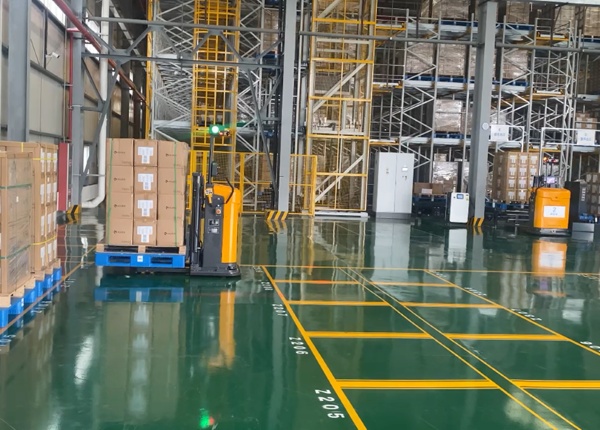
An AGV forklift can execute a correctly assigned task only when the information behind that task reflects the actual warehouse conditions. A record that identifies the right product but contains the wrong pallet height may still result in an unsuitable storage assignment. An accurate weight record is equally important if the physical load has changed since the original measurement.
Warehouse data validation should therefore connect the physical pallet, the product record, the handling requirements, and the intended storage conditions. The goal is to identify mismatches before they become transport failures, inventory errors, or safety concerns.
Start by defining the information required for the warehouse's actual pallet and product profiles. Not every field has the same importance for every application, but critical handling attributes should be mandatory and verified.
Load identity: Pallet ID, product code, batch or serial information where required.
Physical dimensions: Pallet footprint, loaded height, and any permitted overhang.
Weight: Total loaded weight and any relevant handling limitations.
Load condition: Stability, packaging condition, and suitability for automated pickup.
Handling orientation: Required entry direction, fork access, or permitted pickup side.
Storage eligibility: Applicable location, product, or handling restrictions.
Inventory status: Whether the load is available, reserved, restricted, or awaiting inspection.
Specify which fields are required for task creation and which conditions require a physical check. Avoid relying on optional free-text descriptions for attributes that determine whether a pallet can be handled safely.
Data can become inaccurate when suppliers change packaging, operators create mixed pallets, labels are replaced, or the same product is shipped in different configurations.
Use a risk-based verification process:
Select representative pallet types from each major load category.
Measure or verify the relevant physical attributes.
Compare the results with the recorded data.
Investigate discrepancies that exceed the warehouse's approved tolerance.
Correct the source record through the authorized data-control process.
Repeat the check when packaging or handling conditions change.
Pay particular attention to maximum loaded height and weight rather than relying only on product packaging specifications. The actual pallet configuration may include wrapping, protective materials, mixed cartons, or other items that affect the load envelope.
A load record should not simply indicate that a product belongs in a warehouse. It should support the decision about which locations are suitable for that specific load.
Check the compatibility between load attributes and destination requirements:
Load weight against the applicable rack and handling limits.
Loaded height against the available storage clearance.
Pallet footprint and overhang against the intended storage position.
Product restrictions against the location's permitted inventory types.
Required handling orientation against the physical pickup and placement arrangement.
Inventory status against the rules for the intended movement.
For high-bay operations, verify the complete load profile against the intended storage height and the relevant vehicle capabilities. A destination should not be considered valid solely because the location is empty.
When critical information is missing or contradictory, the warehouse needs a defined response. Allowing a task to proceed with an assumed value may create a more serious problem than holding the pallet for verification.
Define how the system or operator should handle these cases:
A pallet ID cannot be read or does not match the expected record.
The recorded load height conflicts with the physical measurement.
The product record contains no required handling attribute.
A pallet is heavier than its recorded or approved limit.
The destination is incompatible with the load's status or dimensions.
A physical load has been modified after its attributes were recorded.
For each case, identify whether the task should be held, sent to an approved inspection point, or handled through another authorized process. Do not use a default value to bypass a missing safety-critical attribute.
Key checkpoint
A load is ready for automated assignment only when its critical attributes are sufficiently reliable, its physical condition meets the handling requirements, and its intended destination is compatible.
Data accuracy can deteriorate if multiple users can modify important fields without validation or traceability. Establish ownership for the information that affects automated handling decisions.
A practical governance structure should identify:
Who creates or updates product and load records.
Who approves changes to critical physical attributes.
Which fields require a physical verification before approval.
How changes are recorded and reviewed.
How affected open tasks are handled when an attribute changes.
How warehouse teams are informed about newly restricted load types.
Where possible, keep an audit record of the previous value, the revised value, the change time, and the responsible person. This makes it easier to investigate whether a failed task was caused by a physical load, an outdated record, or an unauthorized change.
Data validation should continue after go-live. New packaging, supplier changes, and operational workarounds can introduce errors even when the initial records were accurate.
Track:
Percentage of loads with complete required attributes.
Mismatch rate between recorded and verified dimensions or weight.
Transport tasks rejected because of missing or conflicting data.
Storage assignment failures related to load compatibility.
Manual interventions caused by incorrect load records.
Time taken to resolve data discrepancies.
Analyze the results by supplier, product category, pallet type, and warehouse area. Repeated discrepancies from one source may justify an upstream data correction rather than repeated checks at the warehouse entrance.
Critical load attributes are defined for each handling category.
Representative physical loads are checked against recorded data.
Weight, dimensions, and storage compatibility are verified.
Missing or conflicting attributes trigger a controlled response.
Changes to critical records require authorized ownership.
Open tasks are reviewed when relevant load attributes change.
Data discrepancies are traceable to their source.
Recurring errors are analyzed and corrected upstream where possible.
Accurate load and storage attributes help automated forklifts make suitable transport decisions and reduce avoidable handling failures. Validation should be part of product onboarding, supplier change management, warehouse operations, and ongoing quality control.
Contact ZCNest Robotics to discuss your pallet profiles, high-bay storage requirements, and AGV forklift handling specifications.












 Chinese
 English





