


Dock appointments determine when vehicles arrive, but automated warehouse performance also depends on when pallets are ready, when dock positions become available, and how AGV forklift tasks are released. Coordinating these events reduces avoidable waiting and congestion.
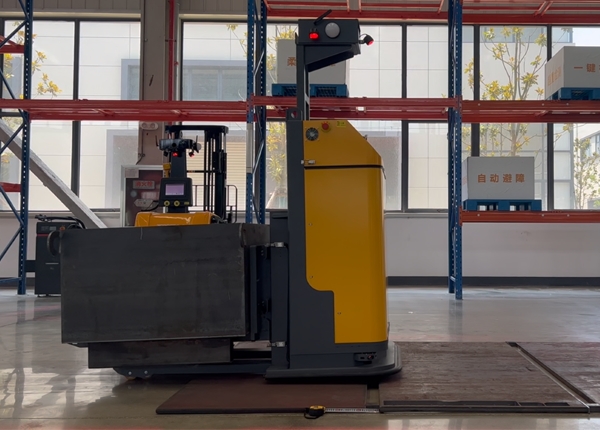
A truck can arrive on schedule and still wait because its pallets are not ready. Conversely, pallets may be moved toward a dock before the assigned vehicle is available, occupying valuable space and creating additional handling.
These problems become more visible in automated warehouses where AGV forklifts operate according to defined routes, task conditions, and handover points. Dock scheduling should therefore be coordinated with pallet readiness and vehicle task release rather than managed as an independent calendar.
Begin by identifying the events that determine whether a dock-related movement can proceed. A planned appointment does not necessarily mean that a load or destination is ready.
Appointment confirmed: A delivery or collection has an agreed time window.
Vehicle arrived: The truck has reached the site and is available for the next process.
Dock assigned: A suitable loading or unloading position is available.
Pallet ready: The required load is identified, accessible, and eligible for movement.
AGV task released: The transport request has met the conditions for execution.
Transfer completed: The pallet has reached the approved handover position and the result is confirmed.
Record the actual event times where possible. This allows the warehouse to distinguish a late vehicle from a late pallet, an unavailable dock, or a delay in releasing transport tasks.
Daily totals do not reveal how much pressure the warehouse will face during a specific hour. Several trucks may arrive within a short period even when the total daily volume is manageable.
For each appointment window, estimate:
Number of trucks expected to arrive.
Expected pallets to unload or load per truck.
Dock service time and vehicle turnaround assumptions.
Availability of receiving or dispatch staff.
AGV forklift movements required per appointment.
Expected overlap with other warehouse activities.
Use actual operating data when available rather than assuming that every appointment requires the same service time. Different pallet counts, load conditions, or documentation requirements may change the duration substantially.
Identify time windows where demand is likely to exceed dock or transport capacity. Adjust appointments or operating arrangements before those windows become a recurring source of delay.
Moving pallets too early can consume staging capacity, while moving them too late can delay truck departure. Set release rules based on appointment status, load readiness, destination availability, and the time needed to complete transport.
A release rule may consider:
Whether the appointment is confirmed and within the applicable planning window.
Whether the required pallets have been identified and are available.
Whether the destination handover position is ready to receive the load.
Whether the transport route is available for the planned movement.
Whether sufficient time remains to complete the transfer before the dock deadline.
Whether higher-priority operational constraints affect the movement.
Use a defined release window rather than releasing all dock-related tasks as soon as an appointment is booked. The correct window depends on travel distance, task volume, dock capacity, and the warehouse's handling process.
An AGV forklift needs a valid destination when it arrives with a pallet. If the assigned dock or handover position is occupied, the vehicle may wait or require a new task decision.
Establish rules for:
Confirming that the destination position is available before task release.
Limiting the number of pallets delivered to a dock at one time.
Handling a truck that arrives late or changes dock position.
Responding when loading or unloading takes longer than expected.
Redirecting pallets only to approved alternative destinations.
Recording the final handover status.
Where dock availability changes frequently, the warehouse should define how the new destination is communicated and validated before an affected task proceeds. Do not rely on informal messages alone for critical location changes.
Key checkpoint
Release a dock-related AGV task only when the pallet, transport conditions, and receiving position are ready for the planned movement. An appointment by itself is not proof that the entire transfer can proceed.
Truck arrival times rarely match every original plan exactly. A robust process should define what happens when a truck is early, late, cancelled, or assigned to a different dock.
Consider these scenarios:
Early arrival: Confirm whether a dock is available and whether the warehouse can accept the load without disrupting scheduled work.
Late arrival: Reassess whether the planned pallets should remain staged or return to an approved storage position.
Cancelled appointment: Stop unnecessary new releases and review pallets already committed to the movement.
Dock reassignment: Validate the new destination and update affected tasks through the approved process.
Extended loading time: Adjust subsequent releases to avoid sending more pallets than the dock can accommodate.
Specify who can make these decisions and how the change is communicated to the warehouse, transport team, and AGV operation. Unclear ownership can cause pallets to be moved for appointments that are no longer active.
Dock scheduling should be evaluated through the complete operating sequence, not just truck arrival punctuality.
Useful measures include:
Truck waiting time before dock service begins.
Time from appointment window to first pallet transfer.
Percentage of required pallets ready before the planned loading time.
AGV waiting time caused by unavailable handover positions.
Number of rescheduled or redirected dock-related tasks.
Truck turnaround time and missed departure targets.
Segment results by dock, shift, appointment type, and pallet volume. If trucks arrive on time but transfers start late, investigate load readiness and task release. If AGVs frequently wait at docks, review destination capacity and the timing of transport requests.
Appointments are planned by time window and expected pallet volume.
Truck arrival, dock assignment, and pallet readiness are tracked separately.
AGV task-release windows reflect actual transport requirements.
Destination availability is checked before delivery tasks proceed.
Late, cancelled, and reassigned appointments have defined procedures.
Task changes are communicated through an approved process.
Waiting time and turnaround performance are measured.
Recurring bottlenecks trigger changes to the schedule or release rules.
Effective dock scheduling aligns vehicle appointments, pallet readiness, destination capacity, and AGV transport timing. This reduces premature staging, unnecessary waiting, and last-minute task changes while helping warehouse teams maintain predictable loading and unloading operations.
Contact ZCNest Robotics to review your warehouse dock layout, pallet flow, and AGV forklift transport requirements.













 Chinese
 English





