


Automating Internal Movement Beyond Standard Pallet Deliveries
Returned goods and reusable packaging often follow a different path from ordinary inbound inventory. They may need to be moved to inspection, sorting, cleaning, repacking, or temporary holding areas before they can re-enter normal warehouse operations. AGV forklifts can support these movements when the return process and handling requirements are clearly defined.
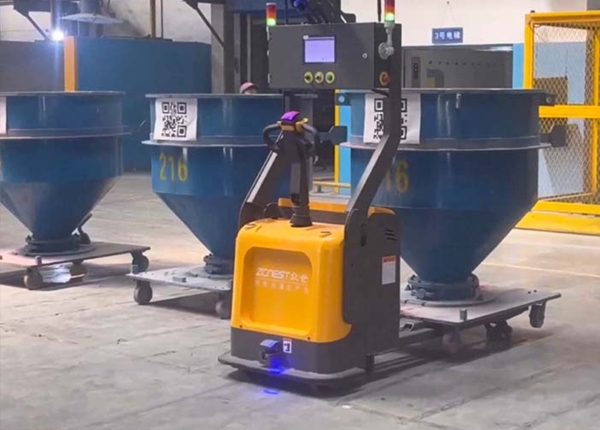
A returned pallet does not necessarily belong in ordinary storage immediately. Its contents may need to be checked, its packaging may need inspection, or its reusable container may need cleaning before reuse.
If returned goods are mixed with normal inbound inventory, warehouse staff may lose visibility over which items have completed the required checks. This can also create unnecessary movement when goods need to be separated later.
A dedicated return flow gives the warehouse a controlled path from arrival to inspection and final disposition. AGV forklifts can perform the physical transfers between designated process areas.
Different returned items may require different destinations. Some goods can return to available inventory after verification. Others may need repacking, repair, quality inspection, or a separate disposition decision.
The warehouse should define the categories and corresponding destinations before designing the AGV task flow. Typical categories include:
Goods awaiting inspection.
Goods approved for restocking.
Goods requiring repacking or relabeling.
Reusable containers awaiting cleaning.
Empty returnable transport packaging.
Items awaiting a separate disposition decision.
The system should not treat all returned pallets as immediately available inventory. The relevant business process must determine when each item can proceed to the next stage.
Return stations should provide clear pickup and delivery positions for AGV forklifts. They should also leave enough space for personnel to inspect goods, open packaging, sort containers, and carry out other manual tasks.
The station layout should account for the dimensions of returned pallets and containers, the equipment's fork-entry requirements, and the space needed for safe access. If several return categories are processed at the same station, the physical positions should be clearly identified.
Where inspection capacity is limited, the warehouse should define buffer limits and a procedure for managing incoming returns when all positions are occupied.
Reusable packaging can include plastic containers, metal stillages, returnable boxes, and dedicated transport frames. These items may differ significantly from standard pallets in shape, weight, fork openings, and load distribution.
Before using AGV forklifts, check whether each carrier can be picked up safely using the proposed fork arrangement. Confirm its base structure, overall dimensions, maximum loaded weight, and any restrictions on stacking.
If multiple carrier types are used, the warehouse may need separate handling profiles or dedicated transfer fixtures. Do not assume that a carrier suitable for manual forklift handling is automatically suitable for the selected AGV forklift.
The WMS should manage the business status of returned goods, while the AGV control system executes the assigned transport tasks. The interface should communicate the relevant handling-unit identifier, pickup point, destination, and task status.
A returned pallet may first be sent to inspection. After inspection, the WMS can issue a new task to move approved goods to storage or send reusable packaging to a cleaning or return area.
The system should also handle cases where the destination is full, the returned item has no valid identifier, or the inspection process is not complete. These situations need defined responses rather than relying on informal instructions.
Return volumes may fluctuate according to customer delivery schedules, production cycles, and packaging circulation. A return area designed only for average daily volume may become congested during busy periods.
Estimate the number of return pallets and containers that may arrive during peak periods. Use this information to determine buffer capacity, inspection throughput, and the frequency of AGV collection tasks.
The warehouse should also define how to prioritize returned goods when inspection capacity is limited. Urgent customer returns and reusable packaging needed for production may require different priorities.
Key Project Checkpoint
Map the complete return process, from arrival through inspection and final disposition. Confirm each carrier type, station location, buffer capacity, and software status before assigning AGV forklift tasks.
What types of goods and reusable packaging are returned?
Which items require inspection, cleaning, or repacking?
What are the dimensions and weights of each carrier type?
Where are the return collection and inspection stations?
What is the average and peak return volume?
How does the WMS determine the next destination?
What happens when an inspection station or buffer is full?
An effective return process depends on clear product status, suitable handling carriers, and predictable movement between work areas. AGV forklifts can reduce repetitive transport work while allowing warehouse personnel to focus on inspection and processing activities.
ZCNest Robotics provides AGV and AMR forklift solutions for warehouse material handling. Project planning can consider reusable packaging, return stations, transport routes, and software interfaces as part of an integrated automation solution.
Share your return flow, reusable packaging specifications, and warehouse layout to discuss AGV forklift automation.












 Chinese
 English





