


An AGV forklift fleet may operate for longer hours than the technical staff who support it. Warehouse operators need a clear support arrangement for every shift, including first-line checks, escalation ownership, remote assistance, and situations that require an on-site technician.
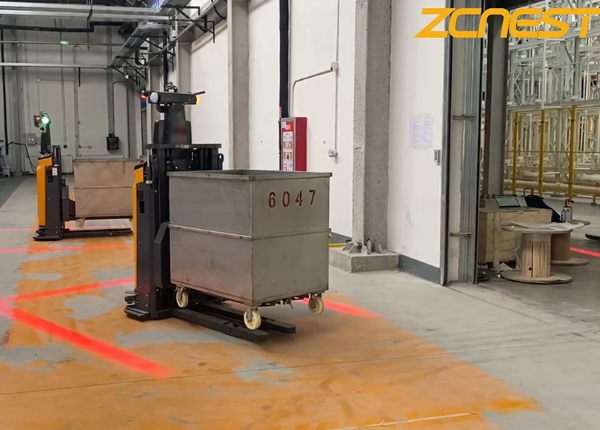
Extending warehouse operating hours can improve asset utilization, but it also changes the support requirements of an automated forklift system. A fault that is straightforward to investigate during the day may remain unresolved at night if the necessary contacts, permissions, or recovery procedures are unavailable.
Support planning should cover more than the number of technicians on the payroll. It should identify the capabilities available on each shift, the response route for different incident types, and the conditions under which work must be restricted until qualified assistance is available.
Begin by mapping the warehouse's operating schedule against the availability of operations supervisors, trained operators, maintenance staff, and external technical support.
For each shift, document:
Number of AGV forklifts and operating areas in service.
On-duty personnel authorized to perform routine checks.
Availability of a supervisor who can make operational decisions.
Access to internal maintenance and automation specialists.
Remote support availability and the applicable contact route.
Conditions requiring a site visit or specialist intervention.
Do not assume that a support contact is available merely because a telephone number exists. Confirm the agreed hours, response method, required incident information, and backup arrangement.
Every shift should have access to trained personnel who can identify the affected vehicle or task, collect useful information, and perform the checks permitted by the operating procedure.
First-line responsibilities may include:
Confirming the vehicle, task, and physical location involved.
Recording visible alarms or system messages.
Checking the immediate operating area for obvious restrictions.
Verifying whether the issue affects one vehicle or a wider area.
Following the approved operator-level troubleshooting procedure.
Escalating when the cause remains unclear or the permitted checks fail.
Make the limits of first-line support explicit. Operators should not modify engineering parameters, bypass safety functions, or perform work for which they are not trained and authorized.
A support plan should work even when the primary contact is unavailable. Use a defined contact sequence that reflects incident severity and the type of decision required.
For example:
The operator records the issue and completes permitted initial checks.
The shift supervisor evaluates operational impact and applies approved restrictions.
The designated internal specialist or external support team is contacted when technical assistance is required.
A backup contact is used if the primary route is unavailable within the agreed response window.
The authorized owner determines whether the affected operation may resume.
The incident is recorded with its resolution and any outstanding follow-up action.
Safety-critical situations must follow the applicable emergency and safety procedures immediately. Routine support response targets must never delay necessary protective action.
Key checkpoint
Every operating shift needs a named first-line owner, a reachable escalation route, and clear authority over whether affected operations can resume.
Not every incident requires a technician to travel to the warehouse. Some issues can be assessed remotely when suitable system information is available, while others require physical inspection or authorized maintenance.
Define which conditions can be handled through each support method:
Remote assessment: Appropriate for reviewing available logs, alarms, task history, and system status when remote access is authorized.
Operator-assisted checks: Suitable for documented checks that trained personnel can safely perform on site.
On-site technical work: Required when physical inspection, repair, or other specialist intervention is necessary.
Restricted operation: Appropriate when the cause or safety of the affected operation cannot yet be confirmed.
Where remote support is used, establish access permissions, information-sharing rules, and the process for authorizing configuration changes. Remote availability does not automatically mean that every repair can be completed remotely.
A single response target for every issue can misallocate support resources. A fault affecting one non-critical movement should not necessarily receive the same priority as a safety concern or an interruption to a critical warehouse area.
Define response expectations according to:
Potential safety consequences.
Number of vehicles or tasks affected.
Importance of the blocked warehouse area.
Availability of an approved alternative process.
Impact on customer dispatch or receiving commitments.
Time of day and availability of qualified support.
Separate acknowledgement time, initial diagnosis time, and restoration time. These measures describe different stages of the response and should not be treated as interchangeable promises.
Before adding an evening or night shift, test whether the proposed support arrangement can handle realistic operating scenarios without depending on unavailable personnel.
Review scenarios such as:
A vehicle becomes unavailable during the busiest period of the night shift.
A recurring fault requires a specialist who is not on site.
A supervisor cannot reach the primary support contact.
A technical issue affects several vehicles in one operating area.
A fault requires physical intervention before the system can resume.
A shift ends while an incident remains unresolved.
Use these exercises to identify gaps in training, access permissions, spare-part arrangements, and contact coverage. Adjust staffing or support agreements before increasing the hours that depend on them.
Support performance should be reviewed by shift, not only as a single warehouse-wide average. Day-shift results can conceal recurring gaps during evenings, weekends, or public holidays.
Monitor:
Incident acknowledgement time by shift.
Time to initial diagnosis and authorized resolution.
Number of incidents awaiting specialist support.
Operational downtime attributable to support availability.
Repeat incidents that require the same intervention.
Percentage of incidents with complete records and follow-up actions.
Use the results to determine whether additional training, revised escalation arrangements, or different support coverage is required. Avoid attributing every delay to staffing without checking whether the underlying issue is technical, procedural, or operational.
Support coverage matches the warehouse operating schedule.
Each shift has trained first-line personnel and a supervisor.
Primary and backup escalation contacts are documented.
Operator-level permissions and restrictions are clear.
Remote and on-site support responsibilities are defined.
Response expectations reflect incident severity and impact.
Unresolved incidents have a clear owner at shift change.
Support performance is reviewed by shift and incident type.
Reliable multi-shift automation requires a support model that matches actual warehouse operating hours. Clear ownership, trained first-line personnel, reachable specialists, and appropriate response targets help prevent avoidable delays when technical issues occur outside standard office hours.
Contact ZCNest Robotics to discuss your AGV forklift operating schedule, technical support requirements, and warehouse automation plan.












 Chinese
 English





