


An automated warehouse needs more than a list of robot alarms. Operations teams must know which alerts require immediate action, who receives each notification, and when an unresolved issue should be escalated.
AGV forklift systems generate information about vehicle status, battery condition, navigation, task execution, communication, and safety-related events. If every event is sent to every operator, important warnings can become difficult to identify.
On the other hand, alert thresholds that are too relaxed may delay intervention until an issue affects warehouse operations. A useful alert management design separates informational events from warnings and critical conditions, then assigns a clear response owner to each category.
This guide explains how to establish an alert management framework for AGV forklift operations.
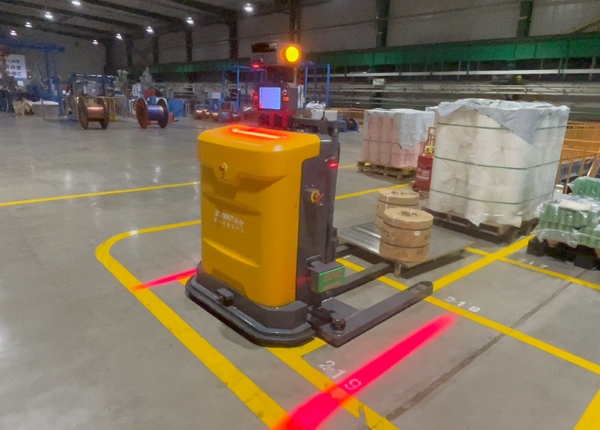
Start by grouping alerts according to the action they require. The exact classification should follow the AGV supplier's system capabilities and the warehouse's operating procedures.
| Alert Level | Typical Response |
|---|---|
| Information | Record or review during routine monitoring. |
| Warning | Investigate before the condition affects normal operations. |
| Critical | Initiate the defined response procedure immediately. |
A critical alert should be reserved for conditions that require prompt intervention, not simply for events that appear frequently in the system log. The classification should be agreed upon by warehouse operations, automation support, and the equipment supplier.
Thresholds determine when a monitored value becomes a notification. Some conditions use fixed status codes, while others depend on configurable values or operating duration.
Typical areas to review include:
Battery condition: Define warning levels that provide enough time for the vehicle to complete or safely hand over its current task before charging is required.
Communication status: Identify how long a communication interruption can persist before the system generates a warning or critical notification.
Vehicle availability: Notify the responsible team when a vehicle remains unavailable beyond the agreed operating threshold.
Task execution: Flag tasks that remain in an unexpected state for longer than the configured period.
Navigation and localization: Distinguish temporary conditions from persistent faults that require technical attention.
Do not copy generic threshold values from another warehouse without validation. Battery reserve, communication tolerance, and acceptable task duration depend on the vehicle model, route design, workload, and operating environment.
An alert without an owner often remains unresolved. The system should specify who receives the notification and who is responsible for deciding the next action.
A practical responsibility structure may look like this:
| Alert Category | Primary Owner | Supporting Team |
|---|---|---|
| Vehicle hardware fault | Automation maintenance | AGV supplier support |
| Warehouse task issue | Warehouse control operator | WMS/RCS support |
| Communication issue | IT or automation support | Network administrator |
| Warehouse access obstruction | Warehouse operations | Site safety or facility team |
The primary owner should be able to acknowledge the alert, assess its impact, and initiate the approved response. Supporting teams should be contacted when the issue exceeds the primary owner's authority or technical capability.
Some alerts can be handled by an on-site operator. Others require a specialist or supplier intervention. Define escalation based on severity, duration, operational impact, and whether the initial response has been completed.
For each alert category, specify:
Who receives the first notification.
How the recipient acknowledges the alert.
What action is permitted at the first response level.
When the issue must be escalated.
Who has authority to return the equipment to service.
What information must be recorded before closure.
For example, an unresolved communication alert may first go to the automation operator. If the issue persists beyond the configured threshold, it can be escalated to IT support and the supplier's technical team. The exact timing should be determined by the warehouse's operating requirements.
Too many notifications can reduce response quality. If minor events repeatedly trigger messages to the same operators, staff may begin ignoring alerts that deserve attention.
Use filtering and grouping rules where the system supports them. Repeated notifications from the same vehicle and underlying condition can be consolidated, while new or more severe conditions remain visible.
Also distinguish between an alert that reports a condition and an alert that requires an action. Informational records can remain available in system history without interrupting operators during every occurrence.
An alert record should contain enough information for the receiving team to understand what happened. At minimum, consider recording:
Vehicle identification and relevant software version.
Alert code, severity, and description.
Time detected and time acknowledged.
Active task or operating state when the alert occurred.
Assigned owner and escalation history.
Corrective action and final closure status.
These records help the warehouse identify recurring issues and determine whether a threshold, operating rule, maintenance procedure, or system configuration needs adjustment.
Classify alerts by operational impact.
Define thresholds for relevant vehicle and system conditions.
Assign a primary owner to every alert category.
Document escalation timing and contact responsibilities.
Configure acknowledgement and closure procedures.
Test notifications during normal and abnormal operating conditions.
Verify that repeated alerts do not overwhelm operators.
Confirm that alert history can be retrieved for investigation.
Key checkpoint: Every critical alert needs three things: a defined trigger, a named response owner, and an escalation path if the issue remains unresolved.
Alert settings should be reviewed when the warehouse introduces new routes, changes operating hours, adds vehicles, modifies network infrastructure, or updates the automation software.
A threshold that was appropriate for a small fleet may not be suitable after the warehouse expands. Similarly, a notification originally assigned to a single operator may need a different owner when responsibilities are reorganized.
Keep an approved record of threshold changes, notification recipients, and escalation rules. This prevents undocumented adjustments from creating gaps in operational responsibility.
Alert management is part of warehouse operating design, not just a software configuration task. By defining thresholds, assigning owners, and establishing escalation rules, businesses can make AGV forklift notifications more actionable and easier to manage.





 Chinese
 English