


Cross-docking moves selected goods from inbound receiving to outbound dispatch without placing them into long-term storage. For warehouses handling high pallet volumes, AGV forklifts can coordinate these transfers with fewer manual vehicle movements, provided that inbound identification, destination assignment, and outbound readiness are controlled.
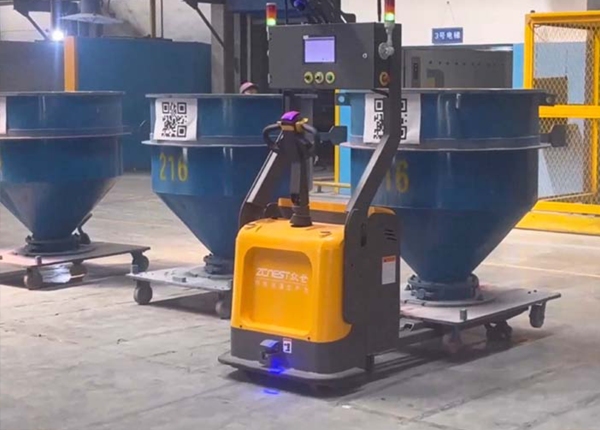
Cross-docking is not simply a matter of moving a pallet from one dock to another. The warehouse must identify which inbound goods are required for which outbound orders, determine where each pallet should go, and ensure that the receiving and dispatch processes are synchronized.
When AGV forklifts are introduced, these decisions become part of an automated material-handling workflow. Poorly defined transfer rules can create congestion, unnecessary storage movements, and pallets waiting in the wrong location.
Not every inbound pallet should bypass storage. The WMS or order management system should determine whether the incoming goods have a confirmed outbound requirement and whether they meet the conditions for direct transfer.
Inbound goods are matched to an existing outbound order.
SKU, batch, quantity, and packaging information meet order requirements.
The outbound shipment has a confirmed destination and dispatch plan.
The goods do not require long-term storage or additional processing.
The receiving and outbound areas can accept the pallet within the planned time window.
Pallets that fail these checks should follow the normal putaway process or an authorized inspection workflow. This prevents the cross-docking area from becoming a temporary holding space for unidentified inventory.
Before configuring AGV tasks, map the physical path between receiving points, verification areas, cross-docking transfer positions, and outbound lanes.
For each route, confirm:
Pickup and drop-off coordinates.
Required turning and maneuvering space.
Intersections with pedestrian or manual forklift traffic.
Temporary restrictions during loading and unloading.
Whether the route is shared with ordinary warehouse putaway and retrieval tasks.
In warehouses with high-bay storage, cross-docking routes should be designed so that direct-transfer traffic does not unnecessarily enter narrow storage aisles. This keeps high-frequency transfer activity separate from rack operations where practical.
A cross-docking area needs clearly identified positions where inbound pallets can be checked and outbound pallets can be collected. These positions should not be treated as unrestricted storage locations.
Define the maximum number of pallets each position can accommodate, the permitted pallet dimensions, and the conditions under which a position becomes available again.
The WMS should reserve a transfer position before dispatching the AGV task. Without reservation control, two inbound pallets may be assigned to the same position, or an AGV may arrive before the outbound process is ready to collect the goods.
The system needs a reliable matching process between incoming pallets and outbound demand. Matching should use more than a general product description.
SKU and product identification.
Batch, lot, or serial number where applicable.
Required quantity and unit of measure.
Customer or shipment restrictions.
Outbound lane and shipment reference.
When a pallet is accepted for cross-docking, the WMS should create a traceable relationship between the inbound receipt and the outbound requirement. This allows warehouse staff to identify why the pallet was routed directly to dispatch rather than to storage.
An AGV forklift should not deliver pallets to an outbound lane that is not ready to receive them. The dispatch process should consider shipment status, lane availability, loading sequence, and the capacity of the transfer area.
A practical workflow is:
Inbound pallet is received and identified.
WMS confirms that the pallet qualifies for cross-docking.
Outbound shipment and destination lane are verified.
Transfer position is reserved.
AGV forklift receives the movement task.
Arrival and pallet placement are confirmed.
Outbound staff or equipment confirms collection readiness.
Shipment plans can change after an inbound pallet has been assigned to cross-docking. A delayed vehicle, cancelled order, or revised loading sequence may make the original destination unsuitable.
Define clear handling rules for these cases. The system should be able to suspend an unexecuted task, revise the destination, or move the pallet to an approved temporary position. If the AGV has already collected the pallet, the actual vehicle and load status must be checked before another instruction is issued.
Do not allow a revised shipment instruction to create a second movement while the original task remains active.
Evaluate the process using operational indicators that show whether direct transfer is actually reducing unnecessary handling.
Time from inbound confirmation to outbound arrival.
Percentage of eligible pallets successfully cross-docked.
Number of pallets diverted to storage after initial assignment.
Transfer-position utilization and waiting time.
AGV task completion and interruption rates.
Number of shipment mismatches or incorrect destinations.
Define pallet eligibility and inventory matching rules.
Map routes between receiving and outbound areas.
Set transfer-position capacity and reservation rules.
Confirm outbound lane readiness before AGV dispatch.
Define handling for shipment changes and task interruptions.
Test simultaneous inbound arrivals and outbound collections.
Key checkpoint: Cross-docking efficiency depends on matching inventory with confirmed outbound demand before the AGV forklift moves the pallet. Automating transport without controlling destination readiness can simply move congestion from one area to another.
During project acceptance, test more than a single pallet transfer. Use multiple inbound pallets, different outbound destinations, and changing shipment conditions. Verify that the WMS creates the correct tasks, the AGV fleet executes them in the intended sequence, and each completed transfer is recorded against the correct shipment.
For high-volume warehouses, also test how cross-docking traffic interacts with ordinary storage operations. The fleet should maintain predictable movement behavior without allowing direct-transfer tasks to block critical rack access routes.
A successful cross-docking project combines accurate order matching, dedicated transfer positions, reliable WMS coordination, and suitable AGV forklift routes. These requirements should be reviewed together before the warehouse automation system is configured.
ZCNest Robotics provides AGV forklift solutions for pallet transportation and automated warehouse operations. Share your inbound and outbound process, pallet specifications, warehouse layout, and system requirements to discuss a suitable configuration.












 Chinese
 English





