


When an AGV forklift stops unexpectedly, the immediate question is not only what caused the interruption, but who should respond and what decisions they are authorized to make. A defined escalation process helps warehouse teams distinguish routine operating issues from incidents requiring technical or management intervention.
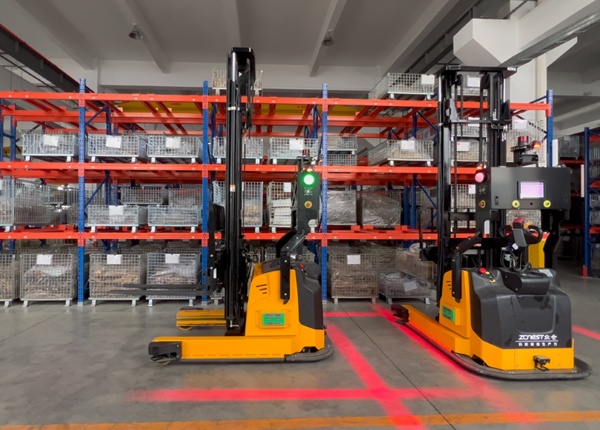
Automated warehouse operations involve vehicles, control software, warehouse systems, storage equipment, and human operators. An interruption in one part of the process can affect several downstream activities.
If response responsibilities are unclear, operators may wait for the wrong team, attempt unauthorized recovery actions, or repeatedly report the same issue through different channels. This increases downtime and makes incident records difficult to analyze.
An escalation matrix establishes who receives an alert, who investigates, who approves corrective action, and who confirms that operations can resume.
Not every AGV interruption requires the same response. Classify incidents according to their impact on people, equipment, inventory, and warehouse throughput.
Level 1 – Local operating issue: A task is delayed or a vehicle requires an authorized routine check, with limited impact on surrounding operations.
Level 2 – Repeated or unresolved interruption: The same issue continues after standard checks or affects several tasks.
Level 3 – System-wide disruption: Multiple vehicles or a critical warehouse zone cannot operate normally.
Level 4 – Safety or equipment incident: A collision, load instability, equipment damage, or potential personnel hazard requires immediate control and formal investigation.
Classification should be based on actual impact and established company procedures. Safety-related events should follow the site's emergency and incident-response rules regardless of production impact.
Each incident category should have a primary owner and a defined escalation contact. Avoid assigning responsibility vaguely to a general warehouse or automation team.
Warehouse operator: Reports the event, provides the location and task reference, and follows approved local procedures.
Shift supervisor: Assesses operational impact, coordinates local resources, and determines whether tasks or areas should be suspended.
Automation engineer: Reviews vehicle status, system alarms, and technical records within authorized access.
IT or WMS administrator: Investigates communication, interface, or inventory-system issues.
Equipment service team: Handles mechanical, electrical, or component-related issues within its authorized scope.
Operations manager: Coordinates major disruptions and approves broader operational decisions.
For overseas installations, also define how the local customer team contacts the supplier's remote technical support and how on-site service is arranged when remote diagnosis is insufficient.
An escalation message should provide enough information for the receiving team to begin investigation without repeatedly contacting the operator for basic details.
Include:
Incident time and warehouse zone.
Vehicle identification and task ID.
Alarm code or displayed message.
Current vehicle and load condition.
Whether other vehicles or tasks are affected.
Actions already taken by authorized personnel.
Photographs or system records where permitted.
A report such as "AGV not working" is not sufficient for effective diagnosis. The vehicle ID, task reference, location, and observed condition make the issue much easier to investigate.
Define when an incident must move from one response level to another. For example, a local issue may become a higher-level incident if it affects a critical storage aisle or remains unresolved beyond the agreed response target.
Response targets should distinguish between acknowledgement, initial diagnosis, recovery planning, and final resolution. These are different activities and should not be represented by a single response-time figure.
For each incident category, document:
Who must acknowledge the alert.
How quickly the first assessment should begin.
When the next response level is contacted.
Who authorizes temporary operating restrictions.
Who communicates updates to warehouse management.
Restoring warehouse activity and fixing the root cause are not always the same task. A vehicle may be safely removed from an affected area so that other operations can continue, while the technical investigation remains open.
The escalation procedure should distinguish between:
Immediate area control and personnel safety.
Protection of the pallet and surrounding equipment.
Recovery of affected warehouse tasks.
Technical diagnosis and corrective maintenance.
Verification before the affected equipment returns to service.
Only personnel authorized by the site's procedures should perform recovery or maintenance actions. Operators should not bypass safety devices or attempt technical repairs outside their training and authorization.
Choose a primary communication channel for normal incidents and a separate urgent notification method for serious events. The process should remain usable during a system outage or network interruption.
Define where incident records are stored, how updates are shared, and who is responsible for communicating operational status. For supplier-supported projects, include contact methods, support hours, remote access requirements, and the information needed before a service request can be processed.
An incident should not be closed simply because the alarm has disappeared. The responsible team should confirm that the vehicle, affected task, and surrounding warehouse process are operating as intended.
A complete closure record should include:
Confirmed cause or current diagnosis.
Corrective action performed.
Vehicle and task status after recovery.
Any inventory or location records requiring reconciliation.
Approval or confirmation from the responsible person.
Whether follow-up maintenance or process changes are required.
Define incident categories and impact levels.
Assign a primary owner and backup contact for each level.
Standardize incident report information.
Set acknowledgement and escalation targets.
Document authorized recovery responsibilities.
Define supplier and remote support procedures.
Require verified closure and incident records.
Key checkpoint: An effective escalation matrix identifies who owns the next decision. It should not merely list technical contacts; it must define when each person is involved and what actions they are authorized to approve.
Run practical exercises using representative warehouse incidents. Test a single-vehicle interruption, a system communication issue, a blocked critical route, and a safety-related event. Confirm that alerts reach the correct people and that the escalation path works outside normal office hours if the warehouse operates multiple shifts.
For overseas projects, verify the communication process across time zones and confirm what information the supplier needs to provide remote assistance. Clear responsibilities reduce delays when local and remote teams need to cooperate.
Incident escalation should be agreed before the system enters production. The warehouse operator, automation supplier, IT team, and maintenance personnel need a shared understanding of response responsibilities and service boundaries.
ZCNest Robotics provides AGV forklift solutions for automated pallet transportation and warehouse operations. Discuss your operating hours, support requirements, warehouse layout, and system configuration with our team.












 Chinese
 English





