


AGV forklift systems rely on rules that determine how warehouse tasks are created, assigned, prioritized, and executed. As operating requirements change, these rules may need adjustment. A controlled change process helps prevent unapproved configuration updates from disrupting warehouse operations or creating unexpected vehicle behavior.
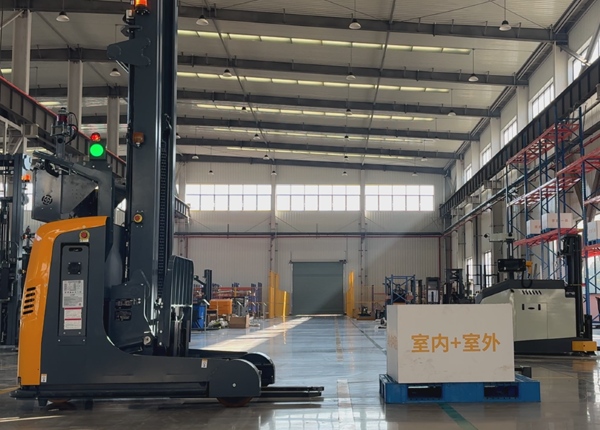
Warehouse operating rules are not necessarily fixed for the entire life of an automation project. New storage areas may be added, business priorities may change, and the warehouse may introduce different handling processes.
These changes can require adjustments to AGV dispatch rules, destination eligibility, task priorities, or vehicle assignment logic. If changes are made without authorization or testing, they may cause unexpected task sequences, traffic conflicts, or inventory processing errors.
Begin by listing the configuration rules that influence warehouse transport and system behavior.
Task creation conditions and task types.
Pickup and delivery location eligibility.
Task priority and dispatch conditions.
Vehicle assignment and capability matching.
Route restrictions and area access rules.
Task cancellation and retry behavior.
Confirmation and inventory update conditions.
Not every configuration change has the same risk. Changing a notification setting is different from changing a destination rule that controls where pallets are placed. Classify changes according to their potential impact on physical operations and inventory records.
Warehouse operators, supervisors, IT administrators, and automation engineers may all identify the need for a configuration change. However, the person who requests a change should not automatically have permission to implement it.
Define responsibilities clearly:
Requester: Explains the operational problem and expected result.
Warehouse supervisor: Confirms the change is consistent with operating procedures.
System owner: Reviews the impact on WMS, RCS, and related applications.
Automation engineer: Evaluates technical effects on vehicle tasks and routes.
Approver: Authorizes implementation according to the change's risk level.
For supplier-managed systems, define which changes the customer can make independently and which require supplier involvement. This avoids confusion over technical responsibilities and support boundaries.
Every significant change should have a documented reason. A request such as "adjust AGV priorities" is not specific enough for review or testing.
A useful change request should include:
Current operating rule and observed problem.
Proposed new rule or configuration.
Warehouse zones, tasks, and vehicles affected.
Expected operational improvement.
Potential risks or dependencies.
Required test cases and acceptance conditions.
Requested implementation window.
Documenting the expected result makes it possible to determine whether the change solved the original problem after implementation.
A task rule may depend on several other parts of the warehouse system. For example, changing a destination eligibility condition may affect WMS master data, storage availability, and AGV route access.
Before implementation, identify whether the change affects:
WMS task generation and inventory transactions.
RCS task dispatch and vehicle assignment.
Storage location configuration.
Warehouse traffic and route restrictions.
Other automated equipment or transfer stations.
Existing active tasks and reservations.
Changes with wider dependencies should receive a more detailed review and a controlled implementation plan.
Whenever possible, test the proposed rule in a controlled environment or with a limited operating scope before applying it to the full warehouse.
Test both the intended scenario and relevant exceptions. A dispatch rule that works for one vehicle and one task may behave differently when several vehicles compete for the same transfer position.
Testing should verify:
Correct task creation and destination selection.
Expected vehicle assignment and task sequence.
Behavior when a destination is unavailable.
Handling of duplicate or interrupted tasks.
Inventory status and location updates.
Effects on existing warehouse traffic.
Keep a record of the configuration before and after each approved change. This makes it easier to identify what was modified and provides a reference if unexpected behavior appears later.
Maintain:
Configuration version or revision identifier.
Change request and approval reference.
Implementation date and responsible person.
List of affected rules and system components.
Test results and acceptance confirmation.
Related incidents or follow-up actions.
Access to production configuration should be limited to authorized personnel. Avoid informal changes that cannot be traced to an approved request.
A change may produce unexpected results after it enters production. Before implementation, determine how the previous configuration can be restored and what conditions would trigger rollback.
The plan should identify:
The previous approved configuration version.
Who has authority to initiate rollback.
How active AGV tasks will be handled.
How inventory and task records will be checked afterward.
How warehouse operators will be informed.
Rollback should not be treated as a substitute for testing. It is a recovery measure for cases where a production change does not behave as expected.
After implementation, review the affected operations to confirm that the new rule performs as intended. Compare task behavior with the original acceptance conditions rather than relying only on whether the system remains online.
Check task completion, destination accuracy, vehicle assignment, traffic behavior, and any increase in manual intervention. If the change affects inventory transactions, verify that WMS records remain consistent with physical pallet locations.
Identify the affected task or dispatch rule.
Document the reason and expected outcome.
Assign a requester, reviewer, and approver.
Assess WMS, RCS, vehicle, and route dependencies.
Test normal and exception scenarios.
Record the approved configuration version.
Prepare rollback and post-change verification steps.
Key checkpoint: A production AGV task rule should never be changed solely because an operator wants a different result. The request, impact assessment, approval, test, and release should all be traceable.
Before signing an AGV forklift project contract, clarify how task rules and system configurations will be managed after commissioning.
Confirm which parameters the customer can maintain, which changes require supplier assistance, whether configuration history is available, and how changes are tested. Also define how support is provided when a modification affects WMS or RCS integration.
Clear governance helps warehouse operators adapt to changing business requirements without introducing uncontrolled changes to automated operations.
AGV forklift task rules should evolve with warehouse operations, but each change needs a clear owner, documented purpose, appropriate testing, and a recovery plan. A structured process protects the reliability of automated transport as the warehouse grows and changes.
ZCNest Robotics provides AGV forklift solutions and warehouse automation support. Share your warehouse processes, software configuration requirements, and expected operational changes to discuss a suitable project approach.












 Chinese
 English





