


A pallet can pass through receiving, inspection, storage, picking, and dispatch before leaving a warehouse. Without reliable identification and movement records, operators may struggle to locate stock or explain inventory discrepancies. A structured traceability process connects each pallet's identity with its physical movements and system transactions.
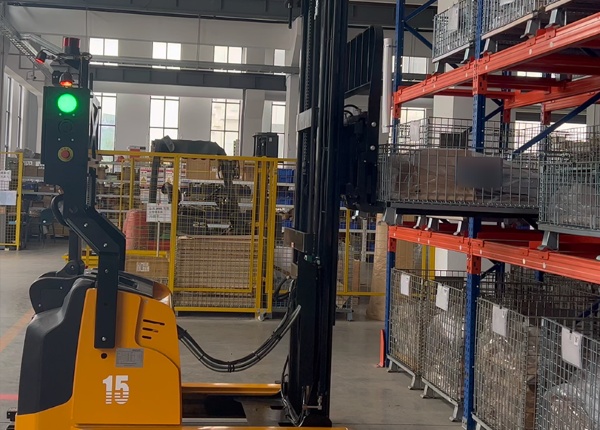
Automated pallet transportation depends on knowing which load is being moved, where it is located, and which task authorizes the movement. If pallet identity is missing or incorrect, even a technically successful AGV movement may result in an inventory error.
Traceability is therefore not just a barcode-reading function. It is a process that links physical pallet identification, WMS inventory records, transport tasks, and final storage confirmation.
Start by determining the level of traceability required by the warehouse. Some operations need to track each individual pallet, while others can manage quantities by SKU and location.
Typical information includes:
Unique pallet or handling-unit ID.
SKU and product description.
Batch, lot, or serial number where applicable.
Quantity and unit of measure.
Current warehouse location.
Inventory status and ownership.
Movement history and related task references.
For operations involving customer-specific goods or regulated products, additional information may be required. The traceability model should reflect actual business and compliance requirements rather than collecting unnecessary data.
Every tracked pallet needs an identifier that can be recognized consistently during warehouse operations.
Barcode labels: Commonly used for pallet identification and scanning at receiving or transfer points.
QR codes: Can store or reference additional information, depending on the warehouse's scanning process.
RFID tags: May support automatic identification in suitable environments and system configurations.
System-generated handling-unit IDs: Provide a unique reference that can be linked to physical labels and inventory records.
Evaluate label durability, placement, scanning distance, and visibility after wrapping or stacking. An identification method is only useful if the warehouse can read it reliably under actual operating conditions.
Scanning or identification should take place at defined points where pallet identity is important to the next operation.
Common checkpoints include:
Inbound receipt and initial inventory registration.
Inspection or quality release.
AGV pickup and delivery confirmation where required.
Storage placement and retrieval.
Picking and repacking operations.
Outbound shipment verification.
Do not assume that a scan at receiving will guarantee correct identification throughout the entire warehouse process. Labels may become damaged, pallets may be exchanged, or goods may be repacked. Define how the system detects and resolves these situations.
When a pallet is assigned to an AGV forklift, the transport task should reference the correct pallet ID and destination. This links the physical movement with the inventory transaction.
A transport task may include:
Task ID and task type.
Pallet or handling-unit ID.
Pickup location and destination.
Load weight and handling requirements.
Priority and execution conditions.
Completion status and confirmation time.
The WMS should define which pallet is authorized for movement, while the RCS or fleet control system coordinates the physical task. The two systems should exchange consistent references so that a task cannot accidentally move a different pallet from the one recorded in inventory.
A pallet's recorded destination should match its physical location. If the AGV forklift reports successful placement but the pallet is placed in another position, the inventory record must not remain unchanged.
Define how destination confirmation is obtained. Depending on the system design, this may involve position sensors, barcode scanning, station confirmation, or other configured verification methods.
For high-bay warehouses, the confirmation process should be designed around the actual rack and vehicle configuration. The goal is to prevent a pallet from being recorded in a storage position that it does not physically occupy.
Labels can become damaged, covered, or difficult to read. A pallet may also arrive with an identifier that does not match the expected WMS record.
Establish a controlled exception process:
Stop the affected transaction from proceeding automatically.
Record the current physical location of the pallet.
Request authorized identity verification.
Correct or replace the label where appropriate.
Reconcile the physical pallet with the WMS record.
Release the pallet for automated movement only after verification.
Do not assign a new identity simply to bypass a scanning problem. Doing so may create duplicate inventory records or break the link with previous movement history.
Some warehouse operations change the physical composition of a pallet. Goods may be split, combined, relabelled, or transferred to a different pallet during picking and repacking.
The traceability process should define how the original handling unit is closed and how new pallet identities are created. Where batch or lot traceability is required, the relationship between the original inventory and the new handling unit should remain available.
This allows the warehouse to track goods even when the physical pallet changes during processing.
Even with automated identification, periodic reconciliation is necessary. Compare WMS records with physical pallet counts and investigate discrepancies rather than simply adjusting quantities without explanation.
Review:
Pallets recorded at locations where no pallet is physically present.
Physical pallets without corresponding system records.
Duplicate pallet identifiers.
Tasks marked complete without confirmed placement.
Inventory records that were not updated after repacking.
Define the required pallet identification level.
Select labels or tags suitable for actual warehouse conditions.
Set identification checkpoints throughout the process.
Link pallet IDs to AGV tasks and WMS transactions.
Confirm actual destination after placement.
Define procedures for damaged or unreadable labels.
Preserve identity relationships during repacking.
Reconcile system records with physical inventory.
Key checkpoint: A complete pallet traceability record connects identity, quantity, physical location, and movement history. A barcode scan alone cannot guarantee traceability if the WMS and AGV task records are not synchronized.
During system acceptance, test the full pallet lifecycle from inbound identification to storage, retrieval, and outbound dispatch. Include unreadable labels, incorrect identifiers, repacking, and interrupted transport tasks.
Confirm that each movement can be traced through the WMS and AGV control system and that physical inventory remains consistent with system records.
For high-bay warehouses, also verify that identification checkpoints work with the actual rack layout, vehicle handling method, and pallet presentation conditions.
Reliable pallet traceability requires consistent identification, accurate system transactions, and confirmation of physical movements. These requirements should be included in the warehouse automation design from the beginning.
ZCNest Robotics provides AGV forklift solutions for automated pallet transportation and warehouse storage operations. Share your pallet identification method, WMS environment, warehouse layout, and traceability requirements to discuss a suitable solution.












 Chinese
 English





