


Returned goods create a different material flow from normal inbound and outbound operations. Products may require inspection, repacking, sorting, or temporary storage before they can re-enter inventory. AGV forklift automation can connect these activities, provided that each return category has a clearly defined destination and handling process.
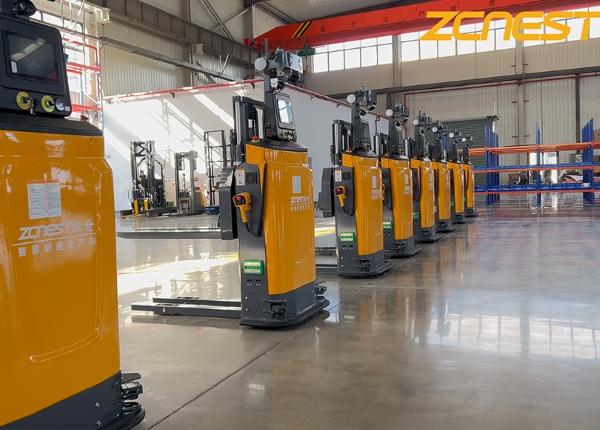
Returns are often less predictable than regular warehouse replenishment. A returned pallet may contain unopened products, damaged packaging, mixed SKUs, or goods that cannot be returned to available inventory without inspection. Sending every returned pallet directly to a standard storage location can create inventory errors and unnecessary handling.
For warehouse operators considering AGV forklifts, the first task is to define the reverse logistics process. The vehicle should execute a controlled transport task, while warehouse rules determine where the returned goods are allowed to go.
Before designing routes, classify returned goods according to their next required action. A practical warehouse process may use the following categories:
| Return category | Next destination |
|---|---|
| Unopened and eligible for resale | Inspection or approved restocking area. |
| Packaging damaged | Repacking or quality inspection area. |
| Product condition uncertain | Restricted inspection area. |
| Rejected or non-resalable goods | Dedicated disposal, repair, or supplier-return process. |
The categories should match the warehouse's actual quality and inventory policies. AGV forklifts should not make product-quality decisions. They transport loads according to approved task instructions and destination rules.
Returned goods should enter the warehouse through a controlled receiving point. This location provides an opportunity to verify the return reference, pallet identity, quantity, and physical condition before the goods enter the automated flow.
Consider the following when selecting the location:
Space for temporary accumulation during busy return periods.
Access for unloading equipment and AGV forklifts.
Clear separation from normal inbound receiving operations.
Enough room for manual inspection and label replacement.
Defined positions for approved, pending, and rejected returns.
If returns are received at several doors or departments, each point should have a consistent method for requesting an AGV transport task. This prevents operators from placing pallets in unrecognized locations and expecting the fleet to collect them automatically.
One of the most important decisions in reverse logistics is when returned goods become eligible for normal storage. A returned pallet should not be assigned to an available high-bay location simply because the vehicle can physically transport it there.
A typical process can be divided into three stages:
Return registration: Record the return reference and identify the goods or pallet.
Condition assessment: Confirm whether the goods need inspection, repacking, or another treatment.
Destination authorization: Release the pallet to an approved storage or processing location.
Where warehouse software supports status-based inventory control, use those statuses to prevent unapproved goods from entering normal available stock. The AGV task should be generated only after the destination has been authorized.
Returns often require several short movements rather than one direct trip. A pallet may move from receiving to inspection, then to repacking, and finally to storage. Each transfer point needs a clear handover method.
For every workstation, define:
Pickup and drop-off positions.
Whether the pallet is presented automatically or by an operator.
How the system confirms that loading or unloading is complete.
What happens if inspection takes longer than expected.
Whether the next transport task can be created before the current process is finished.
Do not assume that a workstation is ready to receive a pallet merely because its physical position is empty. The process may still be occupied by another inspection or repacking task. A reliable interface should communicate readiness before assigning the next delivery.
Some returned pallets contain multiple products or lack a readable identification label. These loads should not enter a standard automated storage process until their identity and handling requirements are confirmed.
Establish a separate workflow for:
Mixed-SKU pallets that require sorting.
Labels that are missing, damaged, or unreadable.
Pallets with quantities that do not match the return record.
Loads with packaging that prevents safe automated handling.
For these situations, a manual verification point is often more practical than trying to automate every decision. Once the pallet has been checked and assigned an approved status, the warehouse system can issue a normal AGV transport task.
The warehouse management system and the AGV fleet control system have different responsibilities. Their interface should make the transition from return processing to physical transportation clear.
WMS: Manages return records, inventory status, storage eligibility, and destination decisions according to the warehouse process.
RCS: Assigns and coordinates AGV transport tasks, vehicle movement, and task execution.
WCS: Coordinates connected equipment or workstation processes where required by the project architecture.
Define the information exchanged for each task, including the load identifier, pickup position, destination, task reference, and completion status. Also specify how cancellations and destination changes are handled when an inspection result changes.
Returns automation should be evaluated by the quality of the complete process, not just the number of AGV movements. Useful measurements include:
Average time from return registration to inspection.
Time from inspection approval to final storage.
Percentage of returns requiring manual transport.
Number of pallets waiting at each processing stage.
Frequency of incorrect destination assignments.
Transport workload generated by returned goods.
These figures help identify whether delays are caused by vehicle capacity, inspection staffing, workstation availability, or warehouse rules. Increasing the AGV fleet will not solve a bottleneck caused by slow inspection decisions.
Classify returned goods by condition and required processing.
Define the receiving and temporary holding locations.
Establish inspection and release responsibilities.
Separate unidentified and mixed-SKU pallets.
Confirm workstation readiness and handover signals.
Define WMS-to-RCS task and status exchanges.
Test rejected returns, missing labels, and cancelled tasks.
Measure the complete return-to-storage cycle.
Key checkpoint
The critical control point in returns automation is the release decision. Returned goods should enter normal storage only after their identity, condition, and inventory status have been approved. AGV forklifts then execute the authorized movement without bypassing quality or inventory controls.
If your warehouse handles frequent returns, repacking, inspection, or restocking, AGV forklifts can help connect these processes with your existing storage and transport operations. The solution should be based on return volume, pallet specifications, inspection procedures, aisle width, storage height, and WMS requirements.
ZCNest Robotics provides AGV forklift and warehouse automation solutions for B2B applications. Share your warehouse layout and returns process to discuss suitable equipment and automation options.












 Chinese
 English





