


A pallet that has been partially picked is no longer the same inventory unit that entered the picking process. Its quantity, weight, packaging, and storage eligibility may have changed. Warehouse operators need clear rules for moving these loads between picking stations, temporary positions, and storage locations.
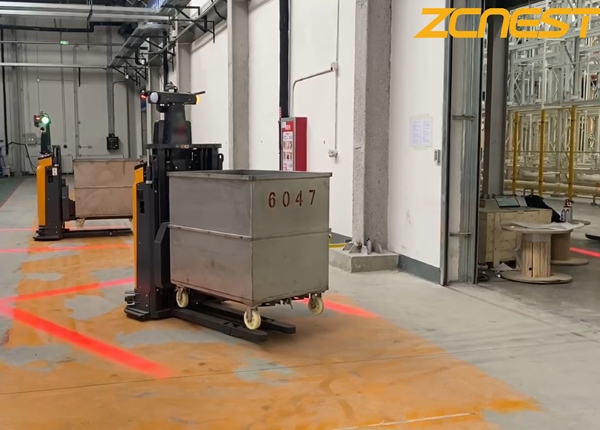
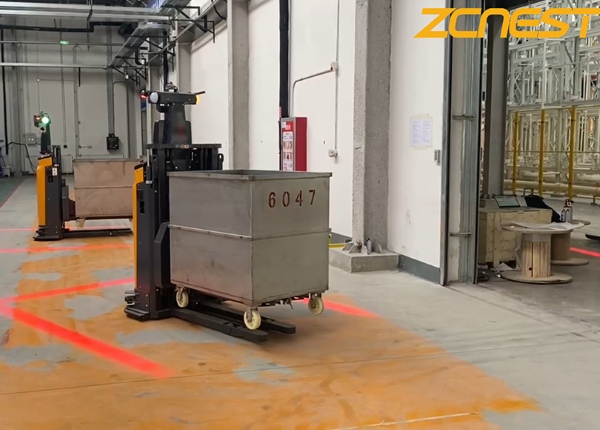
Partial pallet picking is common in warehouses that supply multiple customers or orders from the same inventory stock. A full pallet may arrive at a picking area, have some cases removed, and then need to return to storage or move to another picking location.
This process creates a control challenge for automated material handling. The AGV forklift can transport the pallet, but the warehouse system must know what remains on it and whether the load is still suitable for its next destination.
Do not treat every pallet leaving a picking station as a normal full pallet. Establish operational states that reflect what has happened to the load.
| Pallet state | Required action |
|---|---|
| Picking completed, balance confirmed | Return to an approved storage location. |
| Picking incomplete | Move to another picking position or a defined holding area. |
| Quantity discrepancy | Hold for inventory verification. |
| Load no longer stable | Send to repacking or manual assessment. |
These states should be linked to the warehouse's inventory and picking procedures. The purpose is to prevent a pallet from being moved into a location or process that is unsuitable for its current condition.
After picking, the remaining quantity may differ significantly from the original pallet record. The WMS should receive the picking result before the pallet is released for its next movement.
Define the following information for each partial pallet:
Original pallet or load identifier.
Remaining SKU and quantity.
Current pallet location.
Picking task reference and completion status.
Current load condition and any repacking requirement.
Authorized next destination.
If the warehouse uses a barcode or RFID identifier, determine whether the original label remains valid after picking. Where necessary, generate a new label or update the associated record so that subsequent operations do not mistake a partial pallet for a full one.
Not every partially picked pallet should automatically return to its original rack position. The remaining load may have a different height, weight distribution, or packaging condition.
Before authorizing storage, check:
Whether the remaining load is stable during lifting and transport.
Whether the pallet meets the rack's permitted load requirements.
Whether the new load height is compatible with the assigned storage position.
Whether the pallet dimensions remain suitable for the selected forklift.
Whether the location can accommodate the updated inventory status.
For high-bay applications, these checks are particularly important because the pallet may be lifted to a significant height. Mechanical suitability and warehouse inventory eligibility must both be confirmed before the storage task is issued.
There are two common ways to handle partially picked pallets. The right choice depends on how often the pallet will be needed again and how much picking capacity is available.
This approach is suitable when the remaining stock is not expected to be picked again soon. The pallet returns to an approved location, and a future picking task retrieves it when needed.
This approach can reduce repeated travel when the same pallet is likely to be used again shortly. However, holding positions must have a defined capacity and a clear release rule. Otherwise, temporary positions can become long-term storage areas with no reliable inventory control.
Compare both methods using actual order patterns, pallet movement frequency, available floor space, and the distance between storage and picking locations.
A pallet may remain at a picking station while an operator finishes order preparation. If an AGV forklift arrives before the station is ready, the vehicle may wait or the task may fail.
Use an explicit workstation handover process:
The picking system records the completion or suspension of the picking task.
The operator confirms that the pallet is ready for collection.
The warehouse system validates the remaining quantity and next destination.
The fleet control system receives the transport task.
The AGV forklift collects the pallet and reports the transport result.
If a picking task is paused, the pallet should remain assigned to the current process until the warehouse system releases it. This avoids competing instructions from picking and transport operations.
Some pallets may pass through several picking sessions before the remaining stock is returned to storage. The warehouse should decide whether each session updates the same load record or creates a new handling unit.
Important questions include:
Does the pallet retain its original identity throughout the process?
Can several orders pick from the same pallet at different times?
How are remaining quantities reserved for future orders?
When should a pallet be considered empty and removed from inventory?
Who resolves a difference between physical and recorded quantities?
These decisions belong to the inventory and order management process. AGV transport should follow the resulting authorized movement instructions rather than independently deciding which order owns the remaining goods.
Partial pallet handling can create more movements than expected. A single pallet may travel from storage to picking, wait for an operator, return to storage, and later be retrieved again.
Track these indicators during a pilot:
Number of transport tasks generated per partially picked pallet.
Average time spent waiting at picking stations.
Percentage of pallets returned directly to storage.
Percentage of pallets requiring temporary holding.
Frequency of inventory quantity discrepancies.
Manual interventions caused by unstable or unsuitable loads.
Use the results to adjust holding locations, picking batch rules, and transport release conditions. The objective is not simply to reduce vehicle distance; it is to reduce unnecessary handling without compromising inventory accuracy.
Define the operational states of partially picked pallets.
Confirm how remaining quantities are recorded.
Check pallet stability and rack suitability after picking.
Set rules for direct return versus temporary holding.
Define workstation-ready and pickup confirmation signals.
Prevent conflicting instructions from picking and transport systems.
Specify how empty pallets and quantity discrepancies are handled.
Measure waiting time, repeated movements, and manual intervention.
Key checkpoint
A partially picked pallet must be treated as an updated inventory and handling unit. Confirm its remaining quantity, physical condition, and next destination before releasing the AGV transport task. This prevents inventory mismatches and unsuitable loads from entering automated storage.
AGV forklift projects involving partial pallet picking require coordination between vehicle handling capabilities, picking stations, storage rules, and warehouse software. The design should reflect actual order profiles and the way pallets move through the warehouse.
ZCNest Robotics provides AGV forklift and warehouse automation solutions for B2B applications. Contact our team with your pallet dimensions, picking process, aisle layout, and storage requirements to discuss a suitable configuration.





 Chinese
 English