


Cross-docking moves eligible inbound goods toward outbound operations without placing them into long-term storage. In automated warehouses, AGV forklifts can connect receiving, sorting, consolidation, and dispatch areas. The key is to synchronize material availability with outbound demand.
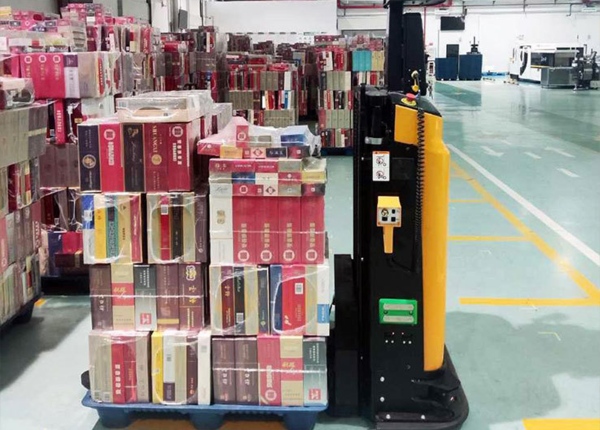
Traditional warehouse operations often place incoming pallets into storage before retrieving them for outbound orders. This is necessary for many inventory flows, but not every inbound load needs to enter a rack location.
When an inbound shipment is already associated with an outbound requirement, a cross-docking process may allow the pallet to move directly to a sorting, consolidation, or dispatch area. This can reduce storage transactions and avoid unnecessary putaway and retrieval movements.
However, direct transfer is not simply a shortcut between two locations. It requires reliable matching between incoming inventory and outbound demand, as well as clear control over the physical handover.
Not all incoming pallets should bypass storage. Define eligibility rules based on order demand, inventory status, product condition, and delivery requirements.
Potential candidates include:
Inbound pallets already allocated to confirmed outbound orders.
Goods required for urgent customer shipments.
Products arriving in quantities that match immediate outbound demand.
Loads that require sorting or consolidation before dispatch.
Loads requiring quality inspection, inventory clarification, or long-term holding should follow the appropriate warehouse process instead of being forced into direct transfer.
Cross-docking depends on accurate information. Before a pallet is assigned to a direct transfer, the warehouse system should confirm that the inbound goods match a valid outbound requirement.
The matching process should consider:
SKU and product specification.
Quantity available on the inbound pallet.
Customer or shipment allocation.
Required dispatch date or shipment window.
Product quality and inventory release status.
Pallet dimensions and handling requirements.
If one inbound pallet is intended for several outbound orders, the warehouse must define whether it will be split, consolidated, or routed through an intermediate processing station. Do not issue a direct movement based only on a product match when the quantity or allocation is still uncertain.
The layout should make the direct flow easy to understand and safe to execute. Receiving and dispatch areas need enough separation to prevent inbound and outbound traffic from interfering with each other.
A typical process may include:
Inbound unloading: Pallets are removed from the delivery vehicle and checked.
Inbound identification: The load is matched with its shipment and inventory record.
Cross-dock authorization: The system confirms that the pallet qualifies for direct transfer.
Transfer: An AGV forklift moves the pallet to the assigned outbound processing point.
Outbound verification: The receiving team confirms the load and shipment assignment.
For each zone, define the exact pickup and drop-off positions. If several pallets are expected to arrive together, ensure that the receiving area can accommodate the volume without blocking vehicle routes or manual inspection access.
The main operational risk in cross-docking is a timing mismatch. An inbound pallet may arrive before the outbound order is ready, or the outbound shipment may be delayed after the pallet has been transferred.
Plan for these situations by defining:
When an inbound load can be released for direct transfer.
How long a pallet may wait in the cross-dock area.
What happens when the outbound shipment is delayed.
Where the pallet goes if the original shipment is cancelled.
Who can authorize a change to the destination.
When a direct transfer cannot be completed within the allowed time, the warehouse should have a fallback process. This may involve a designated temporary holding position or an approved storage location. The fallback should be part of the system workflow rather than an informal operator decision.
An AGV forklift should not be dispatched simply because an inbound pallet has been registered. The pallet must be physically ready for pickup, and the destination must be prepared to receive it.
Use separate readiness conditions for the two ends of the movement:
Pickup readiness: The pallet is unloaded, identified, and positioned correctly.
Destination readiness: The outbound position is available and the shipment allocation remains valid.
These conditions reduce unnecessary vehicle waiting and prevent pallets from being delivered to occupied or unauthorized positions. If a destination becomes unavailable after task creation, the system should define whether the task is held, cancelled, or reassigned.
Cross-docking requires coordination between business decisions and physical movement. The warehouse management system should determine whether a load qualifies for direct transfer and which outbound process it belongs to. The fleet control system should execute the authorized movement.
| System or role | Main responsibility |
|---|---|
| WMS | Load matching, shipment allocation, inventory status, and destination authorization. |
| RCS | AGV task dispatch, route coordination, and movement execution. |
| WCS or connected equipment control | Equipment and workstation coordination where applicable. |
| Warehouse operator | Physical verification, exception handling, and process release when required. |
Define the messages exchanged at each stage, including task creation, load confirmation, destination confirmation, completion, and failure. The same pallet should not receive conflicting transfer instructions from multiple processes.
A cross-docking pilot should include conditions that interrupt the direct flow. Testing only the normal route will not reveal whether the warehouse can recover when the original plan changes.
Include at least these scenarios:
Inbound quantity does not match the outbound requirement.
The shipment is cancelled after the pallet has been identified.
The outbound receiving position is occupied.
The pallet requires additional inspection.
The inbound load arrives outside the planned operating window.
The AGV task is interrupted before delivery confirmation.
For each case, specify who makes the decision, which system updates the status, and where the pallet is physically allowed to wait. This keeps the material flow controlled even when direct transfer is no longer possible.
Measure whether cross-docking actually reduces handling and improves shipment preparation. Useful indicators include:
Percentage of eligible inbound pallets transferred without storage.
Time from inbound release to outbound delivery.
Number of avoided putaway and retrieval movements.
Average waiting time in cross-dock positions.
Number of loads redirected to storage after a failed direct transfer.
Percentage of transfers completed without manual intervention.
Compare results across different product groups and operating periods. A high direct-transfer rate is not automatically beneficial if it creates congestion or increases outbound errors.
Define which inbound loads qualify for direct transfer.
Confirm SKU, quantity, and shipment matching rules.
Design separate inbound and outbound handling positions.
Set pickup and destination readiness conditions.
Define fallback storage or holding procedures.
Clarify WMS, RCS, and workstation responsibilities.
Test shipment cancellations and destination changes.
Measure handling time, waiting time, and avoided movements.
Key checkpoint
A successful cross-docking process requires both sides of the transfer to be ready. Confirm inbound load eligibility and outbound destination availability before dispatching the AGV forklift. Always define a fallback route for pallets that can no longer follow the original direct-transfer plan.
Cross-docking automation is suitable for warehouses with predictable inbound-to-outbound relationships and clearly defined pallet handling processes. AGV forklift selection and workflow design should consider pallet specifications, travel distances, transfer volumes, aisle conditions, and software integration.
ZCNest Robotics provides AGV forklift and warehouse automation solutions for B2B warehouse applications. Share your inbound and outbound process details to discuss a suitable automated transfer plan.












 Chinese
 English





