


A warehouse may keep the same building, racks, and AGV fleet while its product assortment changes significantly. New SKUs, discontinued products, different packaging, and changing order patterns can affect storage allocation, pallet handling, and transport workload. These changes should be assessed before warehouse operating rules are updated.
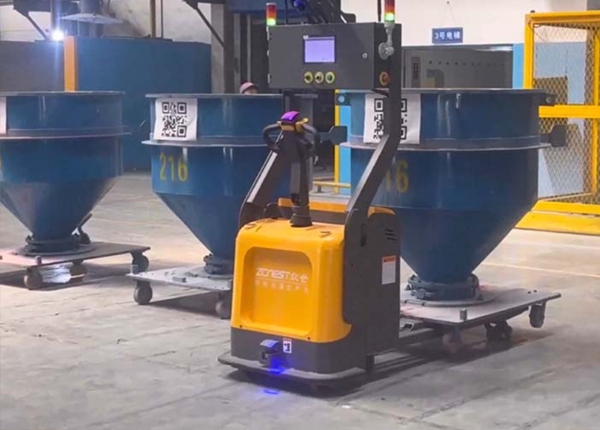
SKU assortment changes are often treated as an inventory planning issue. In an automated warehouse, they can also affect equipment compatibility, storage utilization, order picking frequency, and AGV task distribution.
For example, a new product may arrive on a pallet with different dimensions. Another SKU may have lower inventory turnover but require more storage space. A product range expansion may also increase the number of pallet movements between receiving, storage, and picking areas.
Before introducing a new product range or changing an existing assortment, warehouse managers should evaluate how the change affects the complete automated material flow.
Start with a structured list of the products being introduced, modified, or discontinued. The register should include the physical and operational characteristics needed by warehouse planning.
| Data field | Why it matters |
|---|---|
| Pallet dimensions | Determines compatibility with handling equipment and storage positions. |
| Gross load weight | Affects forklift capacity and handling safety. |
| Pallet height | Affects clearance and storage allocation. |
| Storage temperature or handling restrictions | Determines eligible storage areas and routes. |
| Expected inventory and order frequency | Influences storage demand and movement workload. |
Do not rely only on SKU names or product descriptions. Warehouse automation requires accurate physical load data, particularly when the new assortment includes packaging or pallet formats that differ from existing products.
A new SKU may use a different pallet footprint, load height, or weight distribution. Before the product enters an automated warehouse, verify that its unit load is compatible with the AGV forklift and the storage system.
Review the following:
Pallet length, width, and overall load dimensions.
Fork entry direction and available fork clearance.
Maximum gross weight and load center.
Load stability during lifting, turning, and transport.
Clearance between the load and rack structure.
Compatibility with any automated transfer stations.
For narrow-aisle and high-bay operations, even a small change in pallet dimensions may affect the permitted handling method. Confirm the actual load envelope rather than assuming that a new SKU can use the same equipment settings as an existing product.
A change in product mix can alter how much warehouse space is required. A product range with larger pallets or higher average inventory may consume more storage positions even if the total number of SKUs changes only slightly.
Evaluate the expected stock profile of each new or modified SKU:
Average and peak pallet quantity.
Expected inbound frequency.
Inventory replenishment pattern.
Required storage conditions.
Whether the product can share storage zones with other SKUs.
Compare the forecast with currently available positions. If a new product requires storage positions that are not physically or operationally suitable, the warehouse should revise its storage plan before the first shipment arrives.
SKU changes affect more than storage volume. A new product may become a high-frequency picking item, while a previously popular product may become slow-moving.
This changes the relationship between storage locations and picking operations. Review:
Expected order lines and pallet demand by SKU.
Frequency of replenishment to picking areas.
Number of pallets required for each picking cycle.
Whether multiple orders will draw from the same SKU.
Expected peak workload during promotions or seasonal periods.
If the product mix changes significantly, the original AGV task distribution may no longer reflect actual demand. Use updated order forecasts to estimate how many storage-to-picking movements will be generated and whether existing transport capacity remains sufficient.
Two warehouses with the same number of pallet movements may have very different transport requirements. The distance and frequency of movements between locations can matter as much as the total task count.
Map the expected flows for the revised SKU assortment:
Receiving to storage.
Storage to picking or order preparation.
Movement between storage zones when required.
Return of remaining stock after picking.
Transfer to outbound preparation.
Identify whether new products create concentrated demand around certain workstations or storage zones. This may affect traffic distribution and the time required to complete transport tasks.
Use actual or forecast task origins and destinations to evaluate whether the current AGV fleet can handle the revised workload. A simple increase in daily task volume does not always require more vehicles; the result depends on cycle time, task overlap, and operating hours.
Once the physical and operational impact has been assessed, update the relevant product and handling information in warehouse systems.
Depending on the system design, this may include:
SKU and pallet identification records.
Load dimensions and weight limits.
Eligible storage zones and location restrictions.
Picking and replenishment parameters.
Transport task generation rules.
Product handling restrictions and exception conditions.
Use a controlled change process. Test the new product data with representative pallet loads before allowing normal automated operations. Incorrect master data can lead to unsuitable storage assignments or failed handling tasks.
Do not assume that every SKU expansion requires additional AGV forklifts. First separate the workload change from equipment compatibility issues.
Three questions help guide the assessment:
Capacity: Can the current fleet complete the forecast number of tasks within the required operating period?
Compatibility: Can the existing vehicles safely handle the new pallet dimensions, weights, and fork-entry requirements?
Traffic: Will the revised origin-destination pattern create congestion or excessive waiting?
If the existing equipment is compatible and the workload remains within available capacity, adjustments to task rules or operating schedules may be sufficient. If the new products exceed vehicle specifications, equipment or handling-process changes may be necessary.
Before changing the entire product assortment, test representative new SKUs in a controlled operating environment. Select products that cover different pallet dimensions, weights, and movement frequencies.
During the trial, verify:
Load identification and data accuracy.
Pickup and placement performance.
Rack and equipment compatibility.
Storage allocation and retrieval results.
Task volume and actual cycle time.
System behavior when product data is incomplete or incorrect.
Record issues by SKU and pallet type. This makes it easier to identify whether a problem is caused by a specific product format or by a wider change in warehouse workload.
Prepare a complete register of new, modified, and discontinued SKUs.
Confirm pallet dimensions, load weight, and load stability.
Check compatibility with forklifts, racks, and transfer stations.
Forecast storage demand and peak inventory.
Reassess picking and replenishment frequency.
Map the revised pallet transport patterns.
Update product and handling data in warehouse systems.
Run a controlled trial using representative loads.
Key checkpoint
A SKU change is also a warehouse automation change when it affects pallet dimensions, load weight, storage demand, or transport frequency. Verify the physical load profile and forecast movement pattern before updating automated handling rules or deciding whether additional AGV capacity is required.
When your warehouse introduces new product categories or changes its SKU assortment, AGV forklift performance depends on accurate load data and realistic workload forecasts. Equipment selection should consider pallet dimensions, lifting height, aisle width, load weight, and the required WMS integration.
ZCNest Robotics provides AGV forklift and warehouse automation solutions for B2B warehouse applications. Share your product specifications and warehouse layout to discuss equipment compatibility and workflow planning.












 Chinese
 English





