


Empty pallets are essential warehouse assets, but they can occupy valuable floor space and create repeated manual handling. An automated empty-pallet process needs clear collection points, pallet-type rules, stack limits, and replenishment destinations.
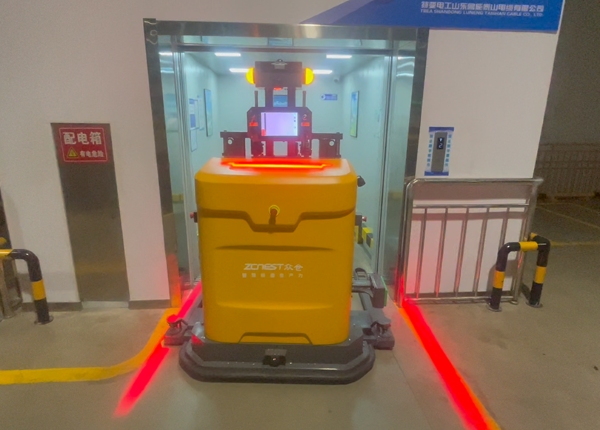
Empty pallets move through a warehouse in the opposite direction from loaded goods. They are released after picking, production supply, shipping preparation, or unloading, and then need to be collected, sorted, stored, or returned to a point where they can be reused.
When this process is managed manually, empty pallets can accumulate beside workstations, block access routes, or become difficult to locate when another operation needs them. The result is unnecessary searching, repeated handling, and inconsistent pallet availability.
AGV forklifts can automate these movements, but the warehouse must first establish a controlled pallet circulation process. The system needs to know which pallets are reusable, where they should be collected, and which destination requires them next.
Empty pallets are not always interchangeable. Warehouses may use different dimensions, materials, load ratings, entry directions, or pallet designs for different products and storage systems.
Define the categories that matter to the operation, such as:
Standard wooden pallets.
Plastic pallets with specific dimensions.
Reusable export or transport pallets.
Special pallets or load carriers.
Damaged pallets requiring inspection or repair.
Pallets that are no longer approved for warehouse use.
Each category should have a clear handling rule. A damaged pallet should not be mixed into a reusable stack, and a pallet designed for one storage or handling process should not be sent to an incompatible destination.
Collection points should be placed where empty pallets are generated. Examples include picking areas, packing stations, outbound preparation areas, and designated unloading positions.
Each point should have a defined capacity and an agreed method for signaling that pallets are ready for collection. If a collection position is full, the process should prevent additional pallets from being placed there or provide an approved overflow destination.
Collection points also need sufficient clearance for AGV forklift approach and departure. Check fork entry direction, pallet orientation, stack height, turning space, and pedestrian access. A collection point that works for a manual pallet truck may not provide enough space for an automated forklift.
Stacking empty pallets can reduce the floor area required for temporary storage, but the process must account for pallet design, stability, and the forklift's handling capability.
Set an approved maximum stack quantity or height for each pallet type. The system should not release a stacking task when the destination has reached its permitted limit. If different pallet types cannot be safely stacked together, assign separate storage positions.
For automated handling, validate whether the selected AGV forklift can pick up and place the intended stack reliably. The required fork height, load center, pallet condition, and approach accuracy should be tested with actual pallet samples.
A designated storage zone makes empty pallets easier to count, identify, and retrieve. It should be located close enough to the main consumption areas to avoid excessive travel, while remaining outside critical traffic paths.
For a warehouse with high-bay storage, assess whether empty pallets should use rack locations or dedicated floor positions. The decision depends on pallet type, stackability, handling frequency, storage height, and the forklift configuration.
Do not use an arbitrary empty floor area as a permanent storage destination. Uncontrolled accumulation makes it difficult to maintain accurate stock records and can interfere with vehicle movement or emergency access.
Empty pallets are often needed at specific locations before another warehouse operation can begin. A packing or picking station may stop working if the required pallet type is unavailable.
The WMS or warehouse control process should monitor the available quantity at key consumption points. When the quantity reaches a defined threshold, it can request replenishment from the empty-pallet storage zone.
Set separate minimum quantities for different pallet types and consumption areas. A high-volume packing station may require more frequent replenishment than a low-volume location. Replenishment rules should also consider the time needed for the AGV forklift to complete the route.
Empty-pallet tasks often have lower urgency than loaded-pallet movements, but they can become critical when a downstream workstation is close to running out of pallets.
Dispatch priorities should reflect the operational impact rather than treating every empty-pallet task as identical. A request to replenish a station with no remaining pallets may need higher priority than collecting an empty pallet from an area with sufficient capacity.
The RCS should also consider vehicle availability, route congestion, pickup-point status, and destination capacity. If a destination is full or inaccessible, the system should select an approved alternative or hold the task for review.
Empty-pallet inventory is often overlooked because the pallets do not contain saleable goods. However, inaccurate pallet counts can disrupt warehouse operations and create unnecessary purchases of reusable packaging.
Track pallet type, quantity, location, condition, and movement status. If a pallet is removed from circulation for repair or disposal, update its status so that it cannot be assigned to a normal replenishment task.
Where the system does not identify every individual pallet, it may manage quantities by pallet type and storage location. The chosen method should match the level of traceability required by the business.
Before automating empty-pallet movements, confirm:
Pallet types and condition categories are clearly defined.
Collection points are positioned and marked.
Stacking limits and permitted pallet combinations are documented.
Storage positions have defined capacity limits.
Replenishment thresholds reflect actual station demand.
Dispatch priorities account for downstream pallet shortages.
Damaged pallets are excluded from normal circulation.
WMS and RCS records reflect completed pallet movements.
Key checkpoint: Empty-pallet automation should be designed as a circulation loop, not a series of isolated collection tasks. Define where pallets are released, where they are stored, and where they are needed before configuring AGV dispatch.
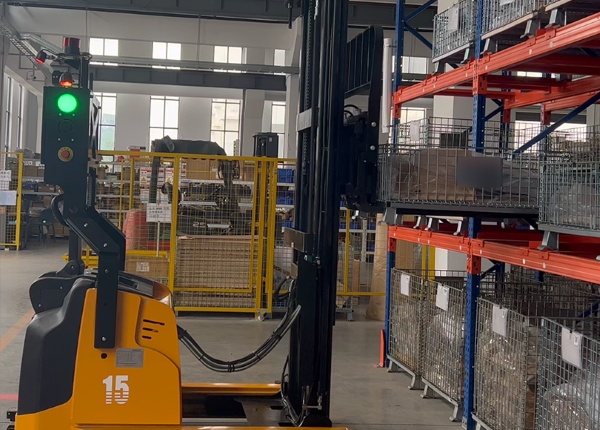
Evaluate the pallet dimensions, stack height, maximum load weight, fork entry direction, and required travel routes. If the warehouse uses several pallet types, test the vehicle with each representative type rather than relying on a single standard pallet.
Also assess whether the vehicle needs to enter narrow aisles, access high-bay storage, or operate in shared areas with people and manual equipment. Navigation, positioning accuracy, safety functions, and fleet-control integration should be considered alongside lifting capacity.
A site assessment should map the number of empty pallets generated per shift, collection frequency, replenishment demand, average travel distance, and the time required to pick up or place a stack. These operating figures help determine whether the proposed fleet can maintain pallet availability without interfering with loaded-pallet operations.












 Chinese
 English





