


An order can be cancelled after a pallet has already left its storage location. The warehouse must then decide whether to return the pallet, redirect it to another order, or hold it for verification. Automated transport requires clear rules for every outcome.
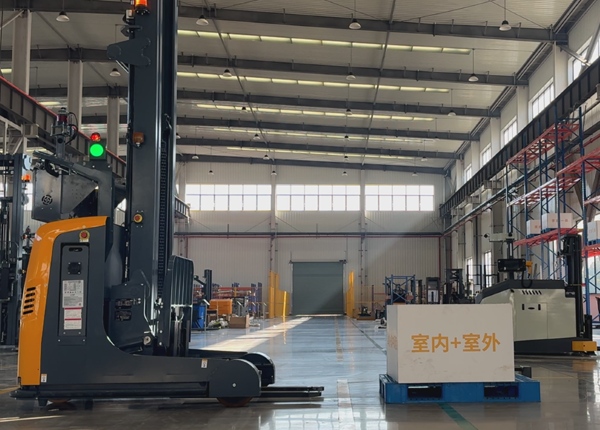
Order cancellations do not always happen before warehouse operations begin. A customer may change the order, a shipment may be postponed, or a sales system may release a cancellation after the warehouse has already instructed an AGV forklift to retrieve the pallet.
At that moment, the pallet may be in storage, reserved for picking, waiting at a transfer station, or already on a vehicle. Treating every cancellation as a simple task deletion can create incorrect inventory records and leave physical pallets without an authorized destination.
For automated warehouses, the cancellation process should connect the order status, transport task status, pallet location, and inventory allocation. The system must decide what happens next based on the actual operating state.
The correct response depends on how far the AGV forklift has progressed. Before cancelling or changing a task, the WMS and RCS should establish the current status.
Task not yet accepted: The transport request can normally be withdrawn before a vehicle is assigned.
Vehicle assigned but pickup not started: The task may be cancelled or released according to the dispatch rules.
Vehicle approaching the pickup point: The system needs to confirm whether the vehicle can safely stop or receive a revised instruction.
Pallet already picked up: A new destination or controlled return task is required.
Pallet delivered to a picking station: The warehouse must determine whether the pallet can be returned directly or needs a status check first.
These states should be based on confirmed system events rather than assumptions. For example, a task marked as incomplete does not necessarily mean the pallet is still in its original rack position.
An order cancellation is a business decision. A transport cancellation is an instruction to stop or change a physical movement. They are related, but they should not be treated as the same transaction.
When an order is cancelled, the WMS should update the order and inventory allocation. It should then evaluate any active transport tasks associated with the order and send the appropriate instruction to the RCS.
If the vehicle has already picked up the pallet, simply deleting the original task can leave the vehicle carrying a load without a valid destination. The system should instead create or authorize a controlled next action.
Keep the original task history so that the warehouse can identify why the movement was interrupted and what happened to the pallet afterward.
Once the order is cancelled, the warehouse needs a destination decision. Three common options are available.
Return to storage: If the pallet remains eligible for normal inventory, the WMS can assign an approved storage location. The destination should be checked for availability and compatibility before the AGV forklift receives the task.
Redirect to another order: If another valid order requires the same inventory, the warehouse may reallocate the pallet. The system must confirm that the product, quantity, batch, and other business restrictions permit the new allocation.
Move to a temporary holding area: If the next destination is not yet known, the pallet can be moved to an approved holding position. This is preferable to leaving it at an uncontrolled location or blocking a picking station.
The warehouse should define which roles can authorize each option. A transport system should not independently decide that a cancelled order's inventory can be allocated to another customer.
Order cancellation can affect several inventory records at once. The reserved quantity may need to be released, the pallet's physical location may need to be updated, and the available quantity may need to be recalculated.
The WMS should avoid releasing inventory as available while the pallet is still being transported or remains at an unverified location. Otherwise, another order may reserve stock that has not yet returned to an accessible position.
Use a controlled sequence to update the order allocation, pallet movement status, physical location, and final inventory availability. The exact sequence depends on the warehouse system, but each change should be traceable to the original order and transport task.
If a pallet has reached a picking or transfer station, the warehouse may need to check whether any products have already been removed, whether the packaging has been changed, or whether the pallet has been assigned to another process.
Do not automatically return a pallet to high-bay storage just because its original order has been cancelled. Confirm that its quantity, condition, and storage eligibility remain valid.
If picking has already started, the warehouse should reconcile the picked quantity and remaining pallet quantity before creating a return task. If the load has been opened or damaged, it may need repacking or inspection before storage.
The WMS should manage the order and inventory decision, while the RCS controls the vehicle's physical task. The interface needs to communicate cancellation and redirection instructions without creating conflicting task states.
Define the message sequence for:
Order cancellation notification.
Transport cancellation request.
Cancellation acceptance or rejection.
Vehicle stop or task interruption confirmation.
New destination or return task creation.
Pickup and delivery confirmation.
Final inventory and order status update.
Messages should reference the original order ID, pallet ID, and transport task ID. If the communication response is delayed, the WMS should check the existing task state before submitting another instruction.
Before deploying the cancellation workflow, confirm:
Order status and transport task status are managed separately.
The system can identify the pallet's actual movement stage.
Tasks are not deleted while a vehicle may still be carrying a pallet.
Return, redirection, and holding destinations are defined.
Inventory is not released before the pallet's status is verified.
Partially picked or repacked pallets receive additional checks.
WMS and RCS messages reference the same task and pallet IDs.
Manual cancellation and recovery permissions are controlled.
Key checkpoint: Cancelling an order must not leave an AGV forklift task without a valid next action. Confirm the pallet's physical location and movement status first, then authorize its return, redirection, or temporary holding destination.
During commissioning, test cancellations at different stages rather than testing only tasks that have not yet started. Include cases where the vehicle has been assigned, is approaching the pickup point, has picked up the pallet, or has already delivered it to a station.
Also test delayed interface responses, repeated cancellation messages, and attempts to reallocate inventory while the original pallet movement remains active. Verify that the WMS and RCS maintain consistent records and that the pallet always has a valid physical destination.
For high-bay warehouses, include a return-to-storage scenario in which the original location is no longer available. The system should select an eligible alternative or move the pallet to an approved holding area rather than attempting to place it in an occupied rack position.





 Chinese
 English