


Bonded warehouses handle goods under specific customs supervision and inventory-control requirements. Automating pallet transportation in these facilities involves more than selecting a forklift AGV and defining travel routes. The system must respect warehouse zone permissions, maintain accurate inventory movement records, and ensure that each pallet follows an authorized process. These requirements should be considered during the initial system design.
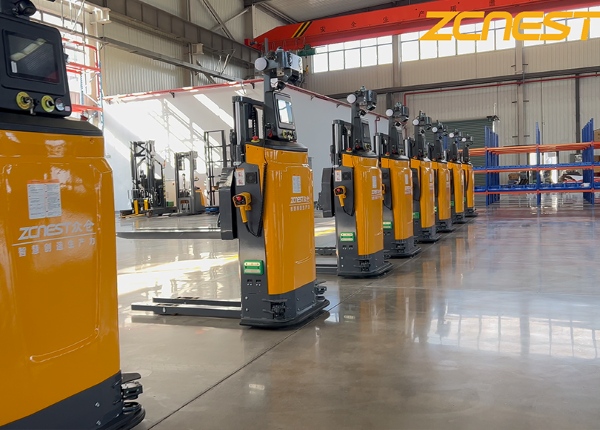
A bonded warehouse may contain several physically separate areas with different operational purposes. Examples include inbound receiving, customs-controlled storage, inspection areas, approved release staging, and outbound dispatch.
The warehouse should document the relationship between each zone before AGV routes are configured. A route that is physically possible may still be inappropriate for a particular inventory status or movement instruction.
Inbound inspection and receiving areas.
Storage zones for goods under customs supervision.
Areas for goods awaiting documentation or inspection.
Authorized release and dispatch staging areas.
Separate zones for returned, rejected, or restricted inventory.
The final zone model should reflect the site's actual customs procedures and approved operating arrangements. AGV software supports the physical execution of those rules; it does not replace customs authorization or legal compliance procedures.
A pallet's physical location is only one part of its warehouse record. Its customs status, inspection status, release status, and permitted destination may also determine whether it can move.
The WMS should evaluate the inventory record before issuing a movement task. The AGV control system should receive a task that already reflects the approved source and destination.
For example, a pallet awaiting inspection may be allowed to move from receiving to a designated inspection area but not to an outbound staging zone. The system should enforce this distinction through configured task permissions and destination validation.
AGV routes should be designed with the warehouse's access-control model in mind. Some vehicles may serve several storage areas, while others may be assigned to specific operational zones.
A zone-based configuration can define:
Which vehicle groups can enter each zone.
Which transfer points connect adjacent zones.
Which destinations are valid for each inventory category.
Whether a transfer requires an additional system authorization.
How the system responds when a route or destination becomes unavailable.
Where a physical checkpoint, access door, or controlled transfer point exists, its signals and operating sequence should be incorporated into the project design. Physical access control and software permissions should be evaluated together.
For controlled inventory, a completed AGV task should create a reliable movement record. The record should identify what moved, where it moved from, where it moved to, and which system transaction authorized the movement.
Depending on the warehouse's information requirements, relevant data may include:
Pallet or handling-unit identification.
Product code and batch or lot number.
Source and destination location.
Movement task ID and related WMS transaction.
Task creation, assignment, start, and completion timestamps.
Exception status and the subsequent resolution record.
The WMS should reconcile completed physical movements with inventory records. If a task is interrupted or only partially completed, the system should retain its status rather than incorrectly recording the intended destination as the actual location.
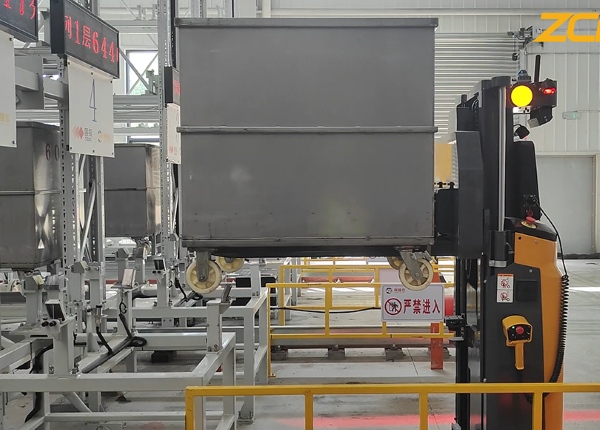
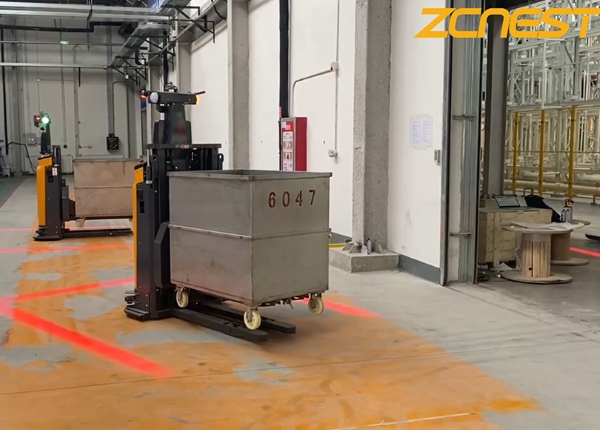
The connection between two warehouse zones can be a critical part of the automation layout. A transfer point may be located near a security checkpoint, inspection station, access-controlled door, or shared staging area.
Avoid designing these points as simple map coordinates without considering the physical operating process. The project team should confirm whether the AGV can approach, deposit, and retrieve the pallet without interfering with personnel, inspection activities, or other vehicles.
If an authorized employee must approve a transfer, the software workflow should make that approval step explicit. The vehicle should receive the next movement instruction only after the required process condition has been satisfied.
A bonded warehouse automation project should test both permitted and prohibited movement scenarios. Testing only successful pallet transfers will not reveal whether the software correctly handles inventory restrictions.
Move an eligible pallet from receiving to its assigned storage zone.
Attempt to route a restricted pallet to an unauthorized destination and confirm that the task is rejected.
Change an inventory status after a task has been created.
Interrupt a task at a controlled transfer point and verify the recorded location.
Test loss of communication between the WMS and fleet control system.
Verify that completed movements are reconciled with inventory records.
Review whether operational reports provide the information required by warehouse procedures.
Warehouse zones and permitted transfers are documented.
Inventory statuses are defined in the WMS.
Movement permissions are linked to inventory and destination rules.
Vehicle access and route restrictions are configured.
Controlled transfer points are included in the layout.
Every completed movement can be traced to a system transaction.
Restricted movements and interrupted tasks are included in acceptance testing.
After the zone and software rules are defined, select the AGV forklift based on the physical requirements of each movement. Evaluate maximum load, pallet dimensions, rack height, aisle width, travel distance, transfer-point geometry, and daily throughput.
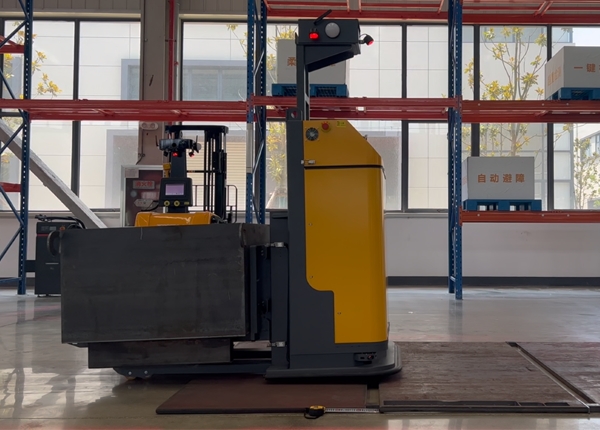
For high-bay warehouses with narrow aisles, an omnidirectional VNA forklift may help automate pallet storage and retrieval. ZCNest provides customized AGV forklift and AMR solutions, including software interfaces designed around project-specific WMS and warehouse control requirements.
The automation design should be reviewed with the warehouse operator and relevant compliance stakeholders before deployment.
Share your warehouse zoning plan, pallet specifications, movement procedures, and WMS requirements. ZCNest can help evaluate the vehicle configuration and controlled-zone material flow.












 Chinese
 English





