


In many warehouses, a pallet must be weighed before it can be stored, transferred, or dispatched. When AGV forklifts automate these movements, the weighing process becomes part of the material-handling workflow. The robot must position the load correctly, the weighing equipment must return a usable result, and the warehouse software must decide whether the pallet can continue to its next destination.
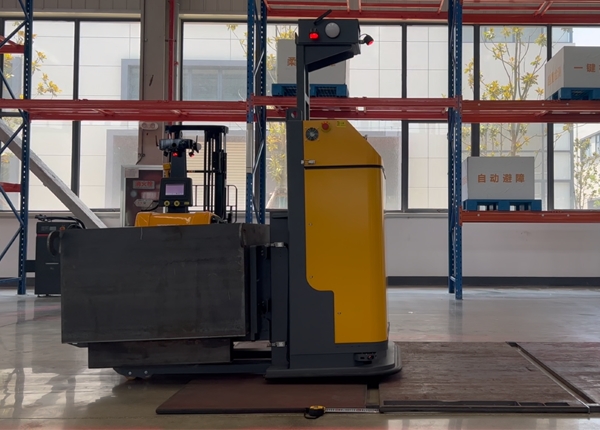
A weighing station can serve different purposes depending on the warehouse process. Some facilities weigh inbound pallets to verify supplier declarations. Others check outbound shipments, calculate freight information, or confirm that a load falls within an equipment or storage specification.
The location of the weighing station should be determined by the business process rather than by the convenience of placing a scale near an available charging point or aisle.
Inbound verification: Weigh the pallet after receiving and identification.
Pre-storage validation: Confirm weight before assigning a rack location.
Process transfer: Weigh loads moving between warehouse areas.
Outbound verification: Capture shipment weight before loading or dispatch.
Each weighing point should have a clearly defined upstream source and downstream destination.
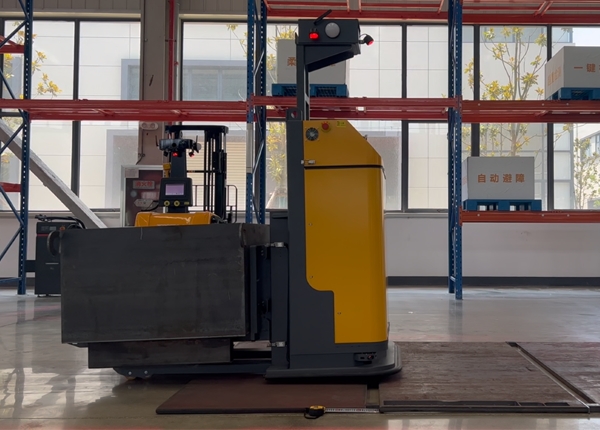
Not every industrial scale is suitable for automated pallet handling. A conventional floor scale may require an operator to position the pallet manually. An automated station may instead use a defined transfer platform, roller conveyor, lifting mechanism, or integrated weighing device.
Before selecting the scale, confirm the following physical details:
Maximum gross load and pallet weight range.
Platform dimensions and usable loading area.
Platform height and AGV fork access requirements.
Required positioning tolerance and approach direction.
Whether the pallet must remain stationary during measurement.
Available communication interfaces for measurement results.
Required maintenance and calibration access.
If the AGV needs to deposit a pallet onto a scale and later retrieve it, the station must provide repeatable load transfer and a clearly defined pickup position.
The control sequence should specify what each system does. The WMS manages the inventory transaction, the fleet management system dispatches the AGV, and the weighing equipment supplies the measurement result.
The WMS creates a weighing task for a specific pallet ID.
The fleet system assigns an AGV and sends it to the pickup location.
The AGV transports the pallet to the designated weighing station.
The AGV positions the load according to the station interface requirements.
The weighing system confirms that the measurement is ready and returns the result.
The control software associates the measurement with the correct pallet ID.
The WMS evaluates the result and releases the next movement instruction.
The process should not depend on an operator manually matching a weight record to a pallet after the movement has been completed.
A weighing station may return a value outside the expected range, fail to stabilize, or lose communication. The AGV system needs a defined response for each condition.
Weight within the configured range: Report the result and allow the WMS to release the next task.
Weight outside the expected range: Hold the normal workflow and request the designated exception process.
No stable reading: Keep the pallet associated with the weighing task until the station reports a valid measurement or the process is escalated.
Communication failure: Prevent an unverified result from being treated as a completed weighing transaction.
Missing pallet identification: Do not attach the measurement to an unidentified inventory record.
The correct response depends on the warehouse's quality and operating procedures. A weight mismatch should not automatically be treated as proof of a particular defect.
Even when AGV transportation is fast, a single weighing station can limit throughput if measurement cycles are slow or multiple vehicles arrive at the same time.
Calculate station capacity using the complete cycle rather than the scale's advertised measurement speed. Include vehicle approach, positioning, load transfer, stabilization, measurement, data exchange, and pallet removal.
For example, a scale that measures a pallet in a few seconds may still have a much longer total cycle if the AGV needs to perform several alignment movements. A queue buffer or a second weighing position may be justified when peak traffic exceeds the station's practical capacity.
Acceptance testing should verify both physical positioning and data accuracy. Test pallets should cover different weights, pallet dimensions, load distributions, and operating conditions.
Confirm that the AGV can access the station from the planned direction.
Verify that the pallet is positioned within the scale's specified measurement area.
Check that the result is linked to the correct pallet identifier.
Test measurements outside the configured acceptance range.
Simulate communication interruption and recovery.
Verify that incomplete weighing tasks cannot be recorded as successful.
Measure actual station throughput during peak task periods.
Minimum, average, and maximum pallet gross weight.
Pallet dimensions and load distribution.
Scale platform dimensions and height.
Required weighing accuracy and process tolerance.
Daily weighing volume and peak hourly demand.
Scale communication protocol and available signals.
WMS task and measurement data requirements.
The correct AGV configuration depends on how pallets enter and leave the weighing station. Fork-type AGVs may be appropriate when the scale provides a compatible transfer position. Other projects may require a customized transfer interface or coordination with conveyor equipment.
ZCNest develops AGV forklift and AMR solutions with customized hardware and software interfaces. Project evaluation can include pallet specifications, station geometry, traffic flow, control signals, and WMS integration requirements.
Send us your pallet weight range, scale layout, transfer method, and software interface requirements. We can help assess the AGV configuration and automated weighing workflow.












 Chinese
 English





