Chinese
 English


No Racking Demolition, Zero Downtime: How Legacy Warehouses Can Cost-Effectively Deploy Autonomous Forklifts
Confronted with rising order volumes and tightening labor markets, operators of legacy warehouses built 5 to 10+ years ago are eager to automate. However, the prospect of "cutting floor slabs for magnetic tape, tearing down existing racking, and halting operations for three months" deters most leadership teams. Today, thanks to infrastructure-free navigation technologies, brownfield warehouses can achieve phased automation with zero racking demolition and zero operational downtime.
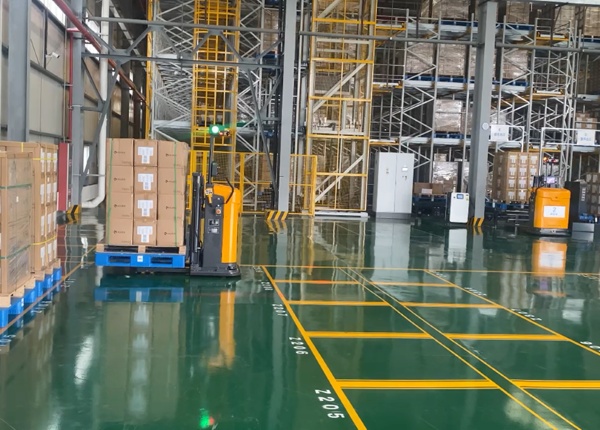
1. Why Traditional Automation Retrofits Fail in Legacy Warehouses
Legacy AGV systems relying on magnetic strips, floor QR codes, or wall-mounted reflector pillars require invasive floor trenching or high-bay structural mounting. Beyond high civil engineering costs, active shipping zones must be shut down during installation—an unacceptable disruption for live distribution centers. Furthermore, older facilities frequently feature uneven floor slabs, slight rack upright deflection, and non-standard aisle widths.
2. Infrastructure-Free Navigation: Deploying While Operations Run
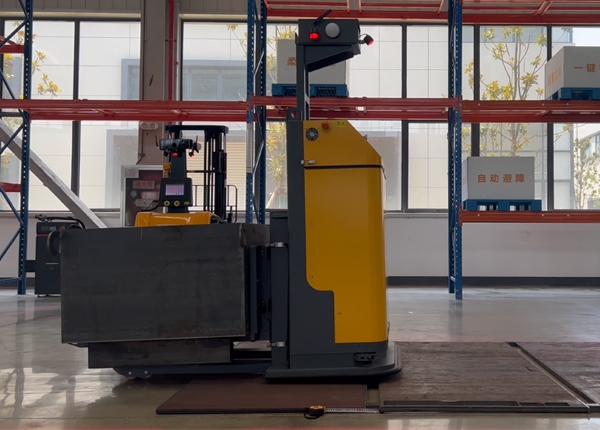
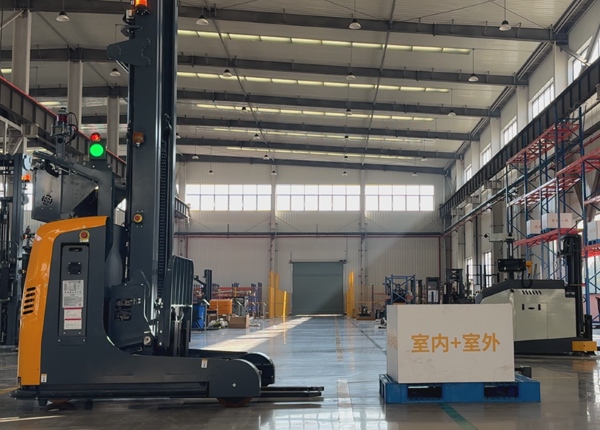
Next-generation autonomous forklifts powered by 3D LiDAR SLAM navigation eliminate physical floor markers and reflectors entirely. Vehicles localize and map autonomously by scanning overhead roof trusses, racking beams, and structural columns:
Zero Civil Rework: No cutting into epoxy or concrete floors; a newly delivered unit completes environmental mapping and path setup within hours.
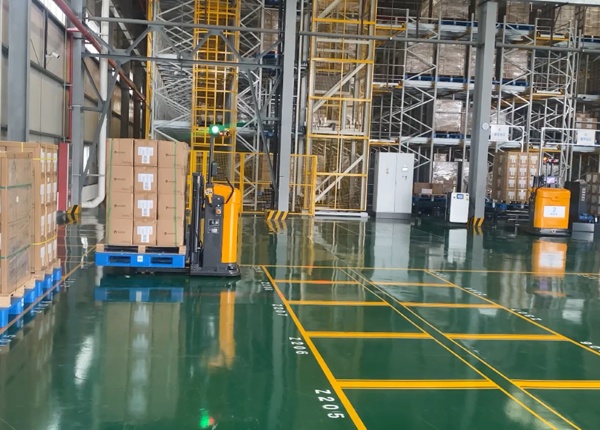
Retain Existing Racking & Pallets: Vehicles work directly with existing selective or drive-in racking and standard wood/plastic pallets—no carrier replacement required.
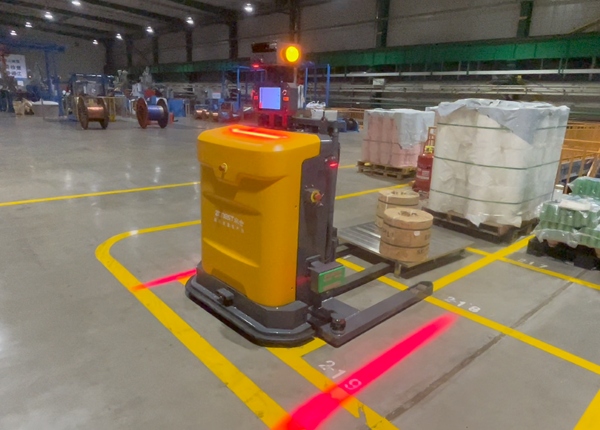
Phased, Low-Risk Rollout: Start with 3 to 5 autonomous forklifts on your highest-throughput main transport corridor, validate ROI, and scale fleet size gradually without interrupting existing manual forklift operations.
Planning a Zero-Downtime Upgrade for an Existing Warehouse?
Send us your current warehouse layout and racking dimensions for a rapid retrofit feasibility assessment.
3. Four Site Survey Checkpoints for Legacy Warehouse Retrofits
Before launching a brownfield deployment, engineering teams only need to verify four core site conditions: clear minimum aisle widths relative to compact forklift turning radii; floor slab integrity and ramp gradients; seamless Wi-Fi roaming coverage across storage zones; and upper beam levelness on existing racking.
4. Agile Retrofit Partner: ZCNEST Robotics' Flexible Deployment Solutions
For brownfield warehouses seeking fast payback with minimal facility modification, ZCNEST Robotics delivers highly adaptable automation solutions. ZCNEST's narrow-aisle reach autonomous forklifts, stacker forklifts, and latent AMRs utilize advanced natural-feature SLAM navigation and compact chassis designs—enabling immediate integration with existing racking structures. Moreover, ZCNEST systems support safe mixed-fleet operations alongside manual forklifts, allowing legacy facilities to transition smoothly into smart warehouses without interrupting daily fulfillment.