Chinese
 English


Is Investing in Autonomous Forklifts Worth It? A Practical ROI Calculation Guide for Enterprise Decision-Makers
When presenting an autonomous forklift budget proposal to the board of directors or CFO, technical specs alone rarely secure final approval. Executive decision-makers focus on one bottom-line question: "How fast will this capital investment pay for itself, and what are the long-term operational savings?" Building a transparent, data-backed ROI (Return on Investment) model is essential to accelerating project sign-off.
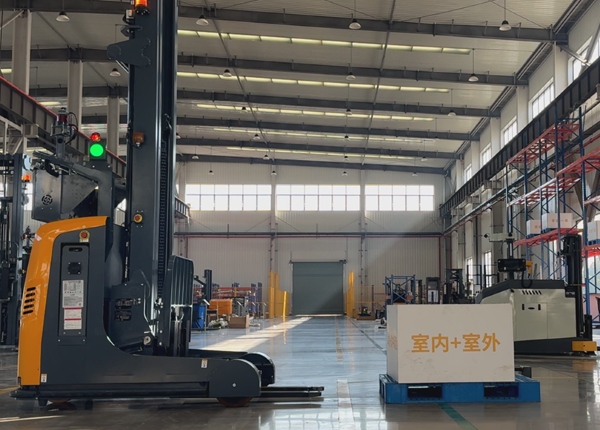
1. Hidden vs. Visible Costs: Lifecycle Comparison of Manual vs. Autonomous Forklifts
Many financial evaluations mistakenly compare a single operator's base wage against the purchase price of an autonomous forklift—overlooking substantial hidden operating expenses:
Total Cost of Manual Forklift Operations: Beyond base hourly wages, companies absorb payroll taxes, benefits, overtime premiums, recruiting/training overhead, turnover-related productivity dips, damaged goods, racking repair bills, and workplace injury liability. Across two- or three-shift operations, fully burdened labor costs per forklift seat frequently exceed $50,000 to $100,000+ annually in North America and Europe.
Total Cost of Autonomous Forklifts: Comprises upfront hardware CapEx, RCS software/WMS integration, and minimal annual electricity and preventive maintenance costs. A single autonomous forklift operates 24/7, routinely replacing 1.5 to 2 manual operator shifts.
2. Four Core Variables for Calculating Autonomous Forklift ROI
Finance and operations teams can use this straightforward framework for rapid feasibility modeling:
Annual Direct Labor Savings (A): Number of replaced operator shifts × fully burdened annual cost per operator.
Annual Indirect Loss Reduction (B): Avoided product damage claims + reduced racking/equipment repairs + warehouse lease savings from narrower aisles.
Annual Operating & Maintenance Cost (C): Electricity consumption + routine wear-part maintenance (typically 3%–5% of hardware CapEx).
Static Payback Period (Years): Total Project Investment (Hardware + Software + Commissioning) ÷ (A + B − C).
Need a Customized Budget & Payback Estimate for Your Facility?
Share your shift count, pallet throughput, and target workflow with our team to receive a tailored budgetary quote and ROI projection.
Request Budgetary Quote & ROI Analysis
3. Which Operations Achieve the Fastest Payback? (Typically 12–24 Months)
Industry deployment benchmarks show that three operational profiles consistently achieve full payback within 12 to 24 months: multi-shift (2- or 3-shift) manufacturing plants where high utilization multiplies labor savings; long-distance, fixed-route transfers between workshops or storage zones; and regions facing acute forklift operator shortages or high labor rates.
4. Maximizing ROI by Partnering Directly with R&D-Driven OEMs
Controlling initial CapEx is the most direct lever to shorten payback timelines. Bypassing multi-tier trading markups to work directly with an R&D-driven manufacturer substantially reduces both hardware and integration costs. ZCNEST Robotics—an original manufacturer specializing in autonomous forklifts, latent AMRs, and heavy-duty AMRs—combines scaled domestic component integration with standardized project execution, delivering high-reliability automation at a compelling total cost of ownership.