


When a U.S. warehouse imports autonomous forklifts or AGVs from China, equipment installation is only one part of the deployment. The local team also needs to know how to operate the vehicles, respond to alarms, perform basic maintenance, and recognize situations that require supplier engineering support.
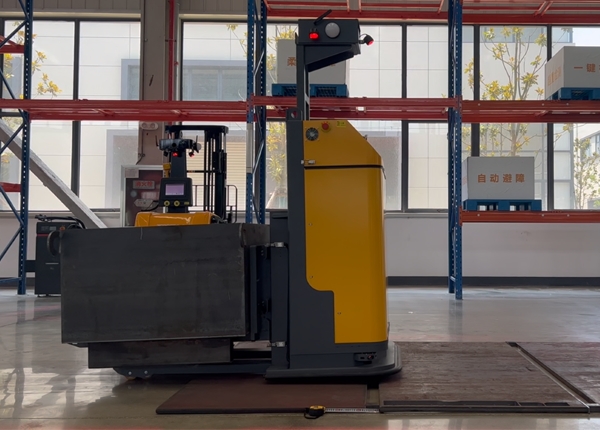
For this reason, on-site training should be defined before the equipment is shipped. The training scope, number of training days, maintenance content, documentation, operator qualification, and local safety requirements should all be included in the project plan rather than left as informal support after installation.
A professional Chinese AGV manufacturer may divide on-site training into several modules. The exact curriculum depends on the vehicle type, fleet management software, warehouse layout, and customer's maintenance capabilities.
AGV operating procedures
Starting, stopping, charging, and parking procedures
Manual or assisted driving procedures, where supported
Loading and unloading pallets
Correct pallet positioning and fork entry
Fleet management software operation
Task assignment and mission monitoring
Alarm and fault-code interpretation
Emergency-stop procedures
Recovery procedures after an abnormal stop
Battery and charging procedures
Daily inspection and preventive maintenance
Basic sensor and navigation checks
Escalation procedures for faults that require engineering support
For a high-bay or narrow-aisle warehouse, training should also include the actual operating environment. Operators should understand rack clearances, pallet presentation, staging areas, restricted zones, charging locations, pedestrian areas, and the operating rules established for the specific site.
There is no universal number of training days for Chinese AGV projects. A simple deployment with a small fleet may require less on-site training than a large warehouse with multiple vehicle types, complex traffic rules, WMS integration, charging stations, elevators, or high-bay operations.
A practical project plan may allocate several days for hands-on training during installation and commissioning. The important point is not simply the number of days. The training should continue until the designated personnel can demonstrate the required procedures under actual warehouse conditions.
For example, a deployment schedule could include:
Initial system and equipment introduction
Hands-on operator training
Maintenance and troubleshooting training
Production simulation with representative pallets
Emergency and abnormal-condition exercises
Operator competency verification
Final handover and documentation review
For procurement purposes, it is better to specify the required training hours and learning objectives in the contract instead of simply writing "on-site training included."
It can, but this should be explicitly defined in the technical scope. Basic operator training and maintenance technician training are two different levels of instruction.
Maintenance personnel may need training on areas such as:
Battery and charging-system checks
Fuse and circuit-protection inspection
24 VDC control circuits
Emergency-stop circuit diagnosis
Sensor status checks
Proximity and position sensor troubleshooting
Safety scanner fault indications
Motor or drive fault codes
Controller diagnostic information
Communication faults between vehicle and fleet system
Basic connector and cable inspection
Fault log collection and escalation
However, the supplier should clearly define what technicians are permitted to troubleshoot themselves. High-voltage battery systems, safety circuits, motor controllers, electrical cabinets, and other hazardous systems may require additional qualifications and procedures.
A good training program therefore separates three levels of troubleshooting: operator-level recovery, maintenance-level diagnosis, and manufacturer-level engineering intervention. This prevents warehouse personnel from attempting repairs that should be performed by qualified technical personnel.
A Chinese manufacturer may provide a training certificate, course-completion document, or manufacturer-issued operator qualification record. However, a manufacturer's certificate should not automatically be treated as a substitute for any operator training or qualification requirements that apply to the employer and workplace.
This distinction is important for U.S. warehouses. The manufacturer can document that an employee completed the supplier's equipment training, but the warehouse employer may still have its own responsibility for evaluating operator competence and implementing the required workplace training and authorization process.
The procurement contract should therefore specify what document will be provided after training. For example:
Training attendance record
Training completion certificate
Operator competency checklist
Maintenance technician training record
Training test results, if applicable
Training date and trainer information
Equipment model and software version covered by the training
This documentation is particularly useful when the warehouse has employee turnover and needs to train new operators after the original commissioning team has left.
This should never be assumed simply because the equipment is being deployed in the United States. Chinese manufacturers may provide manuals, operating instructions, maintenance procedures, risk information, and training materials, but the customer should verify that the final training package addresses the requirements of the actual installation site.
Local safety requirements can affect topics such as pedestrian interaction, operator authorization, emergency procedures, lockout/tagout practices, battery charging, electrical work, machine guarding, warehouse traffic control, and site-specific emergency response.
The manufacturer should provide the technical documentation for the vehicle and system, while the warehouse operator, employer, integrator, and local safety professionals may need to adapt site procedures to the applicable U.S. requirements.
For this reason, the most useful question to ask a Chinese supplier is not simply, "Is your training manual compliant with U.S. regulations?" A better question is:
"Which training documents are supplied by the manufacturer, which requirements are site-specific, and who is responsible for reviewing and adapting the final operating procedures for our facility?"
Before placing an order, the customer should create a training specification rather than relying on a general statement that training is included.
| Training Item | What to Specify |
|---|---|
| On-site training | Number of days, hours, participants, and location |
| Operator training | Operating procedures, pallet handling, alarms, charging, and emergency procedures |
| Maintenance training | Permitted troubleshooting scope, diagnostic tools, sensors, controllers, and spare parts |
| Software training | Fleet management, task monitoring, alarms, reports, user permissions, and recovery procedures |
| Documentation | Manuals, troubleshooting guides, electrical drawings, training slides, and software documentation |
| Certificate | Certificate type, issuing organization, trainee records, and validity if applicable |
| Local requirements | Responsibilities for adapting site procedures and safety training |
| Refresher training | Remote or on-site training available after commissioning |
Training should not be treated as a classroom activity only. During FAT and SAT, the supplier and customer can verify whether operators and maintenance personnel can perform representative tasks correctly.
An operator competency test could include starting the vehicle, accepting a mission, handling a representative pallet, responding to an alarm, placing the pallet into the correct location, returning the vehicle to a designated area, and performing the required emergency procedure.
A maintenance test could include reading diagnostic information, identifying a sensor fault, checking a basic electrical connection, collecting fault logs, restarting the appropriate subsystem, and determining when the problem must be escalated to the manufacturer.
The objective is not to turn warehouse employees into AGV engineers. The objective is to establish a clear boundary between what the local team can safely handle and what requires manufacturer intervention.
How many days of on-site training are included in the quotation?
How many trainers will be provided?
How many operators and maintenance technicians can attend?
Is training performed on the customer's actual equipment?
Does the training include hands-on fault recovery?
What level of electrical troubleshooting can the customer's maintenance team perform?
Are electrical drawings and diagnostic procedures provided?
Is fleet-management software training included?
Will the manufacturer issue a training or completion certificate?
What information will appear on the certificate?
Can the training materials be provided in English?
How are software-version changes reflected in training documentation?
Who is responsible for adapting site-specific safety procedures?
Is refresher training available after commissioning?
What remote technical support is available after the Chinese engineers leave?
For an imported AGV project, the strongest training package is not necessarily the one offering the largest number of training days. It is the one that gives operators, maintenance technicians, supervisors, and IT personnel clearly defined responsibilities, practical hands-on experience, usable documentation, and a reliable escalation path when the warehouse encounters a problem that cannot be solved locally.
FREE ENGINEERING SUPPORT Stop Gambling on Generic Platforms. Get an AGV/AMR Tailored to Your Warehouse.Buying automated guided vehicles involves complex safety standards (CE/ANSI), navigation setups (Laser SLAM), and ERP system integration. Don't risk your factory safety with middle-men. ✓ 100% Direct Factory: Customized payload up to 5 Tons. ✓ Free CAD Simulation: Send us your layout, and our engineers will simulate the optimal AGV routes. ✓ Global Support: Overseas installation guidance & local maintenance partners. |





 Chinese
 English