


Outdoor pallet handling is one of the more demanding applications for an autonomous forklift. A warehouse AGV normally operates on a controlled concrete floor with predictable lighting and stable environmental conditions. An outdoor counterbalanced AGV unloading a flatbed truck has to deal with asphalt, changing sunlight, rain, uneven surfaces, trailer movement, pallet position variation, and much less predictable surroundings.
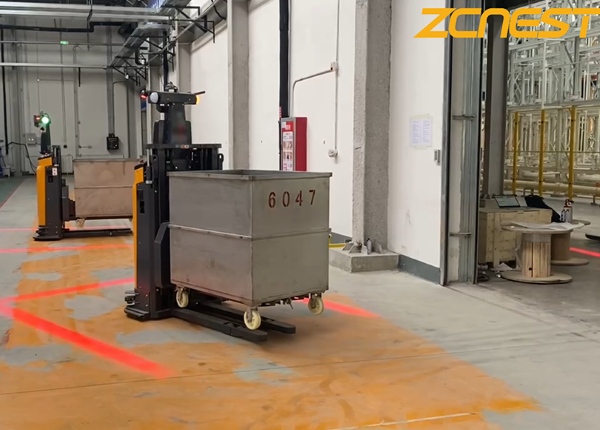
For a U.S. warehouse or distribution center considering an outdoor autonomous forklift imported from China, the question is not simply whether the vehicle can drive outdoors. The more important question is whether the complete vehicle, navigation system, tires, sensors, lifting system, and control software are designed and tested for the specific outdoor unloading application.
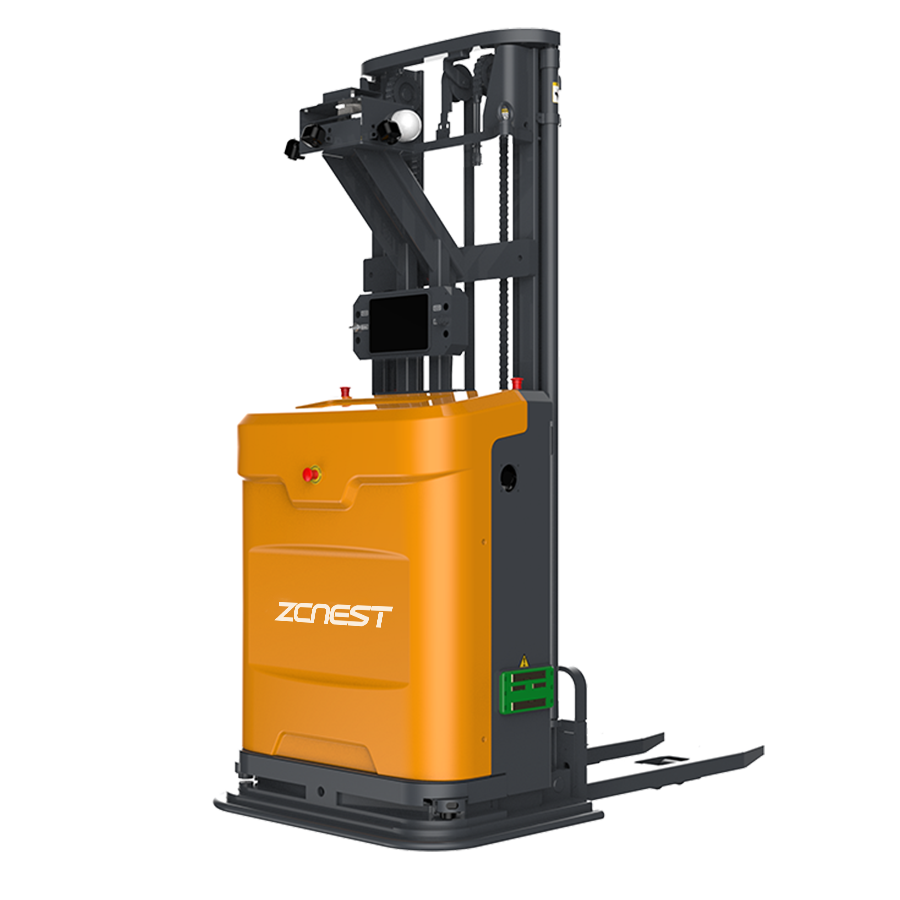
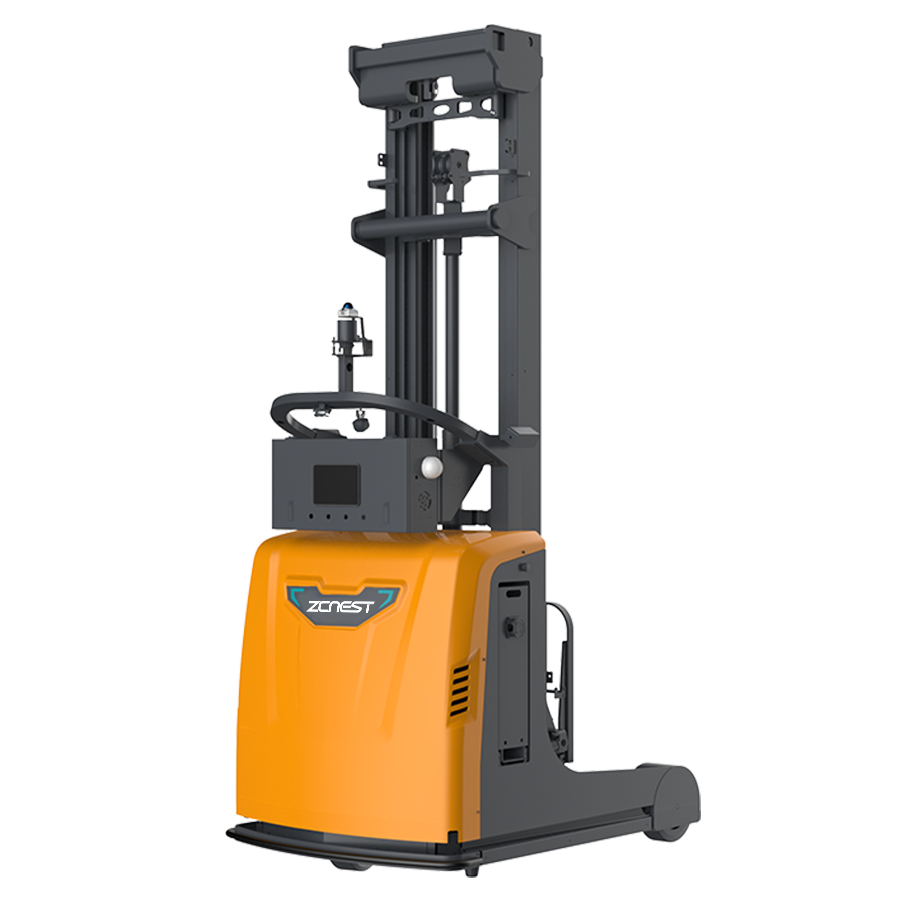
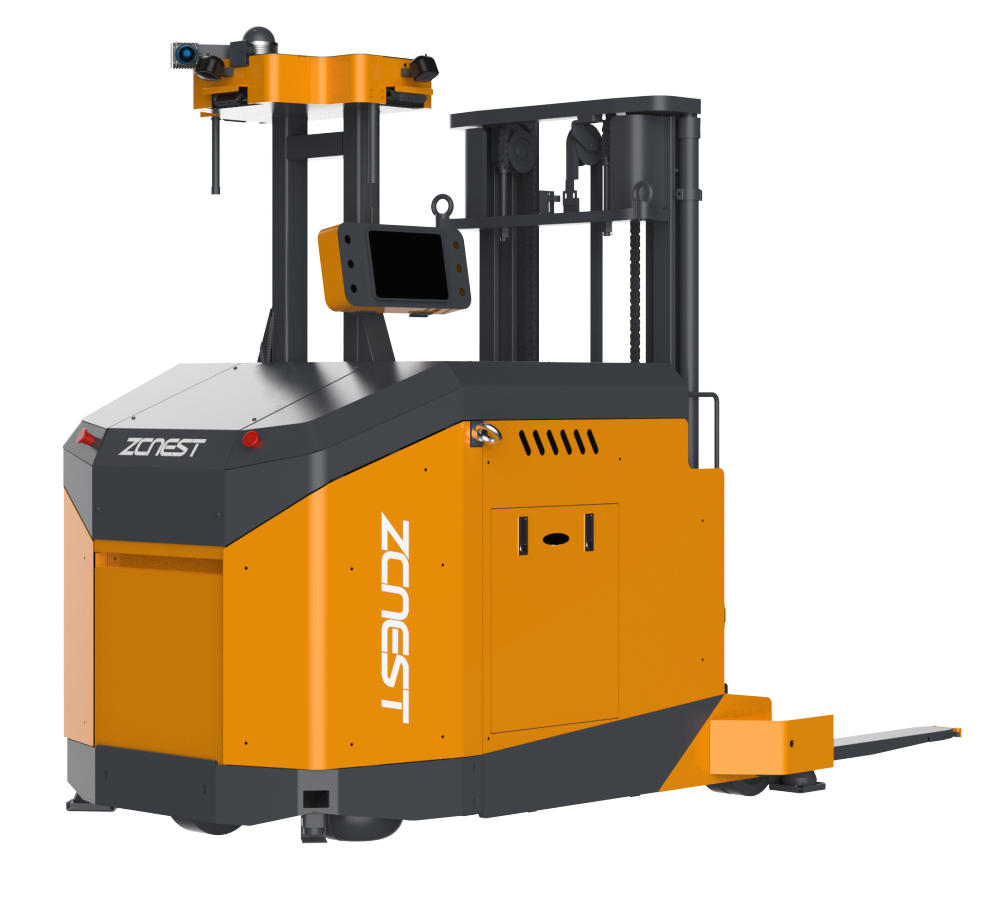
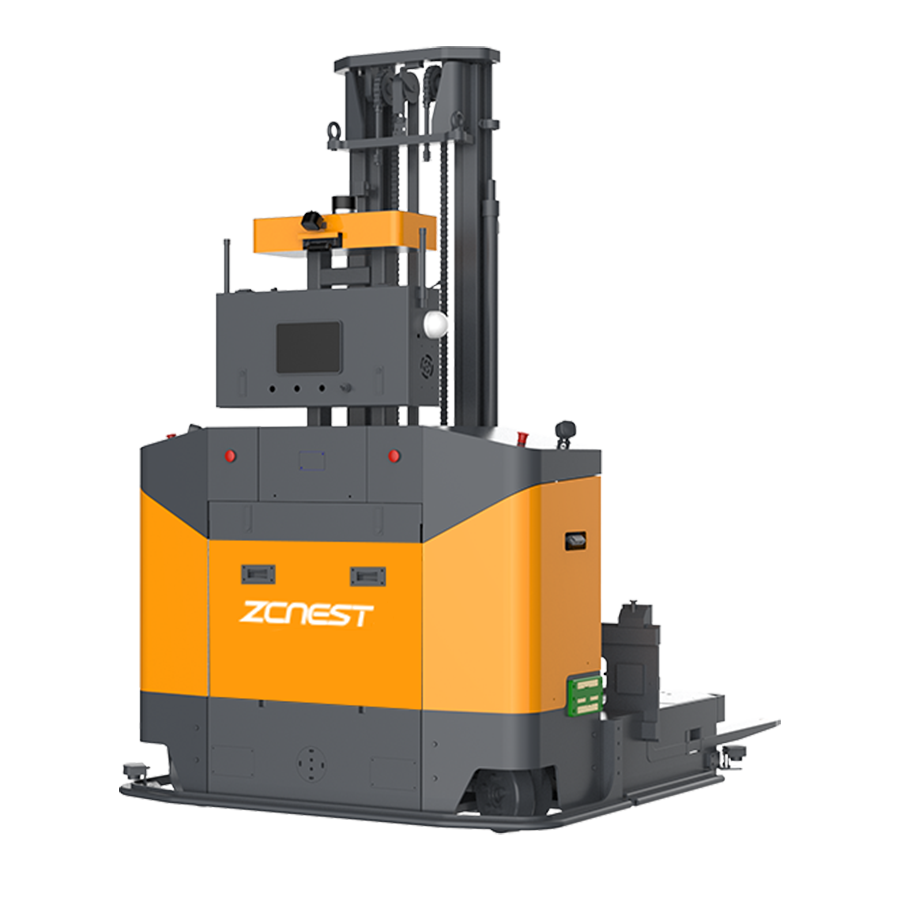
A heavy-duty counterbalanced AGV can potentially be configured for outdoor flatbed unloading, but outdoor operation should be treated as a specific application rather than an automatic extension of indoor AGV capability.
The vehicle needs to maintain reliable localization, traction, braking, load stability, and obstacle detection while moving between the yard and the warehouse. The flatbed itself also creates additional challenges because the truck deck may not have the same height, surface condition, or pallet arrangement as an indoor storage location.
Before selecting a Chinese manufacturer, the buyer should define:
Maximum pallet weight
Maximum load dimensions
Load center
Required lifting height
Flatbed deck height
Trailer type and dimensions
Outdoor travel distance
Asphalt or concrete surface condition
Maximum outdoor slope
Rain and weather exposure
Minimum and maximum operating temperature
Pedestrian and vehicle traffic
Required throughput
These parameters determine whether a standard counterbalanced AGV is suitable or whether the project requires a specially configured outdoor vehicle.
A flatbed trailer is a much less controlled navigation environment than a warehouse rack aisle. The AGV may need to identify the trailer entrance, deck boundaries, pallet position, and surrounding obstacles before entering the loading area.
Depending on the vehicle design, a Chinese manufacturer may use a combination of laser scanners, LiDAR, 3D cameras, vision systems, reflectors, localization markers, wheel odometry, IMU data, or other positioning technologies.
The exact sensor combination is supplier-specific. A laser scanner can detect physical geometry, while a camera or 3D vision system may provide additional information about pallet and trailer features. In some applications, the trailer position may also be controlled through a predefined docking area rather than relying entirely on the AGV to recognize every trailer boundary dynamically.
This distinction is important. "The AGV can detect the trailer" does not necessarily mean that the AGV can independently determine every deck edge under every outdoor condition.
Changing outdoor illumination can be a significant challenge for camera-based perception. Direct sunlight, backlighting, deep shadows, reflective surfaces, and rapid transitions between bright and dark areas can change the appearance of the same physical object.
A professional outdoor AGV should therefore not depend on a single visual feature for critical positioning. Sensor fusion can combine different sources of information to make localization and obstacle detection more robust.
For example, a system may combine:
LiDAR or laser-based environmental detection
3D vision
Camera-based perception
Wheel odometry
IMU information
Reflector or landmark positioning
Predefined docking coordinates
However, sensor fusion does not eliminate all outdoor perception problems. A buyer should test the actual vehicle under representative morning, midday, and afternoon lighting conditions rather than accepting a general statement that the camera system is "adaptive to sunlight."
The FAT or SAT should ideally include direct sunlight, shadows, partially obstructed pallets, reflective trailer surfaces, and other conditions that the vehicle will encounter during normal operations.
Trailer alignment is an important part of outdoor autonomous unloading. A small change in trailer position can affect the approach path, fork alignment, and available clearance.
There are several possible ways to manage this:
Controlled trailer parking positions
Defined AGV docking zones
Physical alignment guides
Laser-based position detection
Vision-based trailer detection
3D perception of the loading area
Operator-assisted positioning when required
The appropriate approach depends on the required level of autonomy. A project that requires completely unattended trailer unloading has a different engineering requirement from one where a supervisor confirms trailer positioning before the AGV enters the loading zone.
Tire selection has a major effect on outdoor AGV performance. The tire compound, tread pattern, wheel diameter, load rating, contact area, temperature range, and surface condition all influence traction.
Chinese manufacturers may offer different wheel or tire configurations depending on the vehicle model. Common considerations include polyurethane wheels, rubber-based tires, pneumatic tires, or other industrial tire designs.
There is no single tire compound that is automatically best for every asphalt yard. A tire optimized for a smooth indoor concrete floor may not provide the same traction characteristics on rough asphalt, wet pavement, or contaminated surfaces.
The buyer should therefore specify the actual outdoor surface and operating conditions when requesting a quotation.
Important parameters include:
Dry asphalt traction
Wet asphalt traction
Maximum operating load
Maximum slope
Braking distance
Wheel wear rate
Operating temperature
Turning behavior under load
The supplier should ideally demonstrate the vehicle with representative payloads on a surface similar to the customer's actual yard.
Rain introduces several additional variables. Water can reduce tire traction, affect braking distance, create reflections for optical sensors, and accumulate in low areas of an outdoor yard.
The AGV's environmental protection should therefore be evaluated at the component level. The buyer should verify the protection of electrical enclosures, connectors, sensors, drive components, battery compartments, and other exposed components.
An IP rating can provide useful information about enclosure protection, but it does not by itself describe the complete vehicle's ability to operate safely in every weather condition.
The operating specification should clearly state whether the AGV is intended for outdoor operation, the permitted weather conditions, temperature range, and any restrictions during heavy rain, flooding, ice, or other severe conditions.
There is no single maximum weight that applies to all Chinese outdoor counterbalanced AGVs. The rated capacity depends on the exact vehicle configuration and operating condition.
Important factors include:
Rated vehicle capacity
Load center distance
Fork length
Load dimensions
Mast type
Lift height
Vehicle wheelbase
Counterweight configuration
Ground conditions
Operating slope
Travel speed
Braking requirements
For example, a vehicle advertised with a certain nominal lifting capacity may have a lower permissible load at a longer load center or greater lifting height. The buyer should therefore request the complete load-capacity chart rather than evaluating the vehicle from one maximum payload number.
Outdoor operation makes this even more important because traction and braking conditions can change with the surface. The rated capacity for lifting a pallet is not automatically the same as the safe operating condition for traveling that pallet across a wet asphalt yard.
A realistic FAT and SAT should reproduce the actual outdoor unloading workflow as closely as possible.
| Test Condition | What to Verify |
|---|---|
| Dry asphalt | Traction, steering, braking, localization |
| Wet surface | Traction and stopping behavior |
| Direct sunlight | Vision and perception performance |
| Strong shadows | Object and pallet detection |
| Trailer misalignment | Docking and entry tolerance |
| Maximum payload | Acceleration, braking, lifting and stability |
| Uneven pavement | Vehicle stability and sensor performance |
| Pedestrian crossing | Detection, speed reduction and stopping |
If the AGV will unload flatbed trucks outdoors, the RFQ should describe the complete operating environment rather than simply asking for an "outdoor AGV."
Required payload and load center
Flatbed trailer dimensions
Trailer deck height
Pallet dimensions and weight
Outdoor travel distance
Asphalt type and surface condition
Maximum slope
Rain exposure
Temperature range
Direct sunlight exposure
Required navigation technology
Trailer docking accuracy
Maximum outdoor speed
Required braking distance
Tire specification
Vehicle and component IP ratings
FAT and SAT environmental test conditions
The buyer should also request the manufacturer's documented operating limits. If the supplier cannot clearly define the vehicle's allowable surface conditions, slope, weather exposure, payload, load center, and environmental limits, the project may require additional engineering before deployment.
An indoor warehouse AGV operates in a controlled environment. An outdoor counterbalanced AGV has to deal with a much larger range of variables at the same time.
The most important evaluation is therefore not the maximum payload or the advertised navigation technology by itself. The complete system needs to demonstrate reliable operation under the actual combination of payload, load center, asphalt condition, weather, lighting, trailer geometry, traffic, and operating speed.
For a Chinese AGV import project, the strongest procurement approach is to provide the manufacturer with the actual flatbed unloading workflow, site conditions, representative pallets, and environmental requirements before the vehicle configuration is finalized. This allows the supplier to select the appropriate chassis, tires, sensors, navigation method, lifting system, and safety configuration for the application rather than adapting an indoor warehouse AGV after delivery.
FREE ENGINEERING SUPPORT Stop Gambling on Generic Platforms. Get an AGV/AMR Tailored to Your Warehouse.Buying automated guided vehicles involves complex safety standards (CE/ANSI), navigation setups (Laser SLAM), and ERP system integration. Don't risk your factory safety with middle-men. ✓ 100% Direct Factory: Customized payload up to 5 Tons. ✓ Free CAD Simulation: Send us your layout, and our engineers will simulate the optimal AGV routes. ✓ Global Support: Overseas installation guidance & local maintenance partners. |





 Chinese
 English