


High-bay warehouse operators often look at narrow-aisle reach AGVs as a way to increase storage density without expanding the building footprint. The potential benefit comes from combining narrower operating aisles, higher lifting capability, and better use of the available vertical clearance.
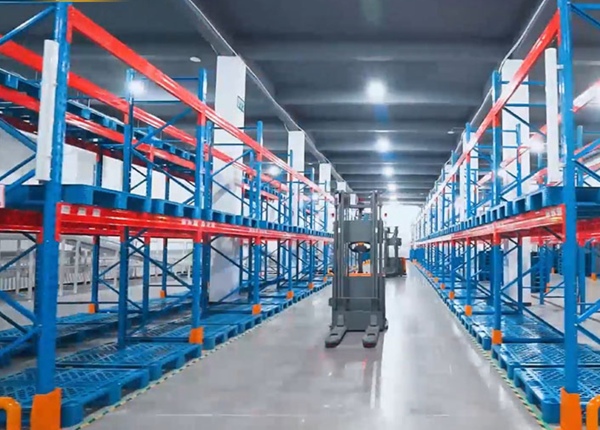
However, the amount of additional storage that can actually be created depends on more than the width of the Chinese reach AGV. Rack geometry, pallet dimensions, load center, lifting height, fire protection clearance, floor conditions, and the existing building structure all have to be considered together.
A narrow reach AGV can potentially increase warehouse storage density by reducing the space allocated to vehicle travel and by allowing pallets to be stored at greater heights. The actual improvement should be calculated from the complete warehouse layout rather than from the vehicle specification alone.
For example, a warehouse with wide conventional forklift aisles may have significant unused floor area between rack blocks. If a suitable narrow-aisle automated reach truck can operate safely in a smaller aisle, some of this floor area can potentially be converted into additional rack positions.
The vertical dimension can also contribute to higher storage density. If the building has sufficient clear height and the rack structure is designed for additional levels, a higher-lift AGV may allow more pallets to be stored vertically.
The final storage-density calculation should consider:
Building clear height
Existing rack height
Rack beam spacing
Pallet height
Load height
Required top clearance
Fire protection requirements
AGV maximum lifting height
Fork and load-center geometry
Aisle width
Column and rack protection requirements
Required staging and cross-aisle space
For this reason, "How many more pallets can I store?" is a better engineering question than simply asking how narrow the AGV can drive.
There is no universal minimum aisle width for every Chinese reach AGV. The required aisle depends on the complete vehicle geometry and the pallet-handling task.
Important variables include:
Overall vehicle width
Vehicle length
Turning radius
Fork length
Load center
Pallet dimensions
Rack depth
Reach mechanism geometry
Required side clearance
Positioning accuracy
Floor flatness
Required operating speed
A supplier may advertise a very narrow aisle capability, but the buyer should ask whether that number represents the theoretical vehicle turning envelope, a minimum operating aisle, or the actual aisle required for safe pallet storage and retrieval.
The most useful specification is therefore the manufacturer's aisle-width calculation for the customer's actual pallet, rack, and load dimensions.
It may be possible, but the AGV itself does not determine whether an existing rack can safely accept two additional storage levels.
The first question is whether the building has enough vertical clearance. The second is whether the existing rack system is structurally designed and approved for the additional loads and storage levels.
The customer should evaluate:
Building clear height
Existing rack height
Beam elevation
Vertical pallet clearance
Maximum pallet height
Maximum pallet weight
Rack upright capacity
Beam capacity
Floor loading
Sprinkler clearance
Seismic requirements where applicable
Required rack protection
If the existing rack was designed for a certain number of levels, adding two more levels may require a structural engineering review and rack modification. The AGV supplier can provide the vehicle's lifting and load-handling capability, but that does not replace the rack manufacturer's or structural engineer's assessment.
A good warehouse redesign therefore treats the rack, AGV, pallet, building, and fire-protection system as one integrated storage system.
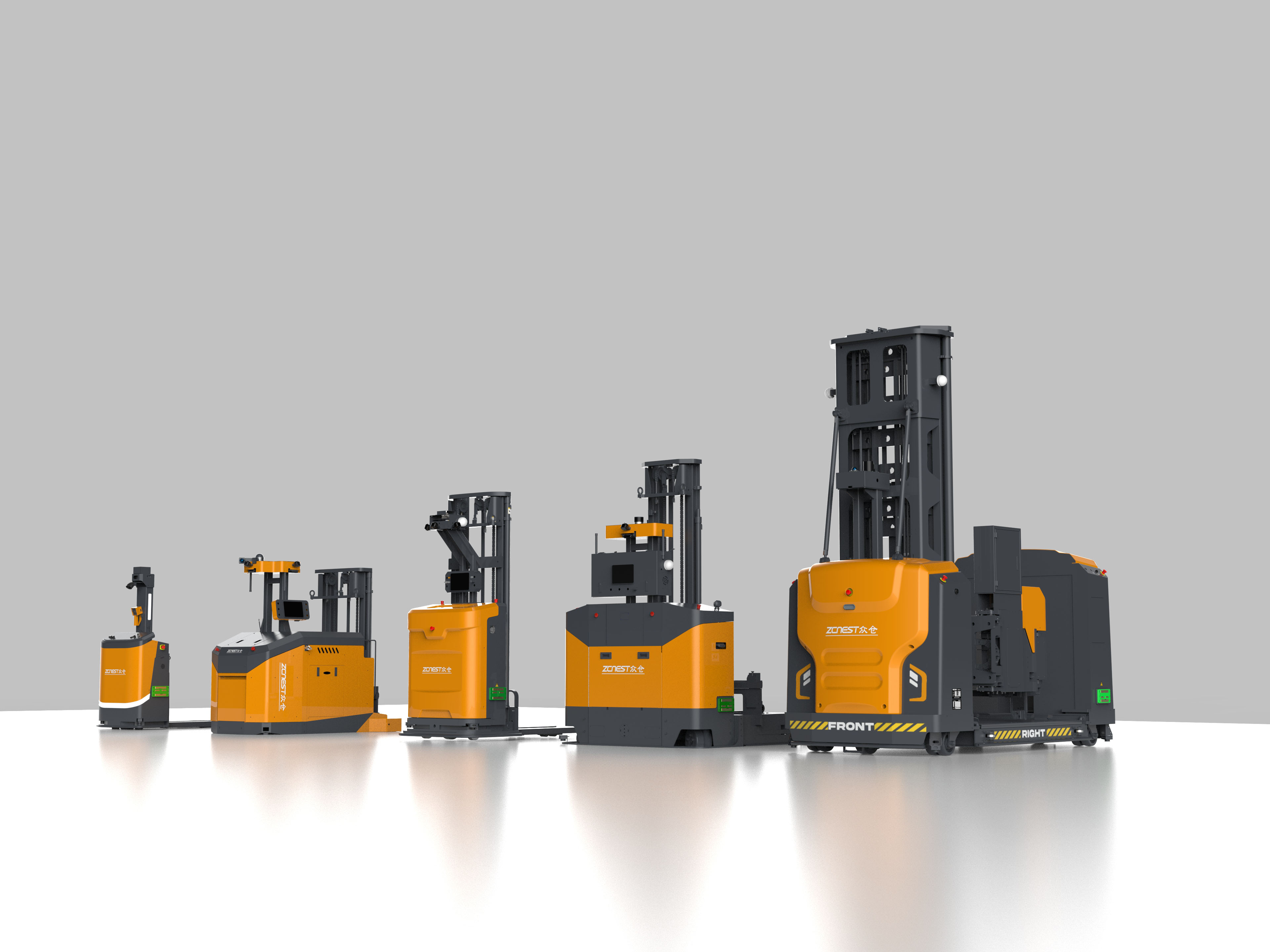
Chinese manufacturers offer different automated forklift and reach-truck configurations with different lifting capabilities. The maximum lifting height depends on the vehicle type, mast design, rated load, load center, stability requirements, and application.
The buyer should not evaluate lift height using a single headline number. A vehicle may have a high maximum lift specification while its allowable payload decreases at greater lifting heights or longer load centers.
For high-bay warehouse planning, request a complete lift and capacity profile showing:
Maximum lift height
Rated capacity at relevant lift heights
Load center used for the rating
Fork dimensions
Mast configuration
Required overhead clearance
Residual capacity, where applicable
Travel-speed limitations at elevated loads
Positioning accuracy at high lift heights
This information allows the warehouse designer to determine whether the AGV can actually service the highest proposed rack position rather than simply reaching the required vertical height without the required payload.
High-bay pallet entry requires much more precise geometry than simply placing a pallet somewhere inside a rack bay. The pallet, forks, rack beams, guides, and AGV localization system need enough tolerance for repeatable entry and retrieval.
Pallet entry guides can help establish a repeatable pallet position, but they should not be used to compensate for an AGV that cannot maintain adequate positioning accuracy.
The rack layout should consider:
Pallet width
Pallet depth
Fork entry openings
Rack beam dimensions
Required side clearance
Backstop location
Load overhang
Pallet deformation
Rack tolerance
AGV positioning accuracy
Fork positioning accuracy
For automated high-bay storage, the pallet should ideally arrive at a consistent presentation position. Large variations in pallet dimensions or load overhang can reduce the effective tolerance available to the AGV.
Yes. Properly designed rack guides, pallet stops, and entry geometry can make pallet positioning more repeatable. However, these components need to be designed together with the AGV's fork geometry and navigation system.
For example, a rack guide that is too aggressive may help center a pallet but can also create excessive contact forces or interfere with damaged pallets. A guide that is too loose may provide little benefit when pallet positioning varies significantly.
The best solution is usually based on representative pallet testing. The customer should test new pallets, older pallets, loaded pallets, partially damaged pallets, and the actual pallet tolerances expected during daily operation.
Floor conditions become increasingly important as lift height increases and aisle width decreases. Small floor irregularities can affect vehicle stability, localization, steering, and fork positioning.
There is no single floor-flatness value that applies to every high-bay AGV project. The required specification depends on vehicle speed, lift height, rack geometry, aisle width, wheel configuration, load characteristics, and the positioning accuracy required at the rack.
The supplier should therefore provide the required floor specification for the exact AGV model and operating configuration. The customer should then compare those requirements with a professional survey of the actual warehouse floor.
The best approach is to compare the existing warehouse layout with a proposed high-density layout using the actual AGV dimensions and operating envelope.
| Parameter | Existing System | Proposed AGV System |
|---|---|---|
| Aisle width | Existing forklift requirement | AGV-specific aisle calculation |
| Rack levels | Existing levels | Levels permitted by building and rack design |
| Lift height | Existing equipment capability | AGV lift and capacity profile |
| Pallet size | Actual pallet dimensions | AGV fork and rack compatibility |
| Storage positions | Current pallet locations | Proposed pallet locations |
| Staging space | Existing requirement | New AGV workflow requirement |
This comparison can show whether the project actually increases pallet positions, improves cubic utilization, or simply changes the material-handling method.
What is the minimum calculated aisle width for my exact pallet and rack configuration?
What load center is used in the rated capacity calculation?
What is the rated capacity at each required lift height?
What is the maximum lifting height under the required payload?
What are the fork dimensions and adjustment range?
What rack tolerances does the AGV require?
What floor-flatness specification is required?
What pallet-position tolerance can the vehicle accommodate?
How does the AGV detect pallet and rack position?
Can rack entry guides be integrated into the design?
What happens if the pallet is slightly misaligned?
What happens if a pallet is damaged or deformed?
Can the supplier simulate the proposed rack layout?
Can the supplier provide a storage-density calculation?
Can the complete system be tested with representative pallets before shipment?
Reducing aisle width can increase storage density, but there is an engineering trade-off. A very narrow aisle may reduce maneuvering tolerance, increase sensitivity to pallet variation, require better floor conditions, and make maintenance or emergency access more difficult.
The objective should therefore be maximum usable storage density rather than the smallest possible aisle number.
For an imported Chinese reach AGV project, the best design is the one that balances aisle width, rack height, pallet handling accuracy, throughput, safety clearance, floor conditions, and total storage capacity.
Before purchasing the vehicle, the warehouse should provide the Chinese manufacturer with the building clear height, rack drawings, pallet dimensions, pallet weights, load center, aisle layout, floor information, and required throughput. The supplier can then calculate the actual operating envelope instead of giving a generic maximum lift height or minimum aisle width.
FREE ENGINEERING SUPPORT Stop Gambling on Generic Platforms. Get an AGV/AMR Tailored to Your Warehouse.Buying automated guided vehicles involves complex safety standards (CE/ANSI), navigation setups (Laser SLAM), and ERP system integration. Don't risk your factory safety with middle-men. ✓ 100% Direct Factory: Customized payload up to 5 Tons. ✓ Free CAD Simulation: Send us your layout, and our engineers will simulate the optimal AGV routes. ✓ Global Support: Overseas installation guidance & local maintenance partners. |





 Chinese
 English