

Introducing Chinese AGVs into a warehouse does not eliminate the need for experienced material-handling employees.
Instead, it changes what those employees do.
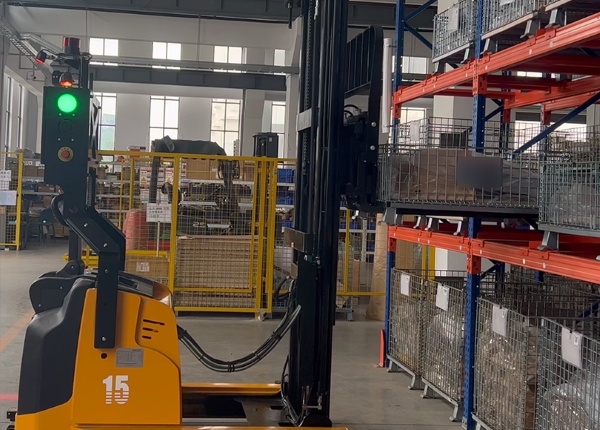
A traditional forklift operator spends most of the shift driving, positioning forks, picking up pallets, transporting loads, and placing them into storage locations. After AGV deployment, many of those physical driving tasks can be automated. The employee's role can shift toward fleet supervision, exception handling, pallet quality checks, traffic monitoring, basic troubleshooting, and operational control.
This means the best AGV training program is not simply a software tutorial.
It is a workforce transition program that turns experienced material handlers into AGV supervisors and, for selected employees, system super-users.
Training should begin before the AGVs arrive at the warehouse. Employees should understand how automated vehicles behave around people, what their new responsibilities will be, and how to respond when an automated vehicle stops unexpectedly.
A baseline training program should normally cover several areas:
AGV operating principles
Warehouse pedestrian safety
AGV traffic behavior
Restricted areas and no-go zones
Emergency-stop procedures
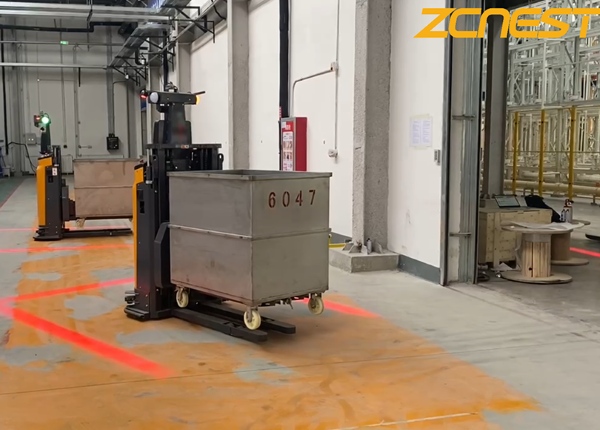
Safe interaction with autonomous forklifts
AGV charging procedures
Pallet quality requirements
Basic fleet dashboard operation
Fault and alarm recognition
Manual recovery procedures
Escalation procedures
Basic preventive maintenance awareness
Traditional forklift operators already have valuable warehouse experience. The objective is therefore not to replace their existing knowledge, but to add automation-related skills to it.
The role changes from directly controlling every vehicle movement to supervising a larger automated process.
| Traditional Role | AGV Super-User Role |
|---|---|
| Drive the forklift | Monitor automated vehicle movements |
| Pick up pallets manually | Verify pallet and task conditions |
| Select physical routes | Monitor software routing and traffic |
| Respond to vehicle problems directly | Identify faults and perform authorized recovery |
| Communicate verbally with other drivers | Manage fleet tasks through the control interface |
| Focus on individual vehicle productivity | Monitor overall fleet throughput |
This change can be particularly valuable because experienced forklift operators already understand pallet handling, warehouse traffic, loading conditions, aisle constraints, and common operational problems. The AGV project adds software and automation knowledge to that existing expertise.
There is no universal training period because fleet software interfaces vary considerably between manufacturers and project configurations. A worker who only needs to acknowledge alarms will require much less training than a super-user responsible for task management and basic system administration.
A practical training structure can separate employees into three levels.
This employee needs to understand basic AGV behavior and safety. The employee should be able to recognize normal and abnormal vehicle conditions, interact safely with automated vehicles, and report faults to the appropriate person.
This employee uses the fleet dashboard to monitor vehicle status, check active tasks, respond to alarms, and perform authorized recovery procedures.
The super-user receives deeper training in fleet management. Depending on the supplier's software permissions, this may include task priorities, route management, traffic configuration, charging strategies, user permissions, reporting, and basic troubleshooting.
Instead of asking a Chinese supplier simply, "How many days of training are included?", ask for a competency-based training plan. The more useful question is:What must each employee be able to perform independently after training?
This depends on the permission structure of the fleet management software. Some systems allow supervisors to change task priorities through the graphical interface, while more advanced configuration functions may require administrator privileges or supplier authorization.
A supervisor may need to prioritize:
Urgent outbound pallets
Production replenishment tasks
Shipping dock movements
High-priority customer orders
Temperature-sensitive inventory
Exception recovery tasks
Time-critical staging movements
The interface should make it clear which changes are operational and which changes can affect the underlying traffic logic. A supervisor should not accidentally modify safety-critical parameters simply because the software provides access to them.
During training, supervisors should learn the difference between:
Changing the priority of an individual task
Changing the priority of a task category
Changing vehicle priorities
Changing route priorities
Changing permanent traffic rules
These functions should be controlled through appropriate user permissions.
The objective of super-user training should be to reduce unnecessary dependence on the supplier for routine operational issues.
Depending on the system design, a trained super-user should ideally be able to:
Log into the fleet dashboard
Identify vehicle status
Review active tasks
Change authorized task priorities
Cancel or restart permitted tasks
Review fault codes
Identify blocked vehicles
Perform basic vehicle recovery
Check battery status
Monitor charging activity
Review historical alarms
Generate basic operational reports
Escalate complex technical faults
The goal is not to teach warehouse employees how to modify the underlying AGV control software. Instead, they should become capable of handling normal operational exceptions without waiting for a remote engineer in China.
Remote training can be useful for overseas AGV deployments, especially when the supplier's engineers cannot remain at the customer's facility for an extended period.
A remote training program can use live video sessions to demonstrate:
Fleet dashboard operation
Alarm recognition
Task creation
Task priority changes
Basic recovery procedures
Charging management
Maintenance inspection
Software reporting
Remote troubleshooting workflows
However, remote training should supplement rather than completely replace hands-on commissioning training. Some procedures are difficult to learn effectively through a webcam, particularly emergency procedures, manual recovery, physical inspection, charging procedures, and safe interaction with moving AGVs.
The contract should therefore specify which training is provided remotely and which training is provided on site.
On-site training should be based on the actual warehouse environment. The training team should not teach only a generic software interface.
The curriculum should use the customer's actual:
Warehouse map
AGV routes
Storage locations
Charging stations
Pedestrian walkways
Loading areas
Staging areas
Safety zones
Traffic intersections
Typical pallet types
Employees learn faster when the training environment matches the conditions they will encounter during normal operation.
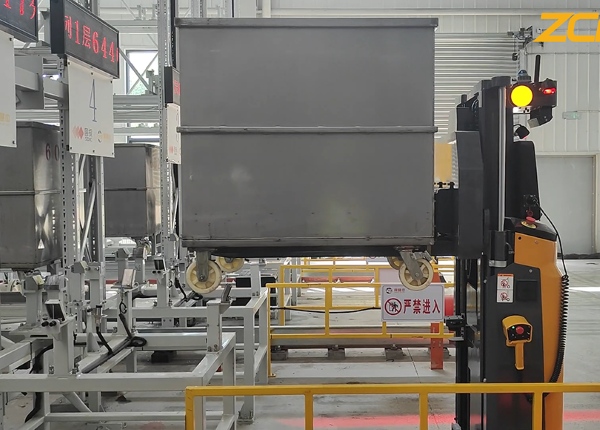
A stalled AGV is one of the most important practical scenarios to train. Employees should know the difference between a normal waiting condition, an obstacle stop, a software task issue, a safety stop, and a hardware fault.
A basic recovery workflow may include:
Identify the vehicle and current alarm.
Check whether a person or obstacle is inside the operating area.
Follow the warehouse safety procedure.
Read the fault information on the fleet dashboard.
Perform only authorized recovery actions.
Restart or resume the task if permitted.
Verify that the vehicle returns to normal operation.
Record the incident if required.
Escalate the problem when the fault exceeds the operator's authorization.
Employees should never be trained to bypass safety systems simply to return an AGV to operation faster. A successful training program must teach employees when they are authorized to recover a vehicle and when they must stop and request technical support.
A simple internal certification system can make the transition easier to manage. Instead of considering an employee "trained" after attending a classroom session, require the employee to demonstrate specific competencies.
| Skill | Assessment |
|---|---|
| AGV Safety | Explain safe interaction and emergency procedures |
| Dashboard | Identify vehicle status and active alarms |
| Task Management | Create, modify, or prioritize authorized tasks |
| Fault Recovery | Complete an approved recovery procedure |
| Charging | Perform the approved charging workflow |
| Escalation | Identify faults requiring engineering support |
| Reporting | Generate and interpret basic fleet reports |
The warehouse should avoid relying on a single employee who understands the entire AGV system. If that person is absent, the operation may become unnecessarily dependent on the supplier.
A better approach is to create several levels of internal capability. For example, each operating shift can have designated AGV supervisors, while a smaller group of maintenance or automation specialists receives deeper technical training.
The exact staffing level depends on fleet size, operating hours, warehouse complexity, and the supplier's support model. A 24/7 operation should particularly consider coverage across all shifts rather than training only daytime personnel.
The supplier should provide a complete training package before the project enters final commissioning.
Operator training manual
Fleet software user manual
Alarm and fault-code reference
Emergency procedure documentation
Charging instructions
Basic maintenance instructions
Software screenshots or video tutorials
Training presentation
Competency assessment checklist
Remote support procedure
Technical escalation contacts
Software version information
The documentation should also identify which procedures are allowed for ordinary operators, which require a supervisor, and which require a qualified maintenance or engineering technician.
| Requirement | Question for the Chinese Supplier |
|---|---|
| On-Site Training | How many days of hands-on training are included during commissioning? |
| Remote Training | Can additional operators receive live remote training after deployment? |
| Super-User Training | Which advanced fleet management functions are covered? |
| Task Priority | Can trained supervisors modify task priorities without supplier intervention? |
| Fault Recovery | Which fault recovery procedures can local staff perform independently? |
| Training Materials | Are English-language manuals, videos, and fault-code references included? |
| Certification | Can the supplier provide documented training completion records or certificates? |
| Future Training | Is refresher training available when software or fleet configuration changes? |
The transition works best when employees are involved before automation arrives. Experienced forklift operators should participate in route reviews, pallet handling assessments, traffic analysis, and operational testing. Their knowledge of the warehouse can reveal problems that may not be obvious from CAD drawings or digital maps.
Once the AGVs are deployed, employees can progressively move from basic safety training to dashboard operation, task supervision, fault recovery, and fleet optimization.
The most successful training model treats warehouse employees as part of the automation system rather than as workers being replaced by it. Their practical experience remains valuable, while the new software skills allow them to supervise more material movement with less direct vehicle driving.
FREE ENGINEERING SUPPORT Stop Gambling on Generic Platforms. Get an AGV/AMR Tailored to Your Warehouse.Buying automated guided vehicles involves complex safety standards (CE/ANSI), navigation setups (Laser SLAM), and ERP system integration. Don't risk your factory safety with middle-men. ✓ 100% Direct Factory: Customized payload up to 5 Tons. ✓ Free CAD Simulation: Send us your layout, and our engineers will simulate the optimal AGV routes. ✓ Global Support: Overseas installation guidance & local maintenance partners. |





 Chinese
 English