


When importing autonomous forklifts from China, technical documentation can be just as important as the hardware itself. A warehouse may receive the AGVs on schedule but still struggle with maintenance, troubleshooting or software integration if the manuals are incomplete or available only in Chinese. Before placing an order, overseas buyers should establish exactly which mechanical drawings, electrical schematics, diagnostic procedures, software instructions and interface documents will be delivered with the fleet.
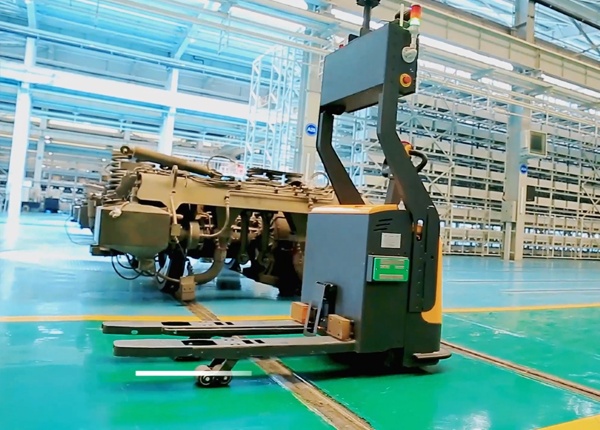
Chinese AGV manufacturers can provide technical manuals covering operation, maintenance, electrical systems, hydraulics, fault diagnosis and software configuration, but the depth and language of documentation vary between suppliers and projects. For an overseas deployment, do not assume that a standard user manual is sufficient. Specify the required documentation in the purchase contract and confirm which materials will be supplied in English before shipment.
A complete documentation package should allow your operators, maintenance technicians, controls engineers and IT team to understand the equipment at the level required for their responsibilities.
Operator Manual
Covers startup, shutdown, normal operation, alarms and basic recovery procedures.
Maintenance Manual
Explains inspection intervals, lubrication, component replacement and preventive maintenance.
Electrical Documentation
Includes wiring diagrams, I/O definitions, electrical components and control circuits.
Hydraulic Documentation
Provides hydraulic circuits, valve information, pressure specifications and troubleshooting procedures where applicable.
Software Manual
Explains fleet-management functions, configuration parameters, maps, tasks and alarms.
Integration Documentation
Defines APIs, communication interfaces and external equipment integration requirements.
For automated forklifts that use hydraulic lifting or tilting systems, the hydraulic schematic is an important maintenance document. It can help a local technician identify pumps, valves, cylinders, pressure-control components and hydraulic lines without relying on the Chinese factory for every service intervention.
However, buyers should confirm the language and level of detail before ordering. A basic component diagram is not equivalent to a complete hydraulic circuit drawing.
Complete hydraulic circuit diagram.
Component names and part numbers.
Rated operating pressures.
Valve and actuator specifications.
Hydraulic oil requirements.
Recommended inspection and replacement intervals.
Hydraulic fault-diagnosis procedures.
English Translation Should Cover Technical Terminology, Not Just Interface Text
A translated manual is useful only when component names, alarm descriptions, measurements, wiring labels and maintenance procedures remain technically unambiguous. For critical documentation, request an English engineering version rather than relying on an automatically translated user guide.
A useful diagnostic-code manual should do more than tell the operator that an error has occurred. It should help a technician determine what subsystem caused the fault and what checks should be performed before replacing components.
Error Code
Unique identifier for the fault.
Fault Description
Clear explanation of the detected condition.
Possible Causes
Potential hardware, software or environmental causes.
Inspection Procedure
Steps for checking the affected subsystem.
Corrective Action
Recommended repair or replacement procedure.
For overseas customers, also ask whether diagnostic software can be operated locally or whether every advanced fault requires a remote connection to the Chinese engineering team.
Software calibration can involve navigation sensors, safety fields, positioning parameters, fork sensors, cameras and other vehicle-specific settings. The exact calibration process depends on the AGV architecture and should be documented by the manufacturer.
For an overseas fleet, calibration instructions are particularly important because waiting for an engineer from China every time a sensor or mechanical component is replaced can increase downtime.
Which components require calibration after replacement.
Required calibration tools and software.
Initial parameter values and allowable adjustment ranges.
Calibration sequence and verification procedure.
Acceptance criteria after calibration.
Which parameters are restricted to authorized engineering personnel.
This is a different question from requesting the manufacturer's proprietary source code. If the fleet-control platform incorporates open-source components, the supplier may be able to provide an open-source software notice or software bill of materials identifying applicable libraries and licenses.
The exact disclosure available to a customer depends on the supplier's software architecture, licensing obligations and contractual terms.
Software Version
Exact version of the fleet-management platform supplied.
Dependency List
Relevant third-party and open-source components.
License Information
Applicable open-source license obligations.
Security Information
Available information concerning software updates and vulnerabilities.
One of the best ways to avoid documentation problems is to make the technical-document package part of the procurement acceptance process rather than treating manuals as an afterthought.
| Document | Recommended Requirement |
|---|---|
| Operation Manual | English version covering normal operation and basic recovery. |
| Maintenance Manual | Maintenance schedule, inspection procedures and replacement instructions. |
| Electrical Schematics | Complete wiring diagrams and component identification. |
| Hydraulic Schematics | Circuit diagrams, component specifications and pressure information where applicable. |
| Fault Code Manual | Error codes, causes, diagnostic steps and corrective actions. |
| Software Manual | Fleet configuration, map management, task settings and user permissions. |
| Calibration Guide | Step-by-step calibration and verification procedures. |
| Interface Documentation | API, PLC, I/O and third-party equipment integration information. |
| Software Component List | Available open-source and third-party software information. |
For an overseas purchase, documentation should be treated as a deliverable with defined acceptance criteria. Instead of writing “English manuals included,” specify exactly what documents are required and when they must be delivered.
List every required manual and engineering drawing in the purchase specification.
Specify English-language delivery where required.
Require document versions to match the actual hardware and software shipped.
Request documentation before final factory acceptance where practical.
Require updated manuals when approved engineering changes alter the equipment.
Define who owns responsibility for maintaining documentation after software upgrades.
Which technical manuals are included with the proposed AGV model?
Are the electrical and hydraulic schematics available in English?
Will I receive a complete diagnostic-code list?
Does the fault manual include troubleshooting procedures rather than only error descriptions?
Is a step-by-step sensor and software calibration guide included?
Can local technicians perform routine calibration without remote factory assistance?
Will the supplier provide API and PLC integration documentation?
Can the supplier provide an open-source software component list or SBOM where available?
Will documentation be updated when the AGV hardware or software is modified?
Can all documentation requirements be written into the purchase contract and FAT acceptance criteria?
For an imported Chinese AGV fleet, good documentation reduces dependence on overseas engineering support and makes local maintenance, troubleshooting and integration much easier. Before signing the purchase order, define the required English manuals, schematics, fault codes, calibration procedures and software-interface documents. The documentation package should describe the actual equipment being delivered—not merely a generic manual for the product family.
FREE ENGINEERING SUPPORT Stop Gambling on Generic Platforms. Get an AGV/AMR Tailored to Your Warehouse.Buying automated guided vehicles involves complex safety standards (CE/ANSI), navigation setups (Laser SLAM), and ERP system integration. Don't risk your factory safety with middle-men. ✓ 100% Direct Factory: Customized payload up to 5 Tons. ✓ Free CAD Simulation: Send us your layout, and our engineers will simulate the optimal AGV routes. ✓ Global Support: Overseas installation guidance & local maintenance partners. |











 Chinese
 English




