


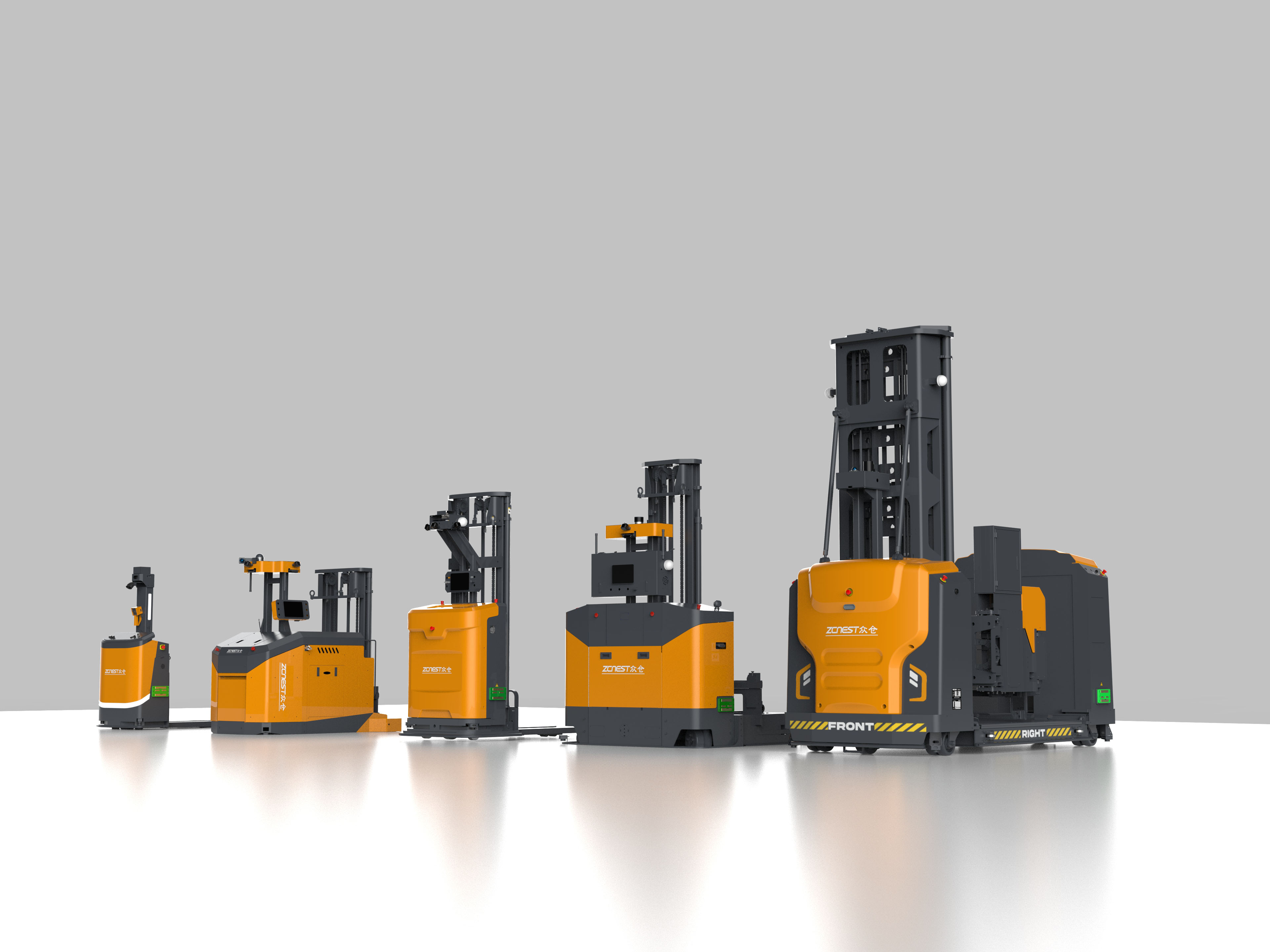
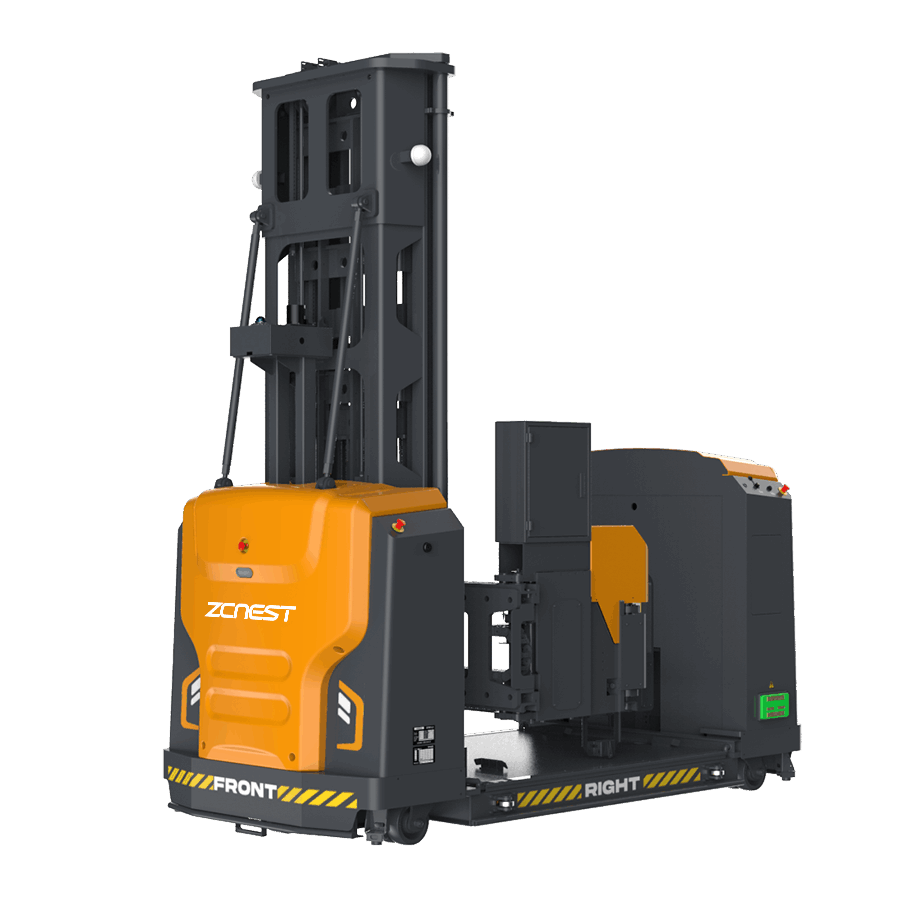
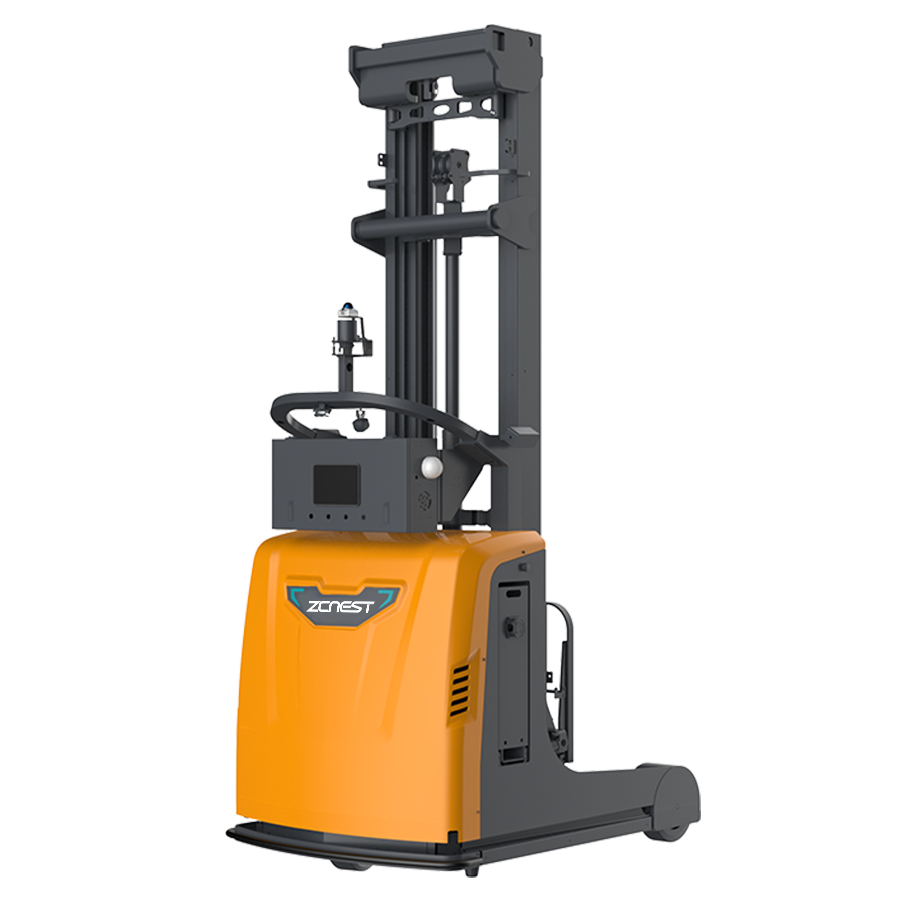
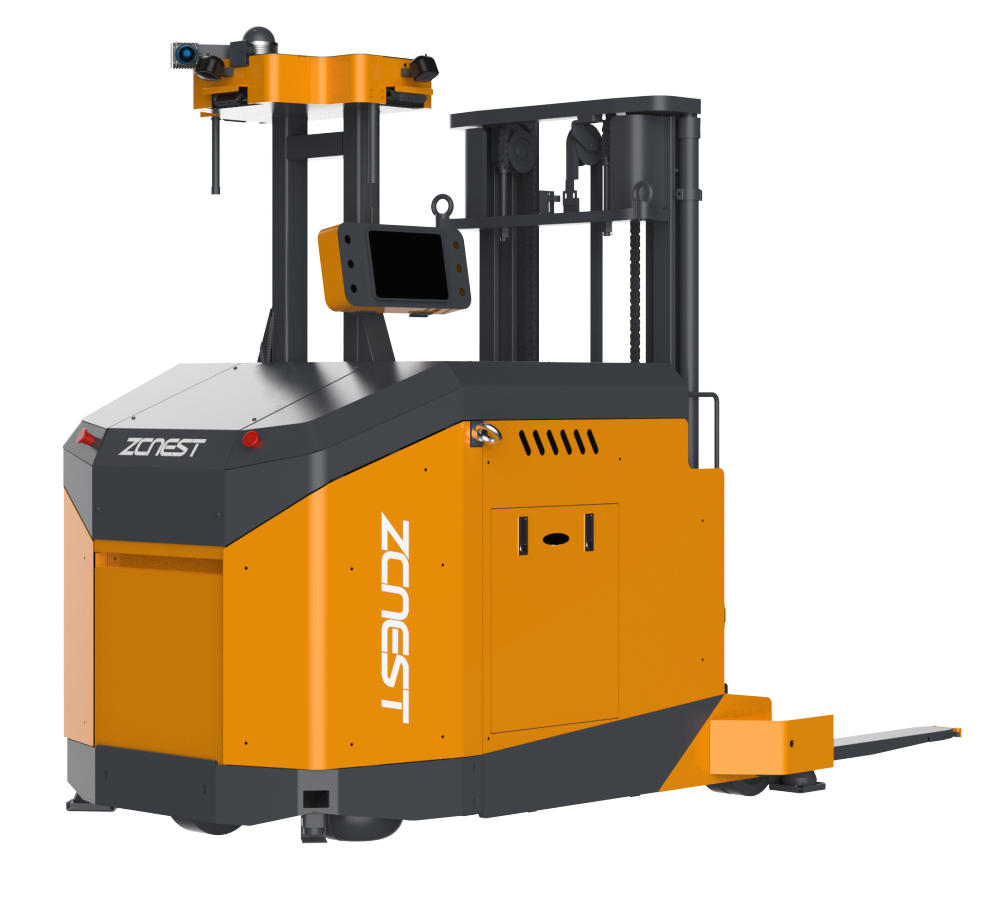
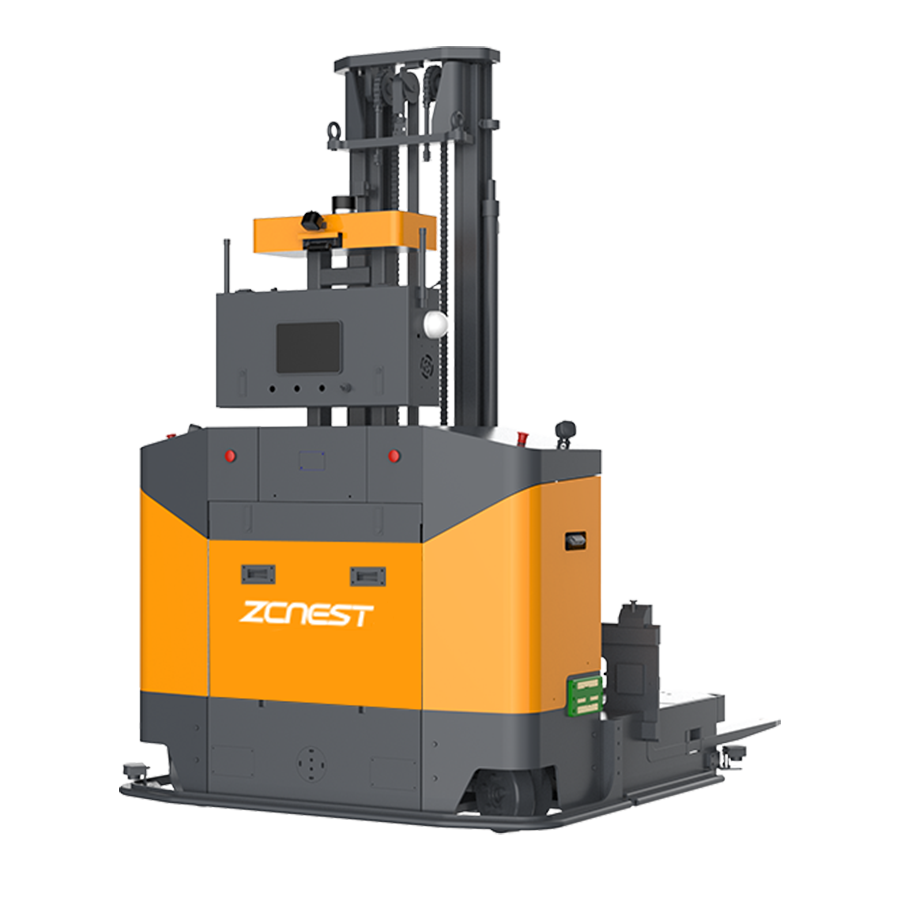
A high-lift VNA AMR can help warehouses use vertical space more efficiently without expanding the building footprint. ZCNest's VNA AMR is designed for narrow-aisle high-bay pallet handling, with a 1.65 m minimum aisle width, up to 11 m lifting height and 1.5-ton rated load capacity.
For warehouses with limited floor area but available overhead clearance, these specifications can provide a practical starting point for evaluating higher rack levels, narrower aisles and increased pallet storage density.
1.65 m
Minimum Aisle Width
Designed for very-narrow-aisle warehouse operations.
11 m
Maximum Lift Height
Supports high-level pallet storage applications.
1.5 t
Rated Load Capacity
Suitable for many standard industrial pallet loads.
ZCNest's VNA AMR combines a 1.65 m aisle requirement, 11 m maximum lifting height and 1.5-ton rated capacity for high-density warehouse storage. This configuration allows warehouse operators to consider additional rack levels within an existing building footprint. However, the actual usable storage height must be calculated from the pallet dimensions, rack design, load weight, ceiling clearance, sprinkler clearance and the vehicle's load capacity at the required lift height.
The ZCNest VNA AMR provides a maximum lifting height of up to 11 meters. This makes it suitable for high-bay warehouse applications where conventional forklift operations may leave valuable vertical space unused.
However, an 11-meter lifting specification should not be interpreted as an 11-meter pallet storage position. The actual top rack level depends on the pallet height, rack beam dimensions, fork-entry clearance, overhead building structure and the required safety clearance above the load.
For example, if the building has a clear height of 12 meters, it would not normally be appropriate to install a rack with its highest pallet position exactly at 11 meters. Space must be reserved for the rack structure, pallet and load, vehicle mast movement, overhead equipment and applicable clearance requirements.
Yes. The main advantage of a VNA system is that it can address two storage-density constraints at the same time: floor space and vertical space.
ZCNest's VNA AMR is designed around a 1.65-meter aisle width. Compared with layouts that require wider forklift operating aisles, a VNA configuration can potentially dedicate more of the existing building footprint to rack storage.
At the same time, the vehicle's 11-meter lifting capability allows the rack system to use more of the available building height, subject to the building's actual clear height and engineering requirements.
Narrower Aisles
A 1.65 m aisle configuration can reduce the floor area dedicated to forklift travel when the warehouse layout is designed specifically for VNA operation.
More Rack Levels
An 11 m lifting height allows the rack system to take greater advantage of available vertical clearance.
Higher Pallet Density
Combining narrow aisles with additional rack levels can increase the number of pallet positions within the same building.
The ZCNest VNA AMR is specified for a 1.5-ton rated load capacity. For high-level pallet storage, however, warehouse operators should evaluate the vehicle's actual capacity at the intended lift height and load center rather than using the rated capacity as the only selection criterion.
This becomes particularly important when a 1.5-ton pallet must be placed near the upper rack levels. The manufacturer should provide the relevant load-capacity or residual-capacity data for the actual operating configuration.
For a 1.5-Ton Pallet, Ask for the Actual Load Chart
If your warehouse regularly handles pallets close to 1.5 tons, ask ZCNest to confirm the allowable load at your required lifting height and load center. Maximum rated capacity and maximum lift height should be evaluated together.
Mast stability becomes increasingly important as the forks move higher. A small movement at the vehicle base can create a much larger displacement at the top of a tall mast. This is why high-bay VNA applications require controlled travel and positioning when carrying heavy pallets.
For a 1.5-ton load at high lift, the vehicle's structural design, mast stiffness, hydraulic control, steering control, acceleration profile and positioning system all contribute to stable pallet placement.
Mast Structure
A rigid mast structure helps limit deflection during high-level pallet handling.
Motion Control
Controlled acceleration and deceleration can reduce sudden load movement.
Lift Control
Controlled mast movement supports more stable pallet positioning at high elevations.
Positioning
Accurate vehicle and fork positioning helps align the pallet with the target rack location.
Do Not Promise “Zero Mast Sway”
For engineering content, it is better to discuss controlled mast movement and allowable positioning tolerance rather than claim that a high-lift forklift has “zero mast sway.” Actual deflection depends on lift height, load, load center, mast configuration and operating conditions.
One of the key specifications of the ZCNest VNA AMR is its 1.65-meter minimum aisle width. This narrow operating envelope is important for warehouses attempting to increase pallet density without increasing the building footprint.
The actual aisle design should still be validated against pallet dimensions, rack depth, vehicle turning characteristics, fork clearance and the required operating tolerances. A quoted minimum aisle dimension should not be treated as a universal rack-layout dimension for every warehouse.
1.65 m — stated minimum VNA aisle width.
Pallet length and width.
Rack depth and beam arrangement.
Fork length and fork-entry clearance.
Vehicle turning and positioning envelope.
Required clearance from racks and stored loads.
An 11-meter high-lift application requires more than sufficient ceiling height. The warehouse floor, rack structure, overhead equipment and building layout all need to be considered before deployment.
The floor is particularly important because high-level loads can amplify the effect of unevenness. A warehouse intended for VNA automation should therefore be surveyed before finalizing the rack and vehicle design.
| Building Factor | Why It Matters |
|---|---|
| Clear Building Height | Determines the practical maximum rack and pallet elevation. |
| Floor Flatness | Influences vehicle stability and high-level positioning. |
| Floor Load Capacity | Must support the vehicle, load and rack system according to engineering requirements. |
| Rack Anchoring | High-bay racks require appropriate structural design and anchoring. |
| Overhead Clearance | Sprinklers, lighting, beams and other building equipment can restrict usable height. |
The answer depends on the warehouse and rack system rather than simply the fact that the vehicle can lift 11 meters. The AGV operates on the existing warehouse floor, so the important question is whether the floor and building infrastructure meet the requirements of the proposed automated storage system.
For a new high-bay installation, the rack supplier, structural engineer and AGV manufacturer should evaluate the floor condition, rack loads, anchoring, seismic requirements and operating environment together.
Warehouse length, width and clear height.
Existing or proposed rack drawings.
Pallet dimensions and maximum load weight.
Floor flatness and levelness data.
Floor load information.
Building columns, beams and other structural obstacles.
Sprinkler and fire-protection layout.
Required daily pallet throughput.
The exact increase in pallet positions cannot be determined from the 1.65-meter aisle, 11-meter lift and 1.5-ton capacity alone. The result depends on the existing warehouse layout and the number of rack levels that can be safely added.
For example, a warehouse with unused overhead clearance may benefit primarily from additional rack levels, while a warehouse with excessive aisle width may gain additional capacity from a more compact VNA layout. A feasibility study should calculate both effects together.
Aisle Count
How many aisles are required?
Rack Levels
How many usable pallet levels fit vertically?
Pallet Positions
How many storage locations are created?
Throughput
Can the fleet support required daily movements?
For buyers evaluating an imported VNA system, the most useful comparison is not simply the country of manufacture. The vehicle should be evaluated against the warehouse's required aisle width, lifting height, payload, navigation accuracy, safety architecture, software integration and total project cost.
The ZCNest VNA AMR provides a defined starting configuration of 1.65 m aisle width, 11 m lifting height and 1.5-ton rated capacity. These parameters can be used to determine whether the vehicle matches the physical requirements of a high-density warehouse project.
1.65 m VNA Aisle
Designed for narrow-aisle high-density storage layouts.
11 m Lift
Supports high-level pallet storage within suitable warehouse buildings.
1.5 t Capacity
Provides a 1.5-ton rated-load reference for warehouse vehicle selection.
Can the 1.65 m aisle specification work with my pallet and rack dimensions?
Can the VNA AMR handle my 1.5-ton pallet at the required rack height?
What is the residual load capacity at the required lifting height?
What is the actual positioning accuracy during high-level pallet placement?
What floor flatness and levelness does the VNA AMR require?
What minimum clearance is required between the top pallet and building structure?
What rack tolerances are required for automated pallet insertion?
Can the manufacturer simulate my warehouse using the actual rack layout?
How many pallet positions can the proposed VNA layout create?
What throughput can the VNA AMR achieve under my actual warehouse operating conditions?
If your warehouse has limited floor space but unused vertical clearance, a VNA AMR can be evaluated as a way to increase pallet density without expanding the building footprint. With a 1.65 m aisle width, 11 m lifting height and 1.5-ton rated capacity, the ZCNest VNA AMR provides a clear technical starting point for a high-bay feasibility study. Share your warehouse dimensions, pallet size, load weight, rack height and daily pallet movements to determine whether the configuration fits your application.
FREE ENGINEERING SUPPORT Stop Gambling on Generic Platforms. Get an AGV/AMR Tailored to Your Warehouse.Buying automated guided vehicles involves complex safety standards (CE/ANSI), navigation setups (Laser SLAM), and ERP system integration. Don't risk your factory safety with middle-men. ✓ 100% Direct Factory: Customized payload up to 5 Tons. ✓ Free CAD Simulation: Send us your layout, and our engineers will simulate the optimal AGV routes. ✓ Global Support: Overseas installation guidance & local maintenance partners. |





 Chinese
 English