


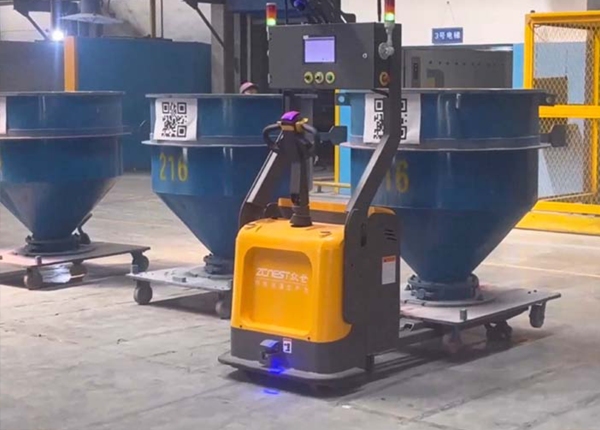
Importing an AGV fleet from China does not necessarily mean that every part of the installation must be completed remotely. For larger warehouse automation projects, Chinese manufacturers may send engineers or commissioning technicians to the customer's facility for installation support, software commissioning, integration, training, and acceptance testing.
However, the scope of an overseas engineering visit varies significantly from one supplier to another. A quotation that says “on-site commissioning included” does not automatically mean that the Chinese team will perform electrical installation, WMS programming, safety certification, and every other local integration task.
For an international AGV project, the buyer should define the on-site scope, number of days, responsible parties, travel costs, technical deliverables, and acceptance responsibilities before placing the order.
The exact scope depends on the project, but traveling engineers may be responsible for commissioning activities directly related to the AGV system.
AGV mechanical inspection and commissioning
Navigation map creation or adjustment
Vehicle parameter configuration
Charging-station commissioning
Fleet-management software configuration
Traffic and route configuration
Pallet pickup and placement testing
WMS or warehouse-control interface testing
Fault diagnosis during commissioning
Operator and maintenance training
FAT/SAT support
The engineer's role is normally to make the supplied AGV system operate correctly within the agreed project configuration. It does not automatically include performing every electrical, construction, IT, or regulatory task at the customer's facility.
There is no universal number of weeks included with a Chinese AGV purchase.
A small fleet with a simple layout may require considerably less commissioning time than a large distribution center with multiple AGVs, high-bay racks, elevators, WMS integration, automatic charging, and complex traffic rules.
For procurement purposes, avoid accepting wording such as “one engineer will be provided for installation.” The contract should specify the actual service period.
| Item | What to Define |
|---|---|
| Engineer count | Number of Chinese engineers or technicians traveling to site |
| Duration | Number of working days or weeks included |
| Arrival | Whether engineers arrive before equipment delivery or after installation |
| Commissioning | Specific commissioning activities included |
| Training | Operator, maintenance, and software training hours |
| Acceptance | FAT/SAT support and testing responsibilities |
| Extra days | Daily engineering rate if commissioning exceeds the included period |
This is particularly important for overseas projects because a commissioning delay can increase hotel, travel, visa, local labor, and project-management costs.
Usually, this should be treated as two separate responsibilities: software integration and physical electrical installation.
Chinese AGV engineers may configure the fleet software, API, task interface, communication parameters, or PLC handshake required to exchange information with the customer's WMS. They may also work with the local automation or IT team during integration testing.
That does not automatically mean they should perform the building's permanent electrical wiring or make connections inside the customer's electrical distribution system.
Physical installation may involve local electricians, controls engineers, network technicians, or a system integrator depending on the facility and applicable requirements.
A typical responsibility split might look like this:
| Task | Possible Responsible Party |
|---|---|
| AGV software configuration | Chinese AGV supplier |
| WMS API configuration | AGV supplier + customer IT/WMS team |
| PLC handshake programming | AGV supplier and/or local integrator |
| Network cabling | Local IT/network contractor |
| Permanent electrical wiring | Qualified local electrical contractor |
| AGV commissioning | Chinese AGV engineering team |
| Final system acceptance | Customer + AGV supplier + relevant integrators |
The exact allocation should be agreed before installation. Otherwise, the project can reach the site with the AGVs ready but without the local electrical, network, or PLC infrastructure required for commissioning.
They may provide technical documentation, commissioning records, risk-assessment information, safety test results, or manufacturer declarations, but a buyer should not automatically assume that a traveling Chinese engineer can provide the final legal or regulatory sign-off for the customer's facility.
A warehouse's final safety responsibilities can involve the equipment manufacturer, employer, local integrator, qualified professionals, authorities having jurisdiction, and other parties depending on the installation and jurisdiction.
The supplier can nevertheless provide useful documentation for the customer's records, such as:
AGV safety-function descriptions
Safety sensor specifications
Emergency-stop test records
Protective-field verification records
Commissioning checklists
Functional test results
Operator training records
FAT/SAT documentation
Manufacturer technical declarations and applicable certification documents
The buyer should distinguish between manufacturer documentation and local regulatory approval or facility sign-off. One does not automatically substitute for the other.
This is a commercial term, not a universal industry rule.
Some Chinese AGV quotations include an agreed number of on-site commissioning days with travel expenses included. Others quote the engineering service separately and charge the customer for flights, accommodation, local transportation, visas, meals, or additional working days.
The quotation should therefore separate the engineering service from reimbursable expenses wherever possible.
| Expense | Question to Ask |
|---|---|
| International airfare | Included in the project price or reimbursed separately? |
| Visa | Who pays application and processing costs? |
| Hotel | Included, capped, or reimbursed at actual cost? |
| Local transportation | Airport transfers and travel between hotel and warehouse |
| Meals | Included in daily allowance or paid separately? |
| Additional days | Daily engineering rate after the included commissioning period |
Do not assume that “installation included” means “all travel expenses included.” The commercial quotation should state this explicitly.
International commissioning schedules should include a contingency plan for travel and immigration delays.
For a major AGV deployment, the contract can define whether remote engineering support is available before the engineer arrives, how a delayed visit affects the commissioning schedule, and whether additional travel caused by a supplier-side delay is charged to the customer.
It is also useful to identify whether the supplier has another qualified engineer who can travel if the originally assigned engineer becomes unavailable.
A professional commissioning plan should identify what happens before, during, and after the Chinese engineering team arrives.
Confirm warehouse readiness before engineer travel.
Verify AGV delivery, unpacking, and physical inspection.
Confirm network and charging infrastructure.
Create or configure the navigation map.
Configure vehicle and fleet parameters.
Test pallet pickup and placement.
Test traffic and charging logic.
Connect and test WMS or other warehouse interfaces.
Verify safety functions and agreed operating scenarios.
Train warehouse personnel.
Execute SAT and record outstanding issues.
Complete handover documentation.
The customer should receive a written commissioning record rather than relying only on verbal confirmation that the system is ready.
For a significant automation project, this can be a useful contractual requirement, but the definition of SAT must be clear.
If the engineer's departure date is fixed before the customer knows whether the system has passed its acceptance tests, the customer may have limited leverage when unresolved commissioning issues remain.
A better structure is to define the expected commissioning period and then specify what happens if additional days are required because of a supplier-caused defect, incomplete software integration, or failure to meet agreed acceptance criteria.
At the same time, the contract should distinguish supplier-caused delays from customer-caused delays, such as an unavailable WMS interface, incomplete network infrastructure, inaccessible warehouse areas, or missing local equipment.
Before signing the purchase order, ask the Chinese supplier to provide a written overseas commissioning scope covering the following items:
Number of engineers
Expected arrival date
Included on-site days
Installation and commissioning responsibilities
WMS/ERP integration responsibilities
PLC and electrical interface responsibilities
Network responsibilities
Safety documentation to be provided
Training scope
FAT/SAT responsibilities
Travel and accommodation costs
Additional engineer daily rate
Remote support after the engineers leave
This list should be included in the commercial proposal or technical agreement rather than left to an informal email discussion.
A Chinese AGV manufacturer sending engineers overseas can significantly simplify deployment, but the success of the project depends on how clearly responsibilities are divided.
The Chinese engineering team may handle vehicle commissioning, fleet software, navigation, integration testing, training, and manufacturer-side troubleshooting. Local contractors may still be required for permanent electrical work, network infrastructure, building modifications, or other site-specific work.
Likewise, manufacturer safety documentation is valuable for the project record, but it should not automatically be treated as the customer's final local regulatory sign-off.
Before importing an AGV fleet from China, make the on-site engineering scope part of the contract: define the number of engineers, included days, technical responsibilities, WMS integration, safety documentation, travel expenses, additional-day rates, and SAT obligations.
That turns “on-site commissioning included” from a vague sales promise into a measurable project deliverable.







 Chinese
 English