

When importing AGVs or autonomous forklifts from China, buyers often focus on payload, lift height, navigation, battery capacity, and software integration. However, appearance can also become an important part of the purchase specification, especially when the vehicles will operate inside a customer-facing warehouse or under a corporate brand.
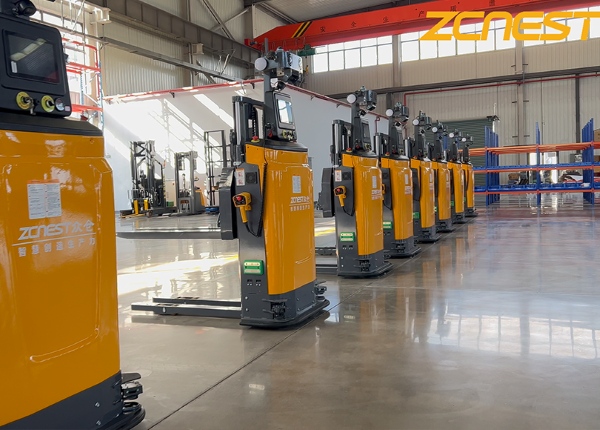
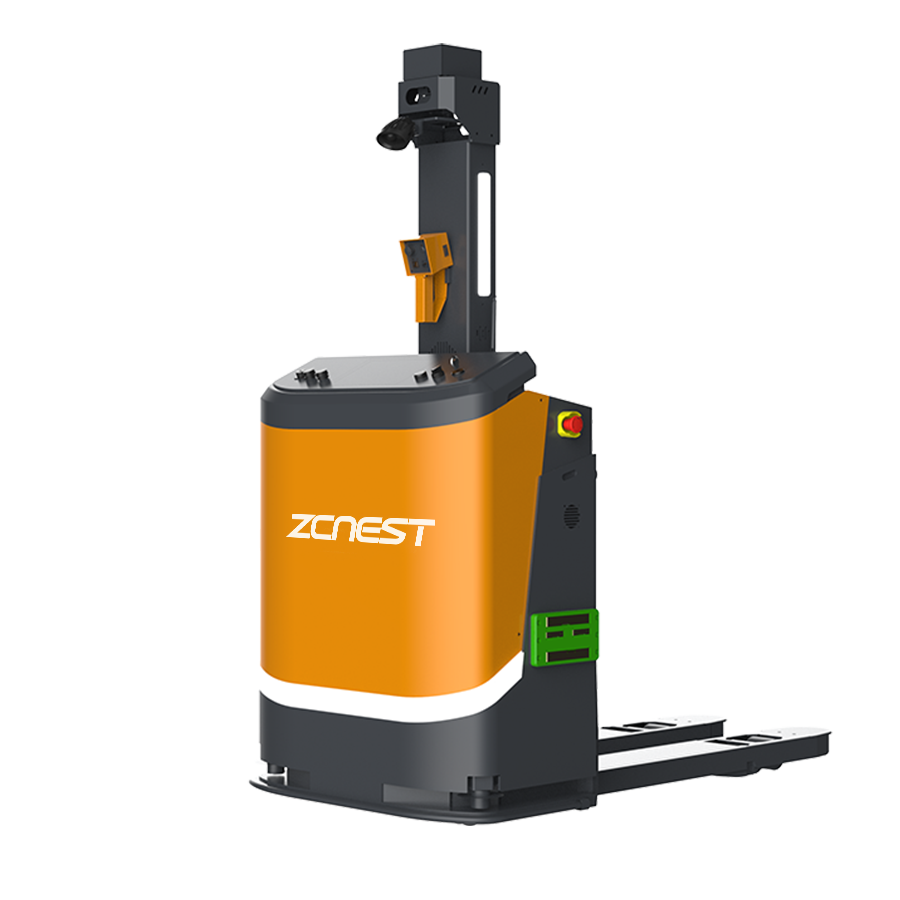
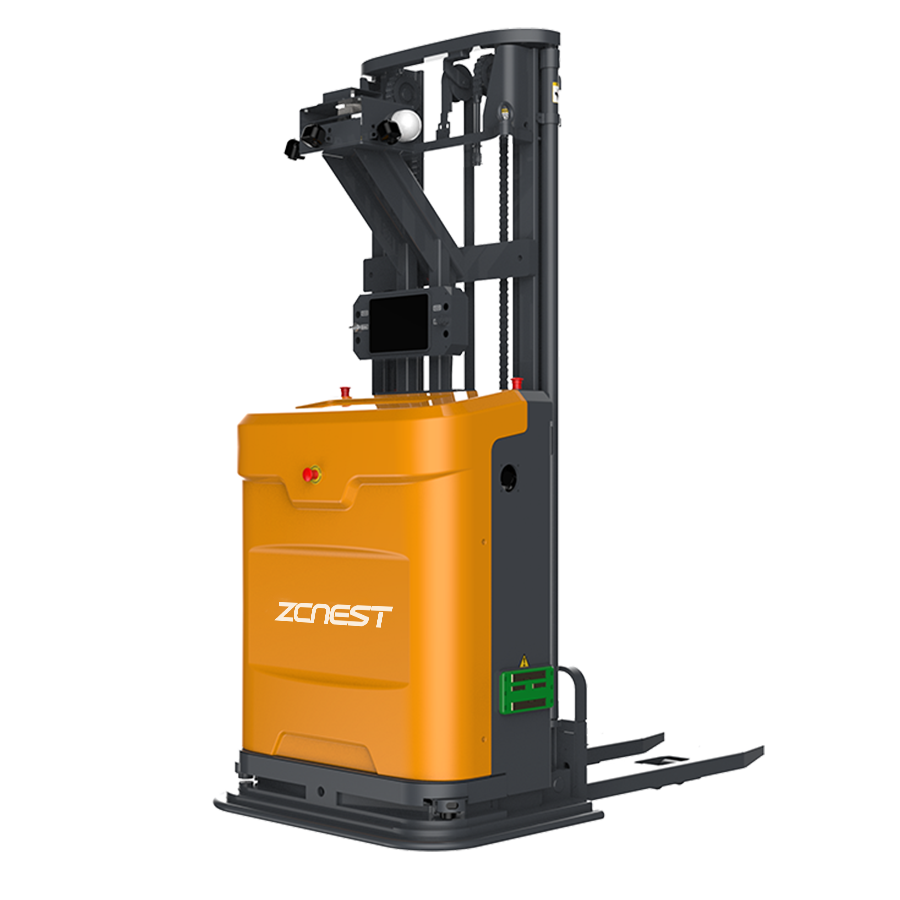
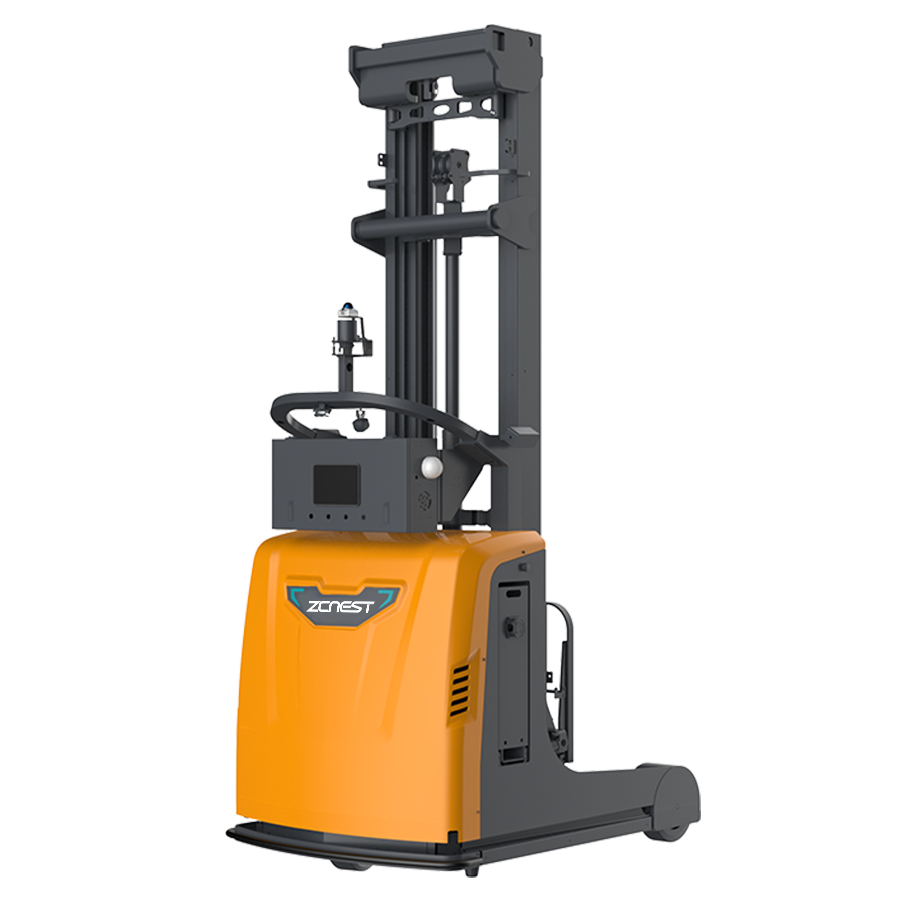
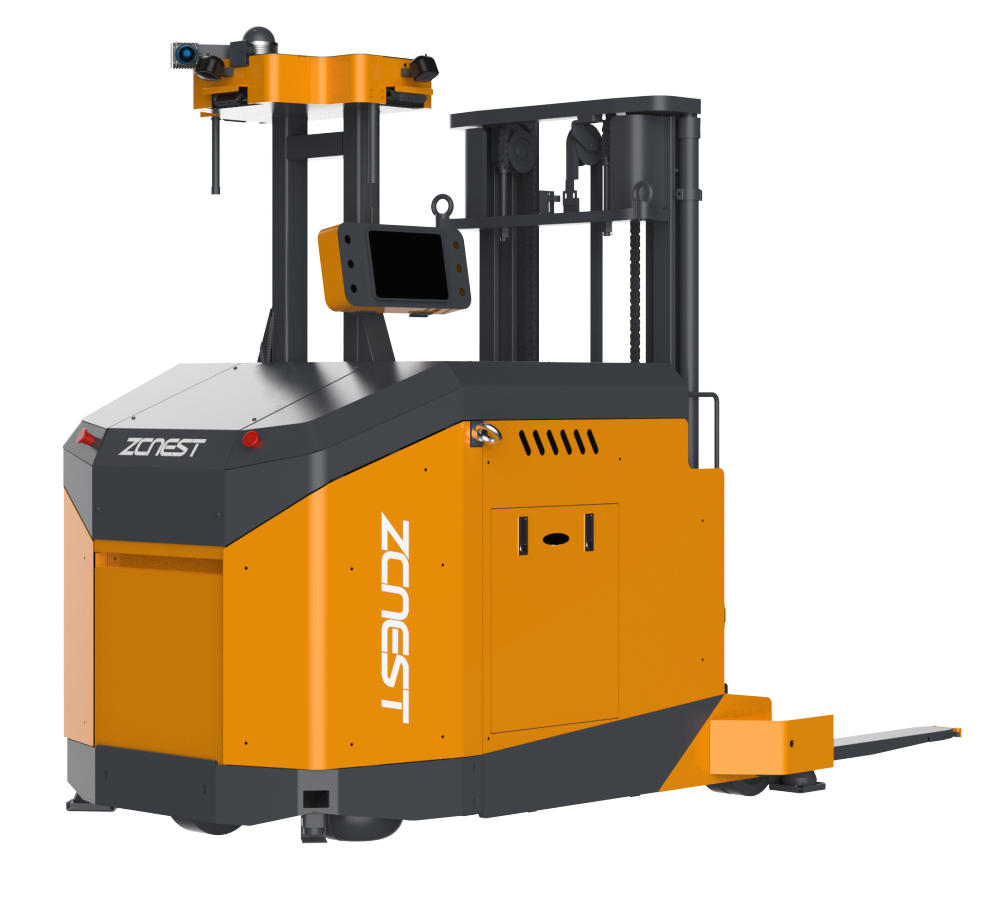
Custom chassis colors, corporate logos, warning decals, and other branding elements can often be requested during the manufacturing process. The important point is to treat these items as part of the engineering and production specification rather than as an informal request made after the AGVs have already entered production.
In many cases, yes. A Chinese AGV manufacturer may be able to offer custom powder coating according to a specified RAL color reference, provided the requested color and finish are compatible with the factory's coating process.
For a procurement project, however, simply writing “paint the AGV blue” is not precise enough. A better specification identifies the color reference and finish.
RAL color number
Gloss or matte finish
Texture requirement
Which chassis panels are included
Whether forks and other metal components are included
Whether plastic covers require a different finishing process
Required appearance standard after production
Powder coating is normally applied to suitable metal surfaces after surface preparation. Different materials and plastic components may require different coating or finishing methods, so the buyer should identify exactly which parts are expected to match the corporate color.
For larger AGV orders, requesting a physical color sample or factory-approved sample panel before mass production can reduce the risk of receiving vehicles whose color appears noticeably different from the buyer's corporate standard.
A RAL reference is generally easier for an industrial manufacturer to work with than a web-based corporate color shown on a computer screen.
Digital RGB or HEX values describe colors for screens and do not directly define an industrial coating specification. If a company's branding department provides only a digital color code, the manufacturer may need an approved physical sample or a suitable coating-system reference before production.
For an international AGV purchase, the cleanest process is usually:
Choose the corporate color.
Identify the closest applicable RAL reference.
Confirm the required gloss and surface finish.
Ask the Chinese factory to confirm feasibility.
Approve a sample if color consistency is important.
Include the approved color specification in the purchase order.
Yes. A customer logo can generally be supplied to the factory for application to AGV side panels, covers, control cabinets, or other suitable surfaces.
The important issue is not only the logo image itself but the production file and application method.
For manufacturing, vector artwork such as AI, EPS, SVG, or PDF with editable vector elements is normally more useful than a low-resolution JPG or PNG. The supplier should also know the required logo dimensions, position, orientation, and color.
Before mass production, request an artwork proof showing how the logo will appear on the actual AGV panel. This is particularly useful when the side panel contains curves, ventilation openings, sensors, warning labels, handles, or removable covers.
Not necessarily. The factory may recommend different methods depending on the surface and expected durability.
Common options can include:
Screen printing
Industrial vinyl decals
Digital printing
UV printing
Cut vinyl graphics
Laser marking for suitable components
Painted or powder-coated branding elements
For an AGV operating in a warehouse, the choice should consider abrasion, cleaning chemicals, pallet contact, sunlight exposure, oil or grease, and the possibility of repeated contact with racks or other equipment.
If the logo is purely for visual branding, a durable decal may be sufficient. If the marking is expected to survive years of industrial cleaning and mechanical contact, the buyer should request the manufacturer's recommended industrial marking process instead of specifying screen printing automatically.
It can, although the effect depends on the order quantity, production schedule, coating process, and whether the requested finish is already supported by the factory.
For example, changing from the manufacturer's standard color to an existing color already used on other production orders may create little additional work. A completely new color may require powder procurement, production scheduling, sample approval, cleaning or coating-line preparation, and additional quality inspection.
Logo customization can also affect the schedule if artwork approval happens after mechanical production has already started.
For this reason, branding requirements should ideally be frozen during the engineering or pre-production approval stage.
A purchase contract can separate:
Standard manufacturing lead time
Custom paint preparation time
Customer artwork approval deadline
Sample approval time
Final production time
FAT date
Shipment-ready date
This makes it easier to determine whether a delayed shipment was caused by the manufacturer's production schedule or by late customer approval of the custom appearance.
Normally, changing the exterior color of a chassis does not by itself change the vehicle's payload, navigation system, or drive configuration. However, buyers should be careful when custom painting or modifying components that have a safety or identification function.
For example, warning labels, safety markings, nameplates, sensor windows, reflective surfaces, emergency-stop labels, and other safety-related markings should not be covered or repositioned without confirming the effect on the vehicle's required documentation and operation.
OSHA's powered-industrial-truck requirements specifically address nameplates and markings. The regulation requires applicable nameplates and markings to be maintained in a legible condition, and modifications affecting capacity or safe operation require manufacturer approval.
Therefore, corporate branding should be placed around—not over—required technical and safety information.
They should not be assumed to be identical across all Chinese AGV manufacturers or all export configurations.
An AGV may have warning labels, hazard symbols, operating instructions, reflective markings, lights, audible alarms, or other visual safety devices. The exact combination depends on the vehicle design, intended market, operating environment, and applicable requirements.
OSHA's forklift guidance states that warning labels and decals provide safety information and should remain clearly visible; missing, damaged, or illegible safety labels should be replaced. OSHA also recognizes that industrial trucks can use visual and sound-producing warning devices depending on workplace conditions.
That does not mean every Chinese AGV automatically arrives with the exact reflective decal package required for a particular U.S. warehouse.
If reflective safety markings are important for your project, specify them directly in the purchase order instead of relying on the phrase “export standard.”
A buyer can create a project-specific marking schedule covering the vehicle's visible safety information.
Depending on the vehicle and application, this may include:
Danger and warning labels
Emergency-stop identification
Fork and pinch-point warnings
Load-capacity and technical nameplates
Battery and charging warnings
Pedestrian warning markings
Reflective strips or conspicuity markings
Manufacturer identification
Model and serial-number markings
Customer fleet identification numbers
For U.S. deployments, the buyer should have the final safety-label package reviewed against the applicable vehicle and workplace requirements rather than assuming that a CE label or a generic “export package” automatically satisfies every local requirement.
Corporate branding can normally be incorporated without changing the fundamental safety identification scheme. However, safety-critical colors and warning markings should not be altered simply to match a corporate brand.
For example, a company may want its AGVs to use a dark corporate color with a matching logo. That can be acceptable as a branding requirement, while emergency-stop identification, warning labels, reflective markings, and other required safety information remain clearly distinguishable.
A good specification therefore separates three categories:
Corporate appearance: chassis color, logo, graphics, fleet number.
Technical identification: model, serial number, capacity, battery and equipment labels.
Safety identification: warnings, emergency-stop markings, hazard labels and required conspicuity features.
Instead of adding “custom color and logo” as a single line in an RFQ, provide a small branding specification.
| Item | Specification |
|---|---|
| Chassis color | RAL reference + finish |
| Logo | Vector artwork + dimensions + position |
| Application method | Factory-recommended durable method |
| Warning markings | Required locations and languages |
| Reflective markings | Material, location and quantity |
| Approval | Artwork/color sample before mass production |
| Lead time | Additional time, if any, confirmed before PO |
Custom appearance should be inspected during FAT rather than for the first time after the AGVs arrive at the warehouse.
Check the actual vehicles for:
Correct RAL color
Consistent finish across vehicles
Logo size and position
Correct logo orientation
Proper adhesion or marking quality
No overspray on sensors, connectors, or moving components
Legible model and serial information
Visible warning labels
Correct reflective safety markings
No branding covering required safety information
Photographs of the approved production appearance can also be included in the FAT record. This gives both the buyer and supplier a clear reference if additional units are manufactured later.
Custom paint and branding are usually straightforward compared with the engineering work involved in an AGV project, but they should still be treated as controlled manufacturing requirements.
Specify the RAL color, surface finish, logo artwork, marking locations, application method, safety-label requirements, and approval process before production starts. Confirm whether the customization affects the manufacturing schedule and include the agreed requirements in the purchase order and FAT checklist.
Most importantly, do not treat “export-grade AGV” as a substitute for a detailed safety-marking specification. OSHA requires applicable forklift markings and nameplates to remain legible, while workplace-specific visual and warning devices may depend on the actual operating environment.





 Chinese
 English