


Wooden pallets are often less consistent than the pallet dimensions shown on a warehouse specification sheet. In daily operations, an AGV may encounter pallets with warped boards, broken deck planks, missing bottom runners, uneven fork openings, damaged corners, loose nails, or loads that are not centered.
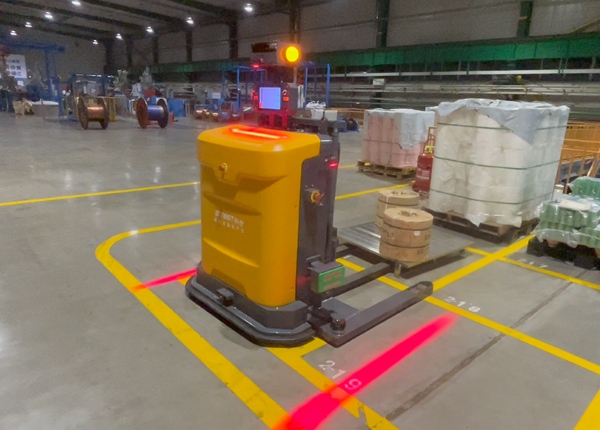
These conditions can create a serious challenge for an automated forklift. A vehicle may be able to navigate accurately to a pickup location but still fail to insert its forks safely into the pallet. The problem is not always a navigation problem. It may involve pallet geometry, fork clearance, load stability, sensor visibility, mechanical deflection, or an unsuitable pallet condition.
Chinese AGV manufacturers may offer 2D LiDAR, 3D vision, depth cameras, fork-position feedback, pallet profiles, and recovery logic to improve handling performance. However, no single sensor or software parameter can make every damaged wooden pallet safe to handle.
For a commercial warehouse project, the correct approach is to define an acceptable pallet-quality window, identify the sensing and handling functions required, and validate representative pallet conditions during factory and site acceptance testing.
A 3D vision system may help an AGV identify the visible geometry of a pallet before fork insertion. Depending on the sensor arrangement and software, the system may estimate the position of deck boards, fork openings, pallet edges, load height, pallet tilt, or obstacles near the entry area.
However, detecting a pallet is not the same as confirming that the pallet is structurally safe or suitable for automatic handling.
A camera or depth sensor may identify some visible conditions, such as:
A pallet that is visibly tilted;
A broken or missing deck board in the sensor’s field of view;
An obstructed fork-entry opening;
An unusual pallet edge or corner position;
A pallet that is not aligned with the expected pickup coordinate;
A load that is visibly shifted outside the expected profile;
An object or damaged board extending into the fork path.
Other defects may be difficult to detect. A hidden crack, loose nail, weak runner, partially broken board, internal structural weakness, or damage beneath the load may not be visible to the AGV’s sensors.
Wooden pallets also present sensing difficulties because of shadows, dark surfaces, irregular textures, reflective wrapping, dust, low light, and occlusion by the transported goods. A 3D camera cannot reliably inspect every part of a pallet if the load blocks the relevant area.
The buyer should therefore ask the supplier to define exactly what the vision system is intended to detect. The specification should distinguish between:
Geometry detection: locating pallet edges, openings, and visible structural features;
Alignment detection: measuring the pallet’s position relative to the vehicle and forks;
Obstacle detection: identifying objects that obstruct the fork path;
Load-profile detection: checking whether the load exceeds an approved height or width envelope;
Damage classification: determining whether the pallet belongs to an approved, rejected, or uncertain condition category.
Damage classification is more demanding than geometric detection. If the supplier claims that its 3D vision system can reject damaged pallets, the buyer should request the supported defect categories, image examples, environmental limitations, false-rejection behavior, and missed-detection handling.
A Chinese AGV may use several sensing layers rather than relying on one camera. The exact architecture depends on the vehicle type, fork design, lift height, payload, navigation method, and pallet-handling process.
| Sensor or device | Possible role in pallet handling |
|---|---|
| 3D vision or depth camera | Estimate visible pallet geometry, fork openings, load shape, and relative alignment |
| 2D LiDAR | Detect surrounding obstacles, pallet edges, rack features, and clearance conditions |
| Fork-position sensors | Monitor fork spread, lift height, or mechanical position depending on the design |
| Wheel and steering encoders | Provide motion feedback for approach and positioning control |
| Proximity or photoelectric sensors | Detect nearby objects or confirm certain physical conditions during pickup |
| Load or hydraulic feedback | Help identify lift response, abnormal resistance, or load-related conditions where the hardware supports it |
| Pallet presence sensors | Confirm whether a pallet or load is present at the expected position |
These sensors serve different purposes. A navigation LiDAR is not automatically a pallet-inspection camera. A fork encoder does not directly prove that a pallet is structurally sound. A load sensor may indicate abnormal resistance but may not identify the exact broken board causing the problem.
The supplier should explain which sensor is responsible for each decision and what the AGV does when the sensor data is uncertain.
Dynamic fork alignment normally means that the AGV adjusts its approach or fork position based on detected pallet geometry rather than relying only on a fixed coordinate.
The adjustment may involve several stages:
Identify the pallet’s approximate location.
Estimate the pallet centerline and available fork-entry area.
Compare the observed geometry with the selected pallet profile.
Correct the vehicle’s lateral or angular approach.
Adjust fork spacing or fork position if the vehicle supports powered adjustment.
Move forward at a controlled speed.
Check whether the forks entered the expected area.
Confirm the pickup condition before lifting or transporting the load.
The actual adjustment capability depends on the mechanical design. Some AGVs may support powered fork spreading, while others may use fixed forks and compensate through vehicle positioning. A vehicle with fixed forks cannot solve every pallet-width problem through software.
The system may use camera-based alignment, LiDAR geometry, reflector or natural-feature localization, encoder feedback, or a combination of these inputs. The final pickup result depends on more than the sensor’s nominal resolution.
Important practical factors include:
Fork thickness and spacing;
Fork length and load center;
Fork tip geometry;
Vehicle stopping accuracy;
Steering and chassis backlash;
Fork and mast deflection;
Pallet entry clearance;
Pallet skew and deformation;
Floor flatness and slope;
Load weight and center of gravity;
Visibility of the fork-entry area;
Approach speed and correction strategy.
A supplier should not describe the feature only as “automatic fork alignment.” The buyer should ask whether the function adjusts vehicle position, fork spacing, fork height, steering angle, or all of these. The buyer should also ask for the permitted pallet dimension range and the conditions under which the function refuses a pickup.
In many AGV systems, software can accommodate a certain range of pallet variations without changing the vehicle hardware. However, software configuration cannot overcome every physical limitation.
Potentially configurable items may include:
Pallet length and width;
Overall pallet height;
Fork-entry opening dimensions;
Expected runner positions;
Permitted pallet skew;
Pickup approach distance;
Alignment tolerance;
Fork insertion speed;
Lift-before-travel conditions;
Load-center parameters;
Pallet detection thresholds;
Retry count and recovery behavior;
Allowed pallet profile IDs;
Pickup and drop-off coordinates.
These settings are useful when the pallet remains within the mechanical and sensing capability of the vehicle. For example, a fleet may support several approved pallet profiles for standard wooden pallets, plastic pallets, metal skids, or different runner arrangements.
Software changes may not be sufficient when:
The pallet opening is physically too narrow for the forks;
The fork length is unsuitable for the load depth;
The load center exceeds the vehicle’s approved rating;
The pallet is missing a critical runner;
The pallet is structurally weak under the load;
The fork or mast cannot reach the required position;
The sensor cannot see the relevant entry area;
The pallet deformation exceeds the vehicle’s alignment range;
The load is unstable or badly distributed.
A custom pallet profile should therefore include more than two dimensions. The supplier should record pallet geometry, fork-entry direction, runner layout, empty and loaded height, maximum weight, load center, acceptable skew, and the percentage of pallets that fall outside the standard profile.
The buyer should also confirm whether local engineers can create or modify pallet profiles, or whether every change requires the Chinese factory’s approval. Access to a configuration screen does not necessarily mean that all parameters are safe for unrestricted local editing.
A damaged pallet can cause a pickup failure in several ways. The forks may not enter, the pallet may move unexpectedly, the load may remain partially supported, the vehicle may detect abnormal resistance, or the expected load confirmation may not occur.
The AGV should not simply continue applying force until the pallet moves. A safe recovery strategy should use controlled motion, detection limits, and a clear transition to an exception state.
A typical recovery sequence may include:
Stop or slow the pickup motion: the vehicle stops the insertion or lifting action when the expected condition is not achieved.
Preserve the vehicle state: the system records the task, vehicle ID, pallet ID if available, location, sensor status, and fault code.
Check the pickup condition: the AGV evaluates whether the forks are partially inserted, whether the load is present, and whether the vehicle is aligned.
Perform a limited retry: if the condition is considered safe, the vehicle may make a small reverse, reposition, or alignment attempt.
Reclassify the pallet: the pallet may be marked as unavailable, damaged, uncertain, or requiring manual inspection.
Notify the fleet manager: the task is sent to the control system with an exception reason.
Request human intervention: a trained operator may inspect the pallet, replace it, adjust the load, or authorize a new task.
Resume or cancel the mission: the fleet software decides whether to retry later, assign another pallet, or close the task as failed.
The exact behavior is supplier-specific. Some systems may support automatic retries, while others may require the vehicle to stop and wait for an operator. The buyer should not assume that every AGV has the same exception-handling logic.
The recovery protocol should define the maximum number of attempts, the permitted correction distance, the maximum insertion force or resistance threshold where measurable, the conditions for a safety stop, and the escalation path after repeated failure.
A pickup failure is more useful when the fleet software records a meaningful exception instead of displaying only a generic message such as “task failed.”
Useful event information may include:
AGV identification;
Time and warehouse location;
Task or mission number;
Pallet ID, barcode, or RFID if available;
Selected pallet profile;
Observed alignment offset;
Fork position and lift status;
Sensor or camera diagnostic state;
Number of retry attempts;
Fault code and error description;
Whether the pallet was classified as damaged or merely not detected;
Whether human intervention is required;
Whether the task was cancelled, retried, or reassigned.
If the software supports image or sensor snapshots, the buyer should ask whether an image of the failed pickup can be stored with the event. This can help maintenance and warehouse teams distinguish between a damaged pallet, an incorrect pallet profile, poor lighting, an obstructed sensor, and a navigation offset.
The buyer should also confirm whether exception data can be exported through reports, APIs, database access, or a standard integration interface. Without accessible history, it is difficult to identify recurring pallet-quality problems and quantify their effect on throughput.
A standard pallet test using only clean, straight, correctly sized pallets does not adequately validate an AGV intended for a mixed warehouse environment.
The test sample should include representative conditions such as:
Standard wooden pallets in good condition;
Moderately warped deck boards;
One missing or damaged deck board;
Uneven or partially obstructed fork openings;
Different runner layouts;
Small pallet-size variations;
Pallets with visible corner damage;
Loads that are slightly off-center;
Dark or dusty wooden surfaces;
Low-light and shadowed pickup areas;
Partially blocked pallet openings;
Pallets that should be rejected as unsafe.
The test should measure more than whether the AGV eventually completes the task. Relevant measures may include pickup success rate, false rejection rate, number of retries, time per pickup, pallet damage, load stability, operator intervention frequency, and the quality of the recorded exception.
The buyer should define the acceptable pallet-quality range before testing. For example, the project may classify pallets into approved, conditionally approved, and rejected categories. The exact limits should be based on the vehicle’s mechanical design, the load, the warehouse process, and the buyer’s safety requirements.
A supplier should not promise that the AGV will handle all “damaged pallets” unless the term is clearly defined. A pallet with a slightly uneven board is not equivalent to a pallet with a missing structural runner or a load that can collapse during lifting.
Pallet-handling requirements should be written as measurable technical conditions rather than broad marketing statements.
The specification should include:
Approved pallet types and profile IDs;
Nominal and permitted pallet dimensions;
Fork-entry direction and opening geometry;
Maximum pallet and load weight;
Load center and load height;
Permitted pallet skew and deformation;
Conditions classified as unacceptable;
Required vision or sensing functions;
Dynamic fork adjustment capability, if required;
Maximum approach and insertion speed;
Pickup confirmation method;
Retry and exception-handling logic;
Human intervention procedure;
Exception codes and data export capability;
Local configuration permissions;
FAT and SAT test samples and acceptance criteria.
If the buyer expects to introduce new pallet profiles later, the contract should define the process for adding them. It should state whether new profiles are included in the software license, whether engineering fees apply, whether factory testing is required, and who is responsible for validating the resulting pickup performance.
Can the 3D vision system detect missing boards, warped boards, or blocked fork openings?
Which pallet defects can the system detect reliably, and which defects remain outside its capability?
Does the AGV identify a damaged pallet before insertion or only after a pickup failure?
Does the vehicle use fixed forks or powered fork adjustment?
Can the vehicle correct lateral offset and approach angle automatically?
What pallet dimension and entry-clearance range is supported?
Can local engineers create and select different pallet profiles?
Which parameters are safe for local adjustment?
What happens after the first, second, and third pickup failure?
Can the AGV reverse safely after partial fork insertion?
Does the fleet software record the exact exception reason?
Can the system save images or sensor data from a failed pickup?
Can damaged-pallet events be exported through an API or report?
What conditions cause the AGV to request manual inspection?
How are unsafe pallets prevented from being repeatedly assigned?
Which damaged and non-standard pallets will be tested during FAT and SAT?
What performance criteria define an acceptable pickup success rate?
The central issue is not whether a Chinese AGV has a 3D camera or a dynamic alignment feature. The real issue is whether the complete vehicle, sensor system, fork mechanism, software, and exception workflow can handle the pallet conditions found in the buyer’s warehouse.
For a reliable deployment, the buyer should define acceptable pallet geometry, identify which defects must be rejected, validate dynamic alignment on representative loads, and require clear recovery behavior when pickup fails. Software profiles can often accommodate controlled pallet variation, but they cannot replace suitable fork geometry, adequate sensing, or a structurally safe pallet.




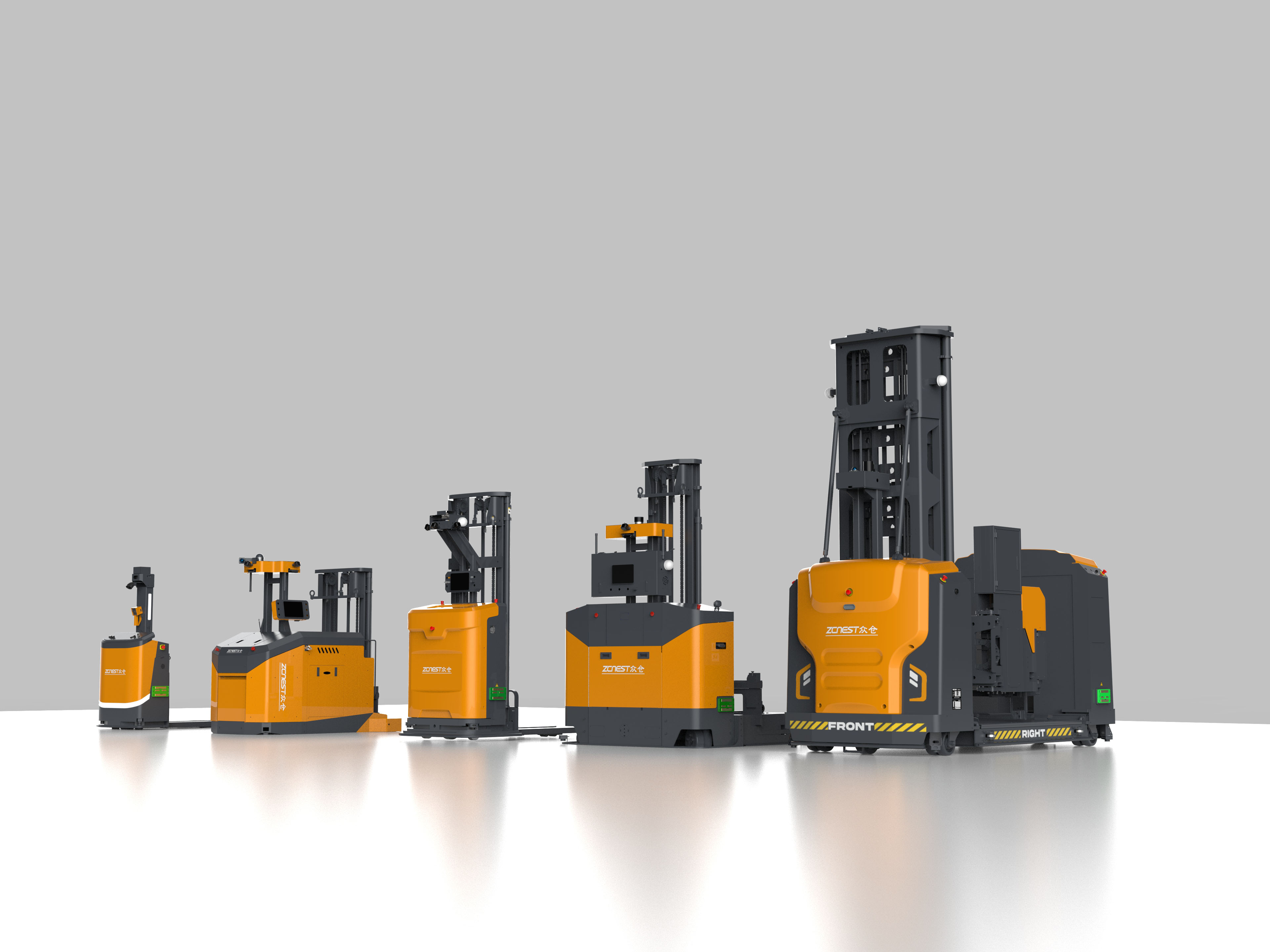
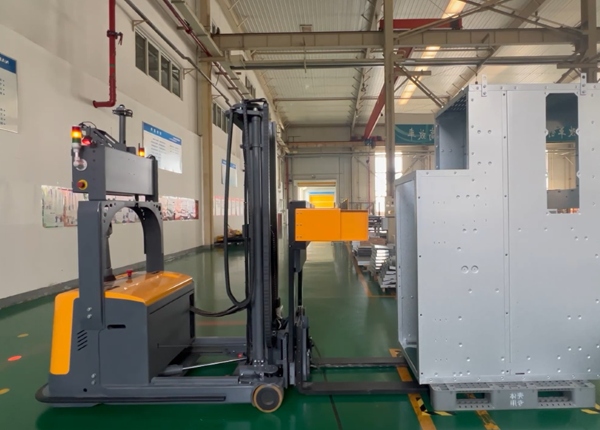
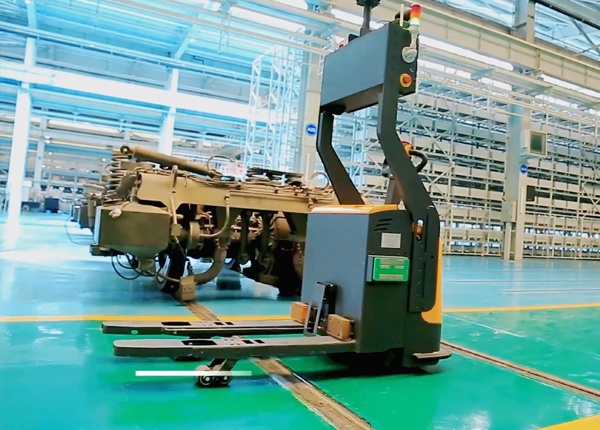

 Chinese
 English