


When an overseas warehouse receives proposals from several Chinese unmanned forklift manufacturers, comparing the quoted unit price is rarely enough. Different suppliers may propose different vehicle types, navigation systems, software architectures, integration scopes, commissioning services, and warranty terms.
A procurement comparison should therefore put every supplier into the same technical and commercial framework before a purchase decision is made.
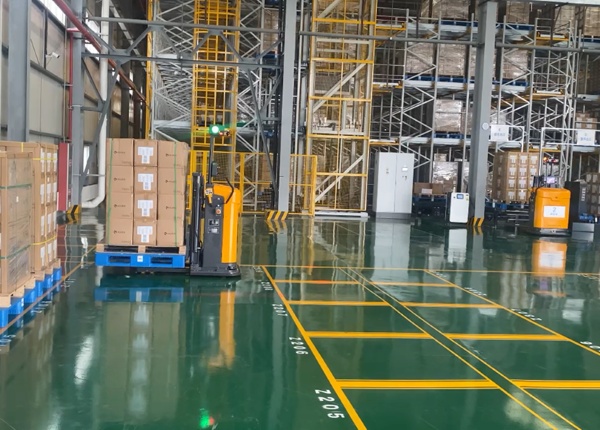
Send every supplier the same basic site information.
Warehouse layout
Pallet dimensions
Maximum pallet weight
Load center
Required lift height
Required aisle width
Daily and hourly pallet movements
Travel distances
Floor conditions
Temperature and environmental conditions
WMS and ERP requirements
If each supplier makes assumptions from different information, the resulting proposals may not actually be comparable.
The first technical comparison should focus on whether each proposed vehicle can perform the required warehouse tasks.
| Specification | Supplier A | Supplier B | Supplier C |
|---|---|---|---|
| Payload | Specified | Specified | Specified |
| Lift height | Specified | Specified | Specified |
| Aisle requirement | Specified | Specified | Specified |
| Navigation | Specified | Specified | Specified |
| Battery | Specified | Specified | Specified |
A supplier may propose laser SLAM, 3D SLAM, reflector-based navigation, magnetic navigation, QR navigation, or another configuration.
The important question is not which technology sounds more advanced. The buyer should ask which navigation method has been validated for the actual warehouse.
For example, consider long repetitive aisles, open spaces, reflective surfaces, changing staging areas, rack ends, pedestrian traffic, and temporary obstacles. The supplier should explain how localization is maintained in those conditions.
Two AGVs with the same payload rating may perform very differently with a customer's pallets.
Ask each supplier to confirm:
Fork dimensions
Fork spacing
Fork adjustment range
Minimum fork-entry clearance
Supported pallet types
Load center assumptions
Approach tolerance
Placement requirements
The best comparison is based on representative pallets and actual rack locations rather than a specification sheet alone.
The vehicle is only one component of a multi-AGV system. Ask suppliers to demonstrate the fleet-management functions included in the proposal.
Task dispatch
Traffic management
Vehicle monitoring
Battery management
Alarm history
Mission history
Manual intervention
Map management
User permissions
Data export
API access
Also determine whether the software is installed locally or hosted externally, whether Internet access is required, and what happens if the external connection is unavailable.
One proposal may include WMS integration while another may only provide an API.
These are commercially different scopes.
Ask suppliers to document the actual interface, task format, status feedback, error handling, cancellation process, and testing responsibilities.
The quotation should clearly identify how much engineering support is included.
Warehouse mapping
Route configuration
Traffic rules
Charging configuration
WMS integration
Safety parameter configuration
Operator training
On-site commissioning
FAT and SAT support
If on-site Chinese engineers are included, clarify the number of engineers, number of days, included activities, and additional-day charges.
Warranty should be compared by scope, not simply by duration.
Ask what happens when a drive motor, controller, sensor, battery, hydraulic component, or fleet server fails. Determine who diagnoses the problem, who supplies the replacement, and whether remote technical support is included.
For overseas buyers, response time and spare-parts logistics can be as important as the warranty period itself.
Exclusions can create a major difference between proposals.
Check whether each quotation excludes shipping, customs, electrical installation, network infrastructure, rack modifications, WMS development, local unloading, safety-related site work, or additional engineering.
A higher initial quotation may contain a broader project scope, while a lower quotation may leave more work for the buyer or a local integrator.
A useful procurement sheet should contain at least four sections:
Vehicle: payload, lift, aisle, dimensions, battery, navigation and safety.
Software: fleet management, WMS integration, API, data and cybersecurity.
Project: simulation, engineering, commissioning, FAT, SAT and training.
Commercial: equipment price, software fees, shipping, warranty, spare parts and exclusions.
Only after these items are normalized should the procurement team compare the total commercial proposal.
Every proposal should identify important assumptions.
For example, a throughput estimate may assume a specific travel distance, pallet weight, lift height, traffic level, charging strategy, and number of operating hours.
If Supplier A and Supplier B use different assumptions, their throughput or fleet-size recommendations cannot be compared directly.
The final comparison should not remain an internal spreadsheet. The approved technical scope should become part of the purchase specification.
This creates a clear reference for production, FAT, shipment, commissioning, SAT, warranty, and future fleet expansion.
For overseas buyers, the objective of proposal comparison is therefore not simply to identify the lowest quotation. It is to make sure every supplier is being compared against the same warehouse requirements, deliverables, assumptions, and acceptance conditions.





 Chinese
 English