


A warehouse simulation can be useful before purchasing an unmanned forklift fleet, but a visually impressive simulation does not automatically prove that the proposed system will achieve the required warehouse performance.
For overseas buyers, the key is to determine whether the simulation represents the actual warehouse, workload, vehicle specifications, traffic conditions, and operating assumptions.
The simulation should use an accurate representation of the warehouse.
Important elements include racks, columns, aisles, staging areas, doors, docks, charging stations, pedestrian areas, elevators, and other permanent obstacles that affect vehicle movement.
If the model is based on an outdated layout, the simulation results may not represent the future operating environment.
The simulation should use the proposed AGV's actual dimensions and operating characteristics as closely as practical.
Check vehicle length, width, turning behavior, fork dimensions, lift height, payload, acceleration, deceleration, and other parameters that influence cycle time and clearance.
A simulation using a generic vehicle model should not be treated as equivalent to one using the final proposed vehicle configuration.
Pallet size and load characteristics affect both storage geometry and handling time.
The model should identify pallet dimensions, load weight, load center, pickup direction, drop-off locations, and any special pallet types.
If the warehouse uses several pallet profiles, they should be represented in the analysis where they materially affect vehicle performance.
A simulation is only as meaningful as the workload assumptions behind it.
Ask the supplier to show the assumed pallet movements per hour, operating hours, inbound and outbound distribution, travel distances, lift cycles, peak demand, and task priorities.
If the simulation assumes a smooth average workload while the warehouse experiences strong peak periods, the resulting fleet-size recommendation may not represent actual production requirements.
Increasing the number of AGVs does not automatically increase warehouse throughput proportionally.
At higher fleet density, vehicles may wait at intersections, block narrow aisles, queue at pickup stations, or compete for charging resources.
The simulation should therefore show vehicle traffic, waiting time, congestion points, and bottleneck areas rather than only displaying completed missions.
Battery charging can influence available fleet capacity.
Ask the supplier to document the assumed battery capacity, charging time, charging strategy, charger availability, operating schedule, and vehicle availability during charging.
If the simulation assumes continuous vehicle availability without modeling charging, it may overstate effective fleet capacity.
For high-bay warehouses, the simulation should show actual rack levels, lift heights, approach paths, pallet insertion, and retrieval movements.
For narrow-aisle applications, verify that the simulated aisle width matches the proposed vehicle's validated operating requirements.
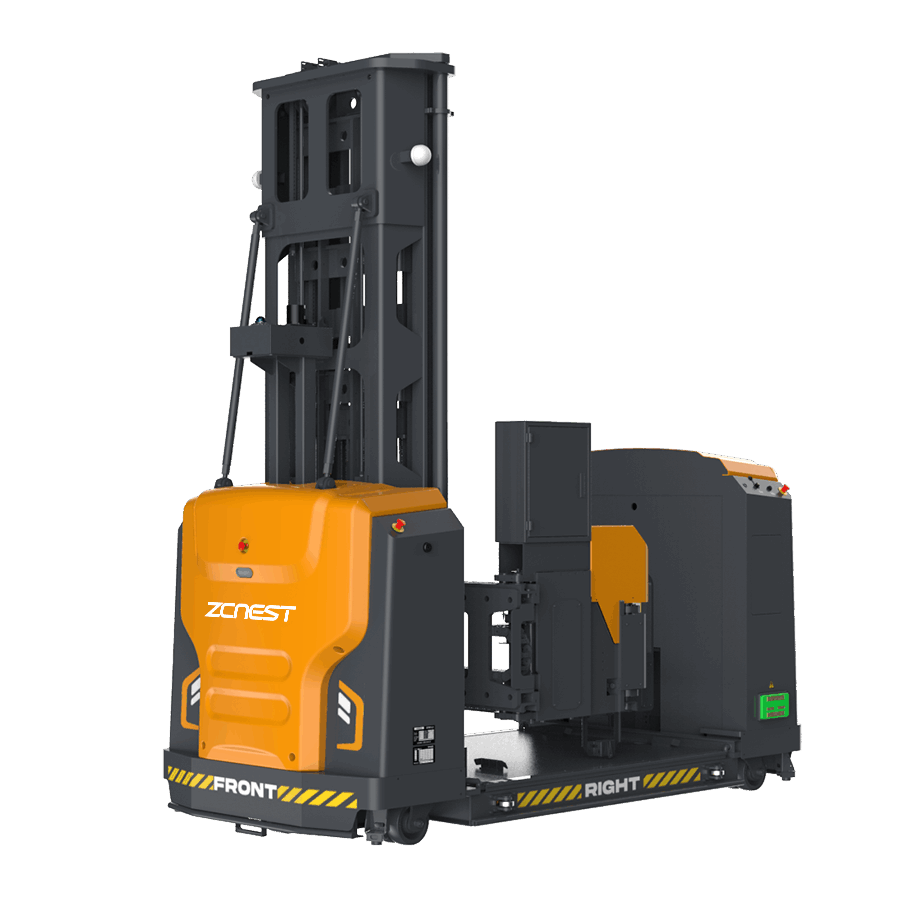
For example, a proposed VNA configuration may target an aisle around 1.65 m and lifting capability up to 11 m, but the actual warehouse layout, pallet dimensions, rack clearance, and vehicle configuration must still be validated together.
A useful simulation should identify where the system becomes constrained.
Pickup stations
Drop-off stations
Narrow aisles
Intersections
Charging stations
Elevators
Doors
Manual-traffic crossings
Knowing the bottleneck is more useful than receiving only a final number such as “20 AGVs are required.”
The buyer should ask the supplier to run more than one workload scenario.
For example, compare normal demand with peak demand and examine what happens when the number of pallet movements increases.
This can reveal whether the proposed fleet has sufficient capacity during the periods that actually matter to the business.
The supplier should provide the assumptions behind the simulation.
These may include vehicle speed, acceleration, deceleration, loading time, unloading time, lift time, travel distance, charging behavior, traffic rules, task priorities, and operating hours.
Without these assumptions, it is difficult for the buyer to reproduce or challenge the result.
The warehouse should compare the model against actual historical workload data.
If the warehouse currently completes a known number of pallet movements per shift, the simulation should demonstrate how the proposed AGV system is expected to handle that workload.
This creates a connection between the simulation and the actual business requirement.
The final simulation should not remain a presentation document.
Important assumptions should be transferred into the technical specification and, where appropriate, into FAT or SAT acceptance criteria.
If the supplier's fleet-size recommendation depends on a particular throughput assumption, that assumption should be visible in the project documents.
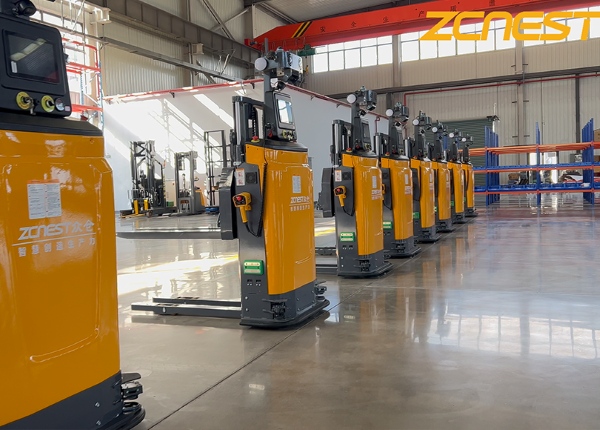
A good simulation does not simply show many autonomous forklifts moving around a warehouse. It provides a transparent engineering model showing why the proposed vehicle type, fleet size, routes, charging strategy, and warehouse configuration are expected to satisfy the actual workload.





 Chinese
 English