


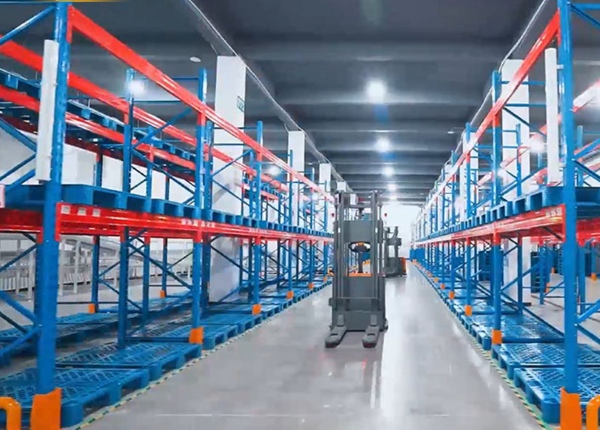
Before requesting a final quotation, an overseas warehouse should determine whether its physical layout, pallets, workload, network, floor, and operating procedures are ready for autonomous forklift deployment.
Unmanned forklifts work most predictably when the warehouse has repeatable material flows.
Examples include receiving-to-staging, staging-to-rack, rack-to-picking, and picking-to-shipping movements.
If every forklift movement is determined manually and changes constantly, the project may require additional process standardization before automation.
Record pallet dimensions, runner configuration, maximum weight, load center, overall load height, and fork-entry direction.
If several pallet types are used, identify how frequently each type appears.
Damaged, warped, broken, or heavily deformed pallets should also be considered if they occur during normal operations.
Provide the supplier with an accurate warehouse layout showing racks, columns, aisles, doors, staging areas, docks, charging stations, elevators, and other permanent obstacles.
The supplier can then determine whether the proposed vehicle dimensions, turning behavior, fork configuration, and lift height are compatible with the building.
Floor condition affects autonomous forklift operation more than many first-time buyers expect.
Identify slopes, joints, cracks, thresholds, potholes, wet areas, polished surfaces, and sudden height changes.
The required floor condition depends on the specific vehicle, speed, payload, lift height, localization method, and accuracy requirements. There is no universal floor specification that applies to every AGV.
If the fleet uses wireless communication, verify coverage throughout the operating area.
The assessment should include not only signal strength but also roaming, interference, packet loss, latency, AP capacity, and network segmentation.
The IT team should also know whether the fleet software operates entirely locally or requires external connections for remote support, cloud monitoring, licensing, or software updates.
Record actual pallet movements instead of estimating the workload from the number of forklifts currently operating.
Useful information includes movements per hour, peak-hour demand, travel distances, lift heights, waiting time, loading time, and operating shifts.
This information allows the supplier to calculate fleet requirements using actual demand rather than forklift headcount.
Document pedestrian crossings, manual forklifts, pallet jacks, maintenance routes, emergency exits, and temporary staging areas.
Autonomous vehicle routes should be designed around the real traffic environment rather than an empty warehouse layout.
Identify where chargers can be installed and whether the electrical infrastructure can support the proposed charging strategy.
Also consider whether charging locations interfere with pedestrian routes, emergency access, pallet staging, or other warehouse operations.
For high-bay applications, confirm rack height, beam levels, pallet clearances, rack upright positions, and building clear height.
The AGV's maximum lifting height should be evaluated together with the rack system and pallet dimensions rather than considered independently.
| Area | Information to Check |
|---|---|
| Pallets | Size, weight, load center, condition |
| Warehouse | Aisles, racks, columns, doors |
| Floor | Slopes, joints, thresholds, traction |
| Workload | Peak and average pallet movements |
| IT | Wi-Fi, servers, network security |
| Charging | Location and electrical capacity |
| Traffic | People and manual equipment |
If these conditions are documented before procurement, the supplier can make a much more accurate vehicle and fleet recommendation.
Warehouse readiness is therefore not about having a “perfect” building. It is about understanding the site's limitations before the vehicle configuration and automation architecture become fixed.





 Chinese
 English