

For an overseas buyer, verifying a Chinese unmanned forklift manufacturer should involve more than checking a website and product catalog.
The buyer needs to understand whether the supplier can actually manufacture the proposed vehicle, develop the required software, complete project engineering, provide documentation, and support the equipment after delivery.
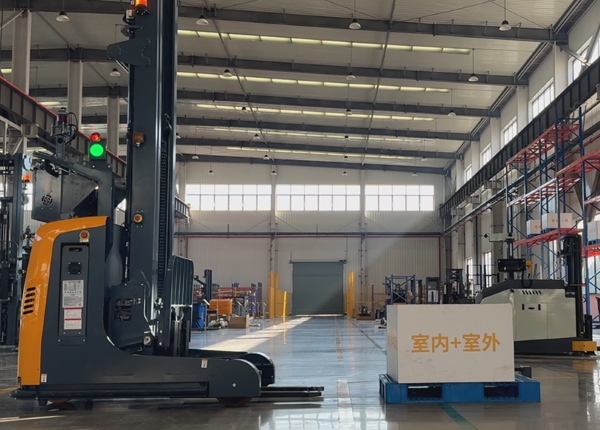
Ask whether the company manufactures the AGV itself or mainly acts as a trading company or project intermediary.
During a factory audit, look for evidence of actual production activity.
Vehicle assembly
Mechanical fabrication
Electrical assembly
Battery and charging integration
Software development or engineering
Testing areas
Quality inspection
Finished vehicles
Spare-parts storage
A supplier may have experience with standard AGVs but limited experience with a particular configuration.
Discuss your actual payload, lift height, aisle width, pallet type, navigation system, battery requirements, and software interfaces.
Ask the supplier to identify which parts are standard and which parts require engineering customization.
Request project information that is relevant to your application.
A supplier may have many AGV installations, but the useful question is whether those projects involve similar warehouse conditions, pallet types, lift heights, aisle widths, throughput requirements, and integration complexity.
Where customer confidentiality prevents detailed disclosure, the supplier should still be able to explain the project type and technical scope without revealing confidential information.
For an unmanned forklift project, the software supplier and vehicle manufacturer may be the same company or different organizations.
Ask who owns and develops the fleet-management software, navigation software, WMS interface, and vehicle-control software.
Also ask what happens if the buyer needs a software modification after deployment.
Ask how each vehicle is inspected before shipment.
A meaningful quality process may include mechanical inspection, electrical testing, battery checks, sensor checks, navigation testing, safety-function testing, and software verification.
The buyer should ask whether test records are retained and whether inspection results can be included in the pre-shipment documentation package.
Customized warehouse automation requires engineering resources beyond basic vehicle assembly.
Ask who is responsible for mechanical engineering, electrical engineering, software, navigation, fleet management, WMS integration, and commissioning.
This becomes particularly important when the project requires non-standard forks, special dimensions, unusual pallets, high lift heights, or local equipment integration.
The factory should explain how support works after the equipment leaves China.
Ask about remote diagnostics, spare-parts shipping, software support, training, local technicians, traveling engineers, and escalation procedures.
The key question is not simply whether the supplier says it provides “global service,” but what service process will apply to your specific country and project.
A serious technical evaluation should generate documents before the order is finalized.
Technical specification
Vehicle drawings
Configuration list
Battery and charger information
Software architecture information
Integration interface description
Safety documentation
Testing plan
Warranty terms
Spare-parts recommendation
Service plan
A modern factory, showroom, or large product catalog does not by itself establish whether a supplier can successfully deliver a complex warehouse automation project.
The more useful audit connects the supplier's manufacturing capability to the buyer's actual project requirements.
The buyer should leave the audit knowing who builds the vehicle, who develops the software, how the vehicle is tested, what documentation is provided, how customization is managed, and how support will be delivered after installation.
That information provides a much clearer basis for comparing suppliers before signing the purchase order.





 Chinese
 English