


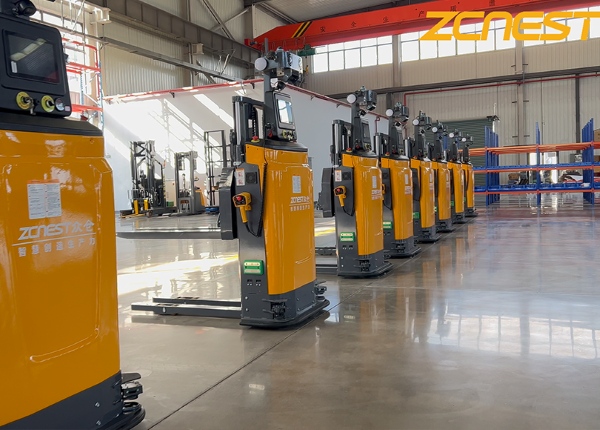
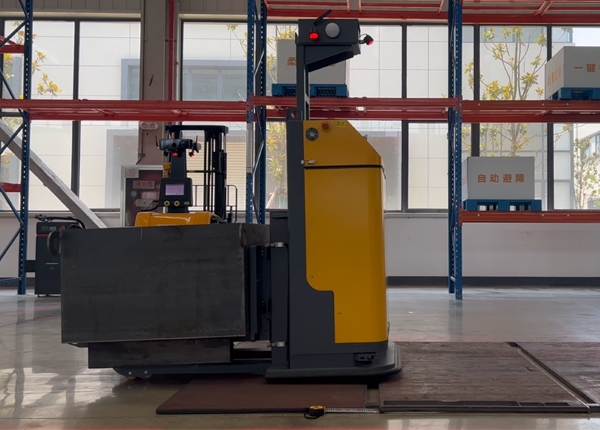
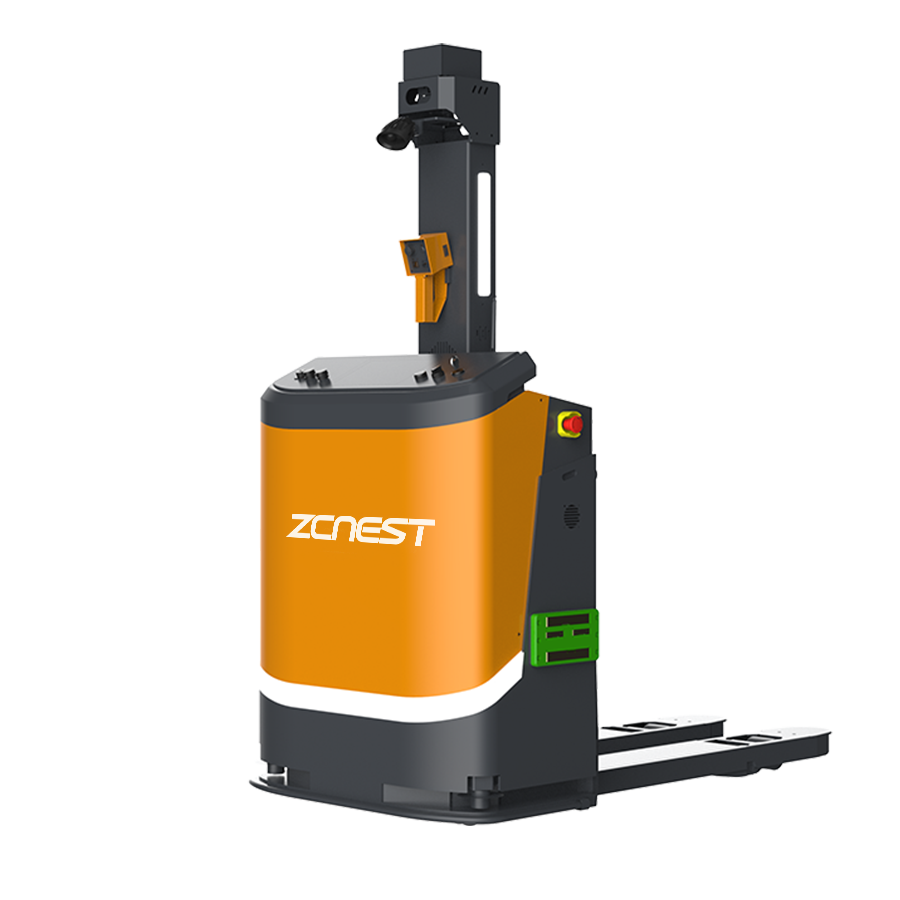
Many warehouses do not become fully automated immediately. During the transition, autonomous forklifts may need to operate in the same warehouse as manually driven forklifts, pallet jacks, warehouse workers, and other mobile equipment.
For overseas buyers, the important question is therefore not simply whether an unmanned forklift can operate autonomously, but how the automated and manual traffic will coexist.
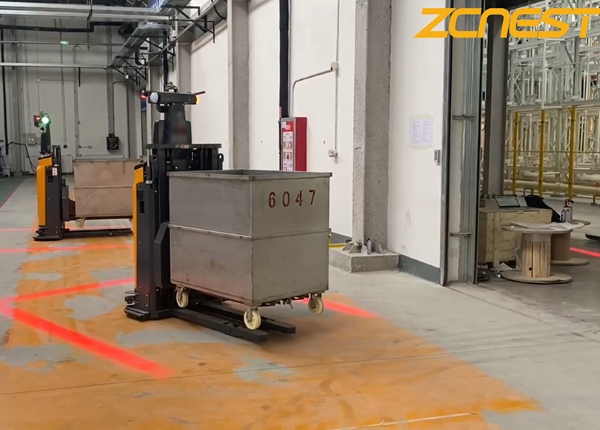
The interaction usually occurs around shared aisles, intersections, staging areas, dock approaches, pallet handoff points, and warehouse entrances.
These areas should be identified during the project design rather than treated as unexpected exceptions after deployment.
A warehouse may also have temporary traffic caused by trailer unloading, inventory counting, maintenance, or peak shipping activity.
Autonomous forklifts can use safety scanners and other sensors to detect people, forklifts, pallets, and obstacles in their operating area.
The exact sensor architecture varies by vehicle.
The buyer should understand the detection zones, warning zones, protective zones, stopping behavior, and recovery process used by the proposed AGV.
The AGV should not simply be expected to continue driving when its route is blocked.
Depending on the fleet-management and navigation architecture, the vehicle may stop, wait, reroute, or request operator intervention.
The exact behavior should be defined and tested for representative warehouse situations.
This depends heavily on the aisle geometry and operating method.
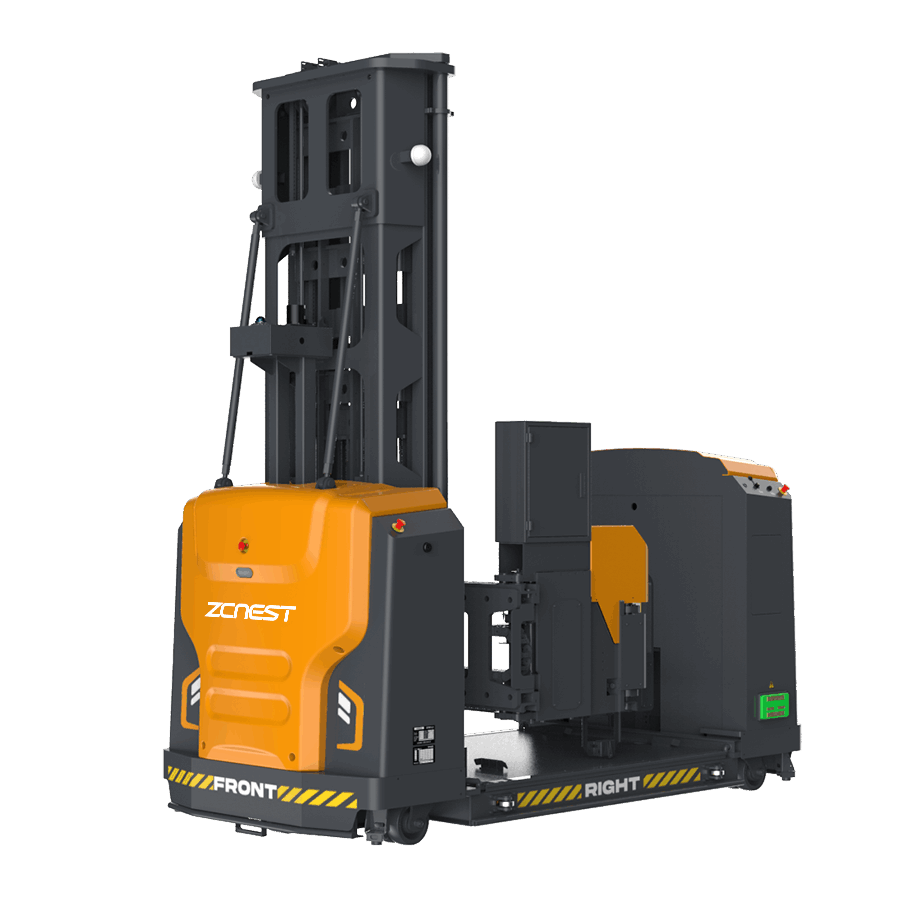
A narrow VNA aisle may be designed primarily for automated operation, while other warehouse areas may remain shared with manual vehicles.
If an aisle is too narrow for safe passing, the traffic plan may need to define one-way movement, entry permissions, waiting areas, or other controls.
Sensors provide detection, but warehouse traffic management should also define operational rules.
AGV-only zones
Manual-only zones
Shared traffic areas
One-way aisles
Intersection priorities
Waiting zones
Pedestrian crossings
Temporary restricted areas
These rules can reduce unnecessary stops and make mixed traffic easier to manage.
Manual forklift operators should understand that an autonomous forklift may stop or behave differently from a manually driven vehicle.
Training should cover AGV operating zones, pedestrian crossings, blocked-route procedures, emergency-stop procedures, and how to report abnormal AGV behavior.
A warehouse should test representative mixed-traffic scenarios before production deployment.
Manual forklift crossing an AGV route
Manual forklift blocking an intersection
Pallet temporarily placed in an AGV lane
Pedestrian entering a shared area
AGV waiting behind an obstacle
Multiple AGVs approaching the same intersection
Manual vehicle entering an AGV-only zone
The purpose is to verify not only whether the AGV stops, but also how the fleet recovers afterward.
A warehouse does not necessarily need to automate every forklift movement at the same time.
Autonomous forklifts can initially handle repeatable pallet movements while manual operators continue handling exceptions, unusual loads, trailers, or areas that are not yet suitable for automation.
The key is to define the boundary between automated and manual operations clearly and test the interaction before the AGV fleet becomes part of daily production.





 Chinese
 English