


An autonomous forklift fleet may operate reliably for months, but warehouse managers still need a plan for equipment failures during peak shipping periods.
The important question is not whether a failure can be completely eliminated. It is how quickly warehouse operations can continue when one vehicle becomes unavailable.
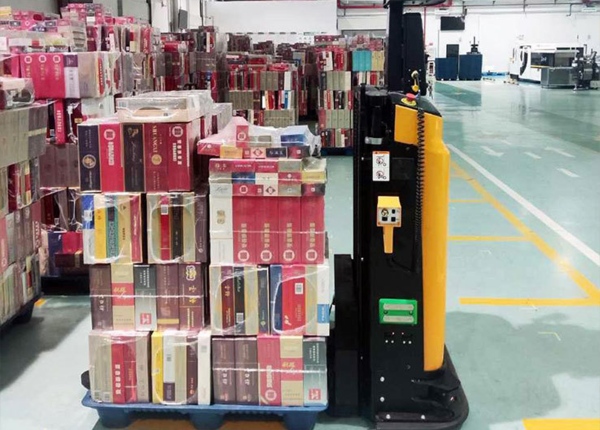
A fleet-management system may be able to reassign pending missions when one AGV becomes unavailable.
The exact behavior depends on the supplier's dispatch architecture and task configuration.
During testing, ask what happens when an AGV stops in the middle of a task, loses communication, requires maintenance, or becomes unavailable because of a battery or sensor problem.
The recovery process depends on where the failure occurs.
Before pallet pickup
During travel without a load
During travel with a pallet
At a rack position
During lifting
At a pickup or drop-off station
The warehouse should have a defined procedure for safely recovering the vehicle and handling the pallet in each relevant situation.
A vehicle failure can become an operational problem if the AGV stops in a narrow aisle or at a critical intersection.
The response plan should identify who is authorized to enter the area, how the vehicle is made safe, how the blockage is removed, and how the fleet is returned to normal operation.
The procedure should be developed for the actual vehicle and warehouse layout rather than copied from a generic maintenance manual.
Many warehouses retain manual forklifts during the transition to autonomous operation.
These vehicles can potentially provide operational backup for selected pallet movements when an AGV is unavailable, subject to the warehouse's normal safety and operating procedures.
The buyer should identify which critical movements have a manual fallback and which processes depend entirely on the automated system.
Remote diagnostics can reduce the time required to identify software, sensor, communication, or vehicle faults.
Ask the supplier what information is available remotely, what diagnostic logs can be exported, and what information the local maintenance team needs to collect.
Remote support does not eliminate the need for local intervention when the problem is mechanical or requires physical access to the vehicle.
The appropriate level of fleet redundancy depends on warehouse workload, operating hours, vehicle utilization, recovery time, and the consequences of downtime.
A warehouse handling non-critical movements may tolerate a different level of redundancy from a distribution center operating under strict shipping deadlines.
The decision should therefore be based on operational risk rather than a universal spare-vehicle percentage.
Failure recovery should be part of commissioning and operational testing.
Examples include:
One AGV becomes unavailable
Fleet communication is interrupted
An AGV stops with a pallet
A route becomes blocked
A charging station becomes unavailable
A sensor fault occurs
A manual forklift blocks a critical route
After each scenario, measure how the warehouse returns to normal operation and whether tasks are automatically recovered or require operator intervention.
The warehouse team should know who handles the first response, who contacts the supplier, and when an issue should be escalated to engineering support.
The supplier's service agreement should identify response procedures, communication channels, remote-support conditions, and escalation responsibilities.
An unmanned forklift project should not be evaluated only under normal operating conditions.
The warehouse should also understand what happens when a vehicle, charger, network connection, fleet server, or route becomes unavailable.
A practical recovery plan combines fleet reassignment, local troubleshooting, manual fallback where appropriate, spare capacity, remote support, and clearly defined escalation procedures.





 Chinese
 English