


AGVs operating across a warehouse may move between multiple wireless access points. The vehicle therefore needs to maintain reliable communication while roaming from one coverage area to another.
A warehouse can have strong Wi-Fi coverage and still experience AGV communication problems if roaming, network configuration, or application behavior has not been properly tested.
Looking for an AGV/AMR Forklift? 01 — Custom-Built for Your Warehouse — No One-Size-Fits-All 02 — Automation Built Around Your Workflow 03 — Direct from the Manufacturer — Engineer-to-Engineer Support |
An AGV may continuously move through different warehouse zones while communicating with fleet software.
During this movement, the wireless connection may transition between access points.
If the transition is poorly configured, the AGV may experience:
Temporary communication interruption
Increased latency
Packet loss
Delayed task updates
Connection drops
Unexpected vehicle behavior
The test should focus on actual AGV movement rather than simply checking Wi-Fi signal strength while the vehicle is stationary.
Important test conditions include:
AGV moving at normal operating speed
AGV moving between access points
AGV carrying a load
Multiple AGVs operating simultaneously
High network traffic
Different warehouse zones
Long travel routes
Choose routes that cross multiple wireless coverage areas.
Priority should be given to locations where AGVs frequently travel, such as:
High-bay aisles
Receiving areas
Shipping areas
Charging areas
Long connecting aisles
Doorways between warehouse zones
Testing only one short route may not expose roaming problems elsewhere in the warehouse.
The test should collect more than a simple Wi-Fi signal-strength value.
Useful measurements can include:
Connection status
Roaming events
Latency
Packet loss
Connection interruptions
Access-point transitions
Application communication status
The exact network metrics depend on the wireless infrastructure and AGV communication architecture.
Yes. A single AGV test may not represent actual operating conditions.
When multiple AGVs communicate simultaneously, network utilization changes. Fleet traffic can also increase the amount of information exchanged between vehicles and control systems.
Therefore, testing should include realistic fleet activity where practical.
The AGV system should have a defined response to communication interruption.
Depending on the system architecture, the vehicle may stop safely, continue a limited operation, or execute another predefined behavior.
The important point is that this behavior should be known and tested rather than discovered during production operation.
A warehouse survey should consider the actual AGV operating path.
Potential problem areas include:
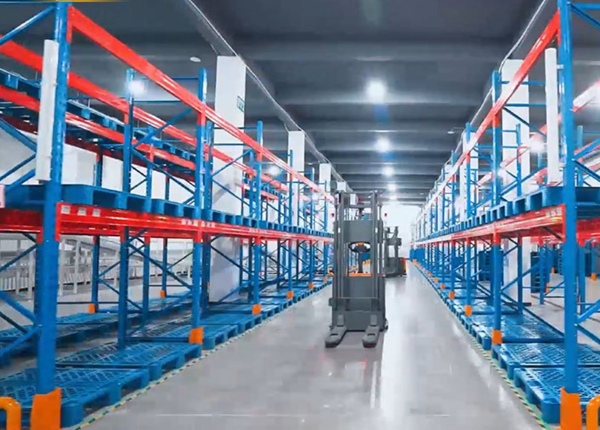
Metal rack aisles
Cold storage areas
Large machinery zones
Dock areas
High-density storage areas
Transitions between buildings or rooms
Signal behavior can vary significantly depending on warehouse construction, rack configuration, equipment, and access-point placement.
Normal AGV travel
Access-point roaming
High fleet traffic
Temporary network interruption
Network recovery
Controller communication
WMS communication
Vehicle restart and reconnection
Long-duration operation
The test should be repeated after major changes to rack layouts, access-point positions, network configuration, or AGV operating zones.
Before deployment, clarify:
AGV wireless requirements
Supported wireless standards
Network architecture
Required communication availability
Roaming behavior
Connection-loss behavior
Network diagnostic tools
Required IT support during commissioning
This prevents the warehouse IT team and AGV supplier from making different assumptions about wireless communication requirements.





 Chinese
 English