


Reverse logistics is often more complicated than forward warehouse flow because returned pallets and products may not follow the same process as normal inbound inventory.
AGVs can automate the physical movement of returned pallets between receiving, inspection, temporary storage, quarantine, and final storage locations.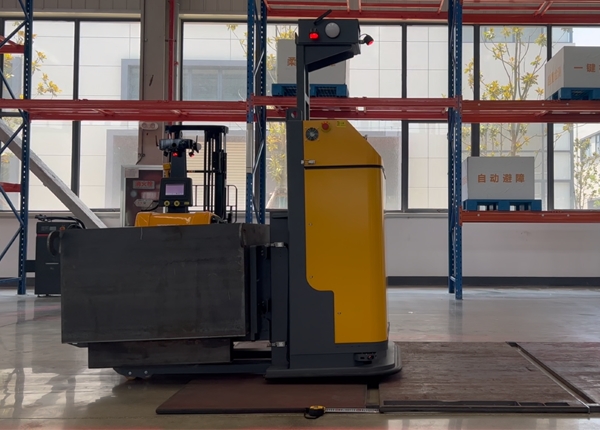
Looking for an AGV/AMR Forklift? 01 — Custom-Built for Your Warehouse — No One-Size-Fits-All 02 — Automation Built Around Your Workflow 03 — Direct from the Manufacturer — Engineer-to-Engineer Support |
Pallet return automation refers to using automated transport equipment to move pallets back through the warehouse after delivery, shipment, customer return, or internal processing.
Typical flows include:
Returned pallet → inspection
Inspection → storage
Returned product → quarantine
Empty pallet → pallet storage
Reusable packaging → designated storage
Forward logistics usually follows standardized rules. Reverse logistics often contains more exceptions.
Returned pallets may have:
Different packaging
Damaged labels
Unexpected quantities
Mixed products
Damaged goods
Unknown storage status
Therefore, the AGV workflow needs clearly defined exception locations.
The WMS or warehouse process should determine what happens after the pallet arrives.
Possible categories include:
Ready for normal storage
Requires inspection
Requires repacking
Damaged
Quarantine
Empty pallet
Each category can be associated with a different AGV destination.
A typical automated workflow could be:
Returned pallet arrives at the receiving area.
The pallet is identified.
WMS determines its processing status.
A transport task is created.
AGV collects the pallet.
AGV delivers it to inspection, quarantine, or storage.
The destination confirms receipt.
WMS updates the inventory status.
The exact workflow depends on the warehouse software and physical process.
The AGV should not simply place an unidentified pallet into normal inventory storage.
A dedicated exception location can provide a controlled destination for pallets that require manual identification.
This keeps uncertain inventory separate from normal automated flows.
Quarantine locations should be clearly defined in both the physical warehouse and WMS.
AGVs can transport pallets to these locations, but the system should prevent normal putaway logic from treating quarantined inventory as available stock.
This requires coordination between the warehouse process and inventory-control system.
In many warehouses, reverse logistics can use the same fleet as normal pallet transport.
However, task priorities may need to distinguish reverse logistics from critical outbound and inbound tasks.
If returned pallets become highly variable or create frequent exceptions, the warehouse should evaluate whether the existing fleet and workflow can handle that variation without disrupting normal operations.
Normal returned pallet
Unidentified pallet
Damaged pallet
Quarantine pallet
Empty pallet
Wrong destination
WMS communication failure
Task cancellation
Manual intervention
Return processing time
AGV transport time
Manual intervention rate
Quarantine volume
Unidentified pallet frequency
Inventory update accuracy
AGV utilization
These metrics help determine whether automation is improving the reverse logistics process or simply moving returned pallets between locations.












 Chinese
 English





