


High-Bay Warehouse Selection Guide
Choosing an automated forklift for high-bay storage requires more than comparing lifting heights. ZCNEST examines aisle width, rack configuration, pallet access, turning requirements, and operating capacity to help warehouse operators identify the right vehicle architecture.
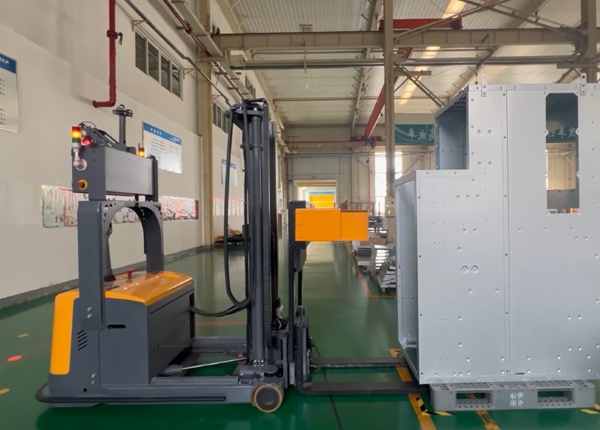
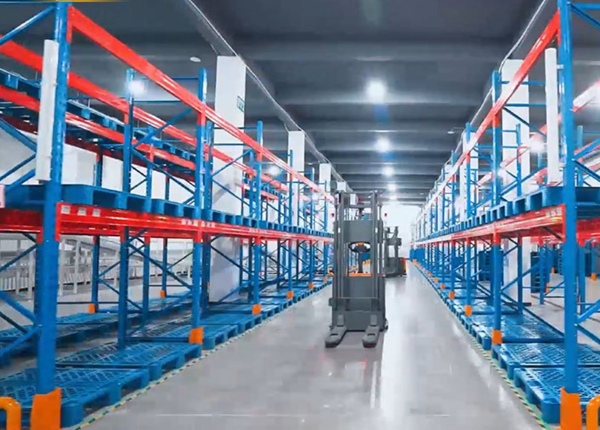
A very narrow aisle (VNA) automated forklift is designed for storage environments where aisle width and storage density are major constraints. A reach truck AGV is generally considered when the warehouse needs elevated pallet handling but the layout and operating method allow a different approach to rack access.
Neither vehicle category is automatically better. A VNA solution may support a denser rack arrangement, but it can impose stricter requirements on aisle geometry, rack alignment, vehicle guidance, and load positioning. A reach truck configuration may provide greater flexibility for some layouts, but its suitability depends on the specific vehicle and the required operating space.
Clear aisle width between the actual rack or load boundaries.
Rack height, beam positions, and required storage levels.
Pallet dimensions, load overhang, and maximum load weight.
Available turning and approach space at aisle entrances.
Required fork entry direction and pallet presentation orientation.
OPTION 01
Consider this architecture when maximizing storage density is a primary objective and the warehouse has long, narrow storage aisles. Confirm the vehicle's aisle requirements, guidance method, load-handling envelope, and compatibility with the rack design.
OPTION 02
Consider this architecture when elevated pallet handling and the site's aisle layout are compatible with a reach-truck configuration. Verify reach mechanism clearance, load stability, lifting performance, and the space required for approach and withdrawal.
A forklift's nominal lifting capacity does not tell the whole story. Actual capacity can vary with lift height, load center, attachment configuration, and other conditions specified by the manufacturer. A vehicle that can lift a particular load at a lower level may not be rated to handle that same load at maximum height.
The engineering review should use the real pallet and product dimensions, not only the nominal pallet size. Overhang, uneven weight distribution, damaged pallets, and fork-entry clearance can affect both handling reliability and safe operation.
Rated load capacity at the required lift height and load center.
Maximum lifting height and the applicable capacity limits.
Minimum operating aisle under the proposed load-handling conditions.
Positioning accuracy and any restrictions for elevated pallet placement.
Required floor conditions and rack-interface tolerances.
Narrow-aisle automation places greater emphasis on controlled vehicle movement and accurate load positioning. Navigation technology, localization performance, rack geometry, and the vehicle's mechanical design all influence the final result. A navigation specification by itself does not guarantee successful pallet placement at height.
Ask the supplier how the vehicle approaches each rack location, how it verifies alignment, and what happens when a pallet or rack position falls outside the permitted range. Validation should include representative rack locations and actual loads, especially at the most demanding storage levels.
A compact aisle layout may increase storage capacity but can also concentrate traffic at aisle entrances, transfer stations, and dispatch points. Compare the number of required pallet movements, travel distances, lifting cycles, waiting times, and charging needs for the complete workflow.
Do not compare models using travel speed alone. A realistic assessment should include pickup, lifting, positioning, lowering, station waiting, and exception recovery. The best configuration is the one that meets the warehouse's capacity and operating requirements within its physical constraints.
Prepare the warehouse layout, clear aisle measurements, rack drawings, pallet specifications, required lift height, and expected movements per shift. These details allow the supplier to assess vehicle feasibility before recommending a model or fleet quantity.












 Chinese
 English





