


Third-Party Logistics Automation Guide
A third-party logistics warehouse may handle different customers, product types, service levels, and inventory rules within one facility. ZCNEST examines how automated forklifts can support shared operations while preserving task priorities, location accuracy, and customer-specific process requirements.
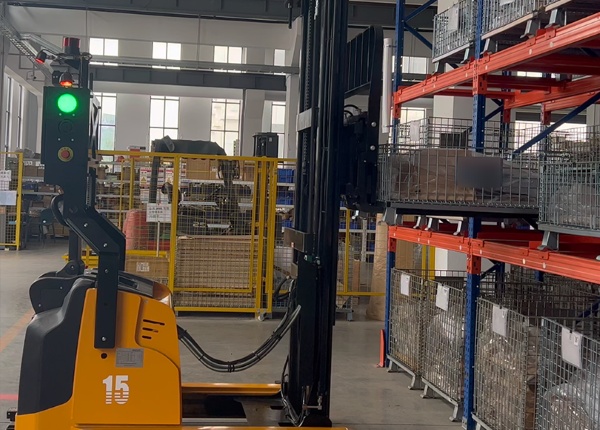
A multi-customer 3PL warehouse may store different goods in the same building while operating under separate customer instructions. One customer may require specific pallet labels or inspection steps, while another may have different dispatch priorities, handling restrictions, or inventory reporting requirements.
The AGV system needs to execute transport missions without confusing these business rules. Customer identity, task type, source, destination, and any applicable handling restrictions should be represented clearly in the warehouse workflow. Rules should be maintained in the appropriate system rather than relying on operators to remember exceptions.
How are customer orders and pallet identities distinguished?
Which storage areas or handling processes are restricted to specific customers?
How are urgent orders prioritized against routine movements?
What information must be recorded for each completed mission?
Who can authorize exceptions or changes to a customer workflow?
LAYER 01
The WMS or relevant business application identifies the customer, order, inventory record, and applicable handling instructions.
LAYER 02
The fleet-control layer assigns eligible transport tasks and coordinates vehicle movement, subject to the configured routes and operating constraints.
LAYER 03
Completed movements and exceptions are recorded so the warehouse can trace pallet status, investigate discrepancies, and produce customer-specific operational reports where supported.
A 3PL operator may want one AGV fleet to serve several customers. Shared use can improve equipment utilization, but only when the workflows, payload requirements, pallet dimensions, operating zones, and service commitments are compatible.
Not every customer task should be assigned to every vehicle. A fleet may contain different forklift configurations, and certain pallets may require specific fork dimensions, lifting capacity, attachments, or route permissions. The assignment logic should prevent a vehicle from receiving work outside its approved capability.
Pallet dimensions, load weight, and handling requirements.
Pickup and delivery station compatibility.
Travel routes and access restrictions.
Customer-specific service windows and dispatch priorities.
Inventory traceability and data access permissions.
Different customers may experience peak demand at different times. One account may generate a large inbound wave while another requires urgent outbound dispatches. If all missions compete under a single undifferentiated queue, the fleet may not reflect the 3PL operator's service commitments.
Define priorities based on contractual service requirements, dispatch deadlines, and warehouse operating rules. Monitor whether the priority scheme consistently serves each workflow without starving lower-priority work. Where the fleet software supports workload limits or task reservations, test whether these functions improve predictability without reducing overall utilization unnecessarily.
In a multi-customer operation, a pallet delivered to the wrong staging position can create inventory discrepancies, missed shipments, or customer disputes. The system should maintain a consistent relationship between the pallet identity, customer or order reference, mission, and confirmed destination.
Test incorrect labels, duplicate task requests, canceled orders, destination changes, and interrupted transfers. Define which system owns each transaction and how a failed or manually recovered mission updates the inventory record. Customer reporting should use validated transaction data rather than assuming every created mission was completed successfully.
Automation is worth evaluating when pallet movement is repetitive, routes can be standardized, and the warehouse has enough predictable demand to justify the equipment and integration effort. Before selecting a fleet, prepare customer workflow maps, pallet specifications, service requirements, movement volumes, and the warehouse system interfaces.












 Chinese
 English





