


WAREHOUSE CAPACITY AND STORAGE CONTROL
Seasonal inventory, unexpected inbound volumes and temporarily unavailable rack positions can create demand for overflow storage. In an AGV forklift warehouse, temporary locations must be planned and controlled so that the fleet can identify the load, access the location and return the inventory to the intended process without losing traceability.
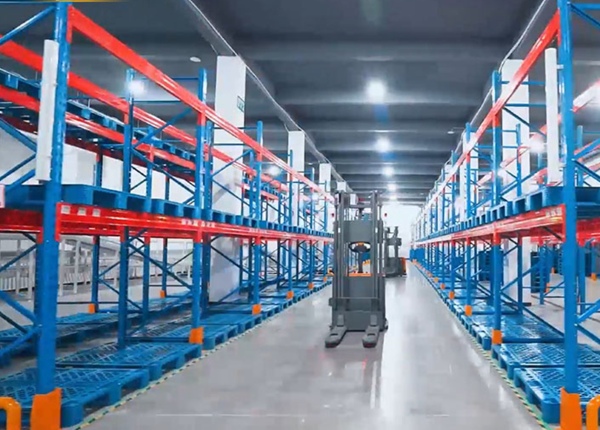
Overflow storage is often introduced when normal storage capacity becomes constrained. A warehouse may designate extra floor positions, reserve locations or a temporary staging zone to accommodate inventory that cannot immediately enter its planned storage position.
For an automated forklift system, an unplanned temporary location can create several problems. The warehouse system may not recognize the position, the AGV may not have an approved route to it, or a later retrieval task may be generated without a valid destination record.
Temporary storage should therefore be managed as a controlled part of the warehouse process, not as an informal place to leave pallets until space becomes available.
Establish the conditions that permit inventory to enter an overflow area. These may include a temporary inbound surge, a blocked storage zone, a planned rack inspection or a defined seasonal operating period.
Specify who may authorize the use of overflow positions and which inventory types are eligible. Some goods may require controlled conditions, segregation or a specific storage arrangement that is not available in every temporary zone.
Set clear rules for when the overflow area must be reviewed or closed. Without an ownership process, temporary positions can become permanent, unmanaged storage locations that are difficult to reconcile.
Record the reason for each overflow event where operationally useful. This information can help identify whether the cause is seasonal demand, poor space allocation, delayed putaway or a recurring capacity constraint.
Every position used by the automated system should have a clear identity and a verified physical location. Do not instruct an AGV forklift to deposit a pallet in an arbitrary floor area simply because it appears empty.
For each temporary location, define:
A unique location identifier recognized by the warehouse system.
The permitted pallet and load dimensions.
The approved approach and withdrawal path.
Any restrictions on load type, weight or handling.
The rules for reserving, occupying and releasing the position.
Validate the physical area for the selected vehicle and load. A floor position may have sufficient space for a pallet but still be unsuitable because it blocks a travel route, emergency access or another operating area.
Where a temporary location requires a configuration change, follow the approved process for updating the warehouse and fleet-control records before releasing tasks to it.
Overflow capacity should be measured in terms the warehouse can manage consistently, such as approved pallet positions or designated storage slots. Avoid relying only on a rough visual estimate of the available floor area.
Define how the system reserves a position for an incoming pallet and when that reservation is released. The reservation process should prevent two tasks from being assigned to the same position at the same time.
Also decide what happens when all approved overflow positions are occupied. The warehouse may need to hold new putaway tasks, direct inventory to another approved zone or request a supervisor's decision.
Do not allow the fleet to improvise a destination outside the approved storage configuration. If the planned capacity is exhausted, the system should expose the condition so that the warehouse can resolve it deliberately.
When a pallet is moved into overflow storage, the inventory record must reflect the actual destination according to the warehouse's transaction rules. A physical move without the corresponding record can leave stock appearing in its original location even though it has been relocated.
Define how the pallet identifier is verified, how the destination is confirmed and which system updates the inventory location. If the movement is interrupted or its result is uncertain, the process should provide a way to reconcile the physical pallet and the digital record.
When the pallet is later moved to its permanent position, treat the relocation as a new controlled movement. Confirm the source, destination and inventory status before completing the transaction.
Regularly review overflow records against physical occupancy. This helps identify positions that remain reserved after a task is canceled, or pallets that have been moved manually without a matching system update.
Overflow areas can gradually expand into nearby travel paths if boundaries are not clearly defined. Mark approved positions and ensure that operators understand which areas are available for storage and which must remain clear.
Review the effect on vehicle access, pedestrian movement, emergency routes and neighboring workstations. Consider how the area will be used when it is nearly full, not only when the first few pallets are placed.
If the overflow zone is close to a busy intersection or staging point, consider whether arriving pallets will create queues or obstruct other movements. A storage area that is easy to reach may still be a poor choice if it interferes with the main flow of warehouse traffic.
Assign responsibility for checking occupancy and keeping the area within its approved limits. Temporary storage should not depend on individual operators remembering informal boundaries.
Overflow storage creates a second movement when inventory is transferred to its permanent location. Plan how that work will be scheduled alongside new inbound tasks, retrieval and outbound demand.
Define which inventory should be relocated first. Priority may depend on shipment requirements, storage restrictions, the duration of the temporary arrangement or the need to clear a designated area.
Make sure each destination is available and valid before releasing a relocation task. If the permanent location is still blocked or occupied, the system should not repeatedly send the same pallet toward an unavailable position.
Before closing the overflow zone, confirm that all inventory has been relocated, canceled tasks have been reconciled and temporary location records have been released according to the approved process.
Conditions for using overflow storage are documented.
Temporary positions have approved identifiers and physical boundaries.
Vehicle access and load-handling clearances have been checked.
Capacity reservations prevent conflicting assignments.
Inventory transactions reflect actual pallet movements.
Overflow occupancy and unresolved tasks are reviewed regularly.
A controlled relocation process exists for returning to normal storage.
Key checkpoint: An overflow location is suitable for AGV operations only when its physical boundaries, system identity, capacity rules and inventory transactions are all controlled. Empty floor space alone is not a valid storage plan.
When evaluating an AGV forklift solution, explain whether your warehouse experiences seasonal inventory peaks, temporary rack closures or frequent changes in available storage space.
Ask the supplier how approved temporary locations are configured, how position reservations work and how the system handles full capacity. Confirm whether warehouse staff can manage these changes under defined permissions or whether supplier support is required.
📖 AGV Forklift Guide — Essential manual for selection and safety.
⚙️ How AGV Systems Work — A deep dive into navigation and logic.
⚖️ AGV vs. AMR Comparison — Choosing the right technology for your facility.
💰 AGV Cost and ROI — Evaluating investment and payback periods.





 Chinese
 English