


SUPPLIER EVALUATION AND ENGINEERING DOCUMENTATION
An AGV forklift purchase involves equipment, software, interfaces and long-term operational responsibilities. Reviewing the right documentation before signing a contract helps buyers understand what will be delivered, how the system will be maintained and which information will remain available after commissioning.
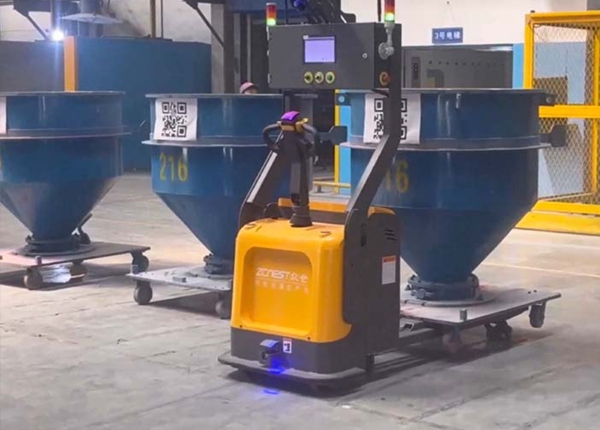
When comparing AGV forklift suppliers, buyers often focus on equipment specifications, price, delivery time and promised operating performance. These factors matter, but they do not fully describe what the customer will receive or how the system can be supported over its service life.
Documentation helps make the scope concrete. It allows warehouse operations, engineering, IT, maintenance and procurement teams to review the same technical assumptions and identify gaps before they become project disputes.
The goal is not to request every document a supplier has ever produced. It is to identify the records needed to design, operate, troubleshoot and modify the specific system being purchased.
Start with the technical information for the proposed AGV forklift model and configuration. Confirm that the document describes the actual equipment being quoted rather than a general product family.
Depending on the application, review:
Rated load capacity and any conditions affecting it.
Lifting range and applicable load-handling restrictions.
Vehicle dimensions, turning requirements and operating clearances.
Supported pallet or load interfaces.
Navigation method and relevant environmental limitations.
Battery, charging and operating-condition requirements.
Check whether the stated values apply to the intended load, lift height and operating environment. A headline specification should not be interpreted as a guarantee that every combination of load and warehouse condition is supported.
Ask the supplier to identify any assumptions that need to be verified during site assessment or commissioning.
The proposed solution should be supported by application-specific information showing how the vehicles will operate in the warehouse. Depending on the project scope, this may include layout drawings, operating zones, station positions, intended routes and representative task flows.
Check that the design reflects the actual warehouse conditions, including rack geometry, aisle access, load presentation and any areas with special operating restrictions.
Where the supplier has identified assumptions about floor conditions, pallet dimensions, access points or transfer equipment, ensure that these are recorded. An assumption that remains undocumented can later become a disagreement about whether the system was designed for the real site.
For a warehouse with high-bay storage or narrow aisles, review the relevant storage and handling requirements against the proposed vehicle configuration. Confirm that the design identifies constraints rather than relying on generic product descriptions.
If the AGV forklift system exchanges data with a WMS, ERP, conveyor controller or other warehouse equipment, request a description of the relevant interfaces.
The documentation should explain the data exchanged, the purpose of each message, the required fields, the status transitions and the handling of unsuccessful transactions. It should also identify which system owns the authoritative record for important information such as inventory location and task completion.
Confirm the supported communication methods and any prerequisites imposed by the existing software environment. If the integration depends on a third-party system or licensed interface, identify the responsible party and associated costs.
Ask how interface changes will be documented and tested. The customer should understand which modifications can be made internally and which require supplier involvement.
Project acceptance should be based on agreed requirements and measurable results rather than a general statement that the system is operational.
Request the acceptance plan before commissioning. It should identify the tests to be performed, the operating conditions to be used, the expected results and the process for recording defects.
Depending on the scope, test records may cover representative transport tasks, load handling, destination accuracy, station interfaces, task reporting, exception handling and other agreed operating requirements.
Clarify how incomplete tests or unresolved issues affect acceptance. Identify who can approve a deviation, what corrective action is required and how retesting will be documented.
Retain the final test results together with any approved exceptions. These records provide a reference when the system is modified or a performance question arises later.
Maintenance personnel need more than a general user guide. They need to understand the routine inspection requirements, service intervals, relevant consumables and the approved process for reporting faults.
Ask which diagnostic information is available to the customer and which tasks require a qualified technician or supplier support. Confirm how maintenance actions should be recorded and whether the supplier provides a defined escalation process for unresolved problems.
Review the recommended spare parts and the information needed to identify the correct components. Where parts have configuration or revision differences, make sure the identification method is clear.
Documentation should also distinguish normal operator actions from maintenance work. Employees should not be expected to perform repairs or bypass protective functions simply because detailed troubleshooting instructions are unavailable.
After installation, the system may include customized routes, location mappings, task rules, station interfaces and software settings. The customer needs a way to identify the configuration that was delivered and the changes made afterward.
Request a record of the agreed final configuration and determine which parts can be exported or backed up. Confirm how updates are versioned and how the team can establish whether a setting changed before a problem occurred.
Agree on the process for future changes. The documentation should identify who may request a modification, who approves it, how it is tested and how the previous configuration can be identified if a rollback becomes necessary.
For customized systems, clarify which deliverables are included in the contract and which remain the supplier's proprietary tools or internal engineering materials. Do not assume that every internal source file or development tool is automatically included in an equipment purchase.
The handover package should explain how the warehouse will operate the system after the commissioning team leaves. Request the relevant user instructions, training records, escalation contacts and descriptions of routine operating procedures.
Confirm the support process, including how to report an issue, what information to provide and how remote or on-site assistance is arranged under the agreed service terms.
Clarify the expected language of documentation, the file formats provided and how updated versions will be delivered. A document that exists but cannot be accessed or understood by the operating team has limited practical value.
Before final handover, assign an internal owner for each key document category. This prevents engineering drawings, configuration records and operating procedures from becoming scattered across departments.
Model-specific equipment specifications and operating limits.
Application layout, station details and documented design assumptions.
Software interface specifications and task-state definitions.
Acceptance criteria, test records and approved deviations.
Maintenance guidance, fault reporting and spare-parts identification.
Final configuration records and change-control procedures.
Training materials, support procedures and handover responsibilities.
Key checkpoint: Documentation should allow the buyer to understand the delivered system, verify agreed performance, operate it safely and determine how future changes will be managed. Include the required deliverables in the project scope rather than leaving them as informal expectations.
When requesting proposals, send each supplier the same documentation checklist and ask them to identify which items are included, which require additional work and which are not available.
Review the answers with the teams that will use the information. Operations may focus on procedures, IT on interfaces and configuration, and maintenance on diagnostics and spare parts. Procurement can then confirm that the required deliverables and responsibilities are reflected in the commercial agreement.
📖 AGV Forklift Guide — Essential manual for selection and safety.
⚙️ How AGV Systems Work — A deep dive into navigation and logic.
⚖️ AGV vs. AMR Comparison — Choosing the right technology for your facility.
💰 AGV Cost and ROI — Evaluating investment and payback periods.












 Chinese
 English





