


DEPLOYMENT AUDIT
Efficiency is promised, but not always delivered. Many companies fail because they view automation as a plug-and-play tool rather than a systemic shift. ZCNEST identifies the friction points that separate successful go-lives from stalled investments.
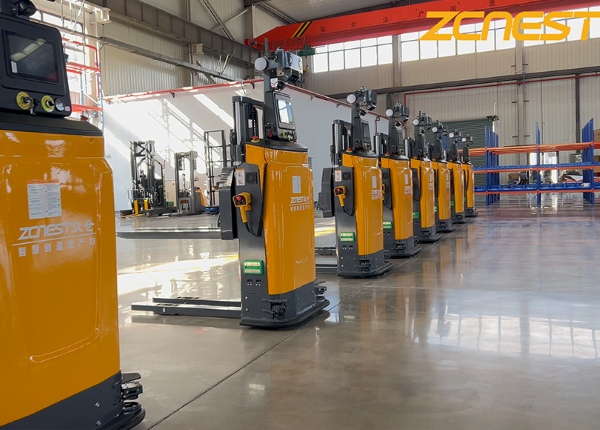
Layout Constraints
Narrow aisles or irregular floor levels can severely degrade navigation and cycle times.
Process Inconsistency
Variability in how goods are staged or labeled creates logic loops that slow down the AMR fleet.
Integration Complexity
Middleware failures and WMS handshake delays are the silent killers of operational uptime.
Workforce Friction
Without proper training and cultural buy-in, staff may perceive robots as obstacles rather than tools.
◈ Standardize: Formalize pallet types and staging zones before the first robot arrives.
◈ Pilot: Run a high-intensity isolated zone test to stress-sync the software logic.
◈ Optimize: Redesign traffic flows to minimize human-machine interference.
◈ Empower: Involve operators early to master the new automated workflow.
"Most deployment issues are not caused by technology—but by Process Misalignment."
Q: What is the single biggest deployment risk?
Lack of process standardization. If the robot can't predict its environment, it will fail regardless of its sensor quality.
Q: Can an automation deployment fail?
Yes. Failure occurs when operational readiness is ignored in favor of simply buying equipment.
📖 AGV Forklift Guide — Essential manual for selection and safety.
⚙️ How AGV Systems Work — A deep dive into navigation and logic.
⚖️ AGV vs. AMR Comparison — Choosing the right technology for your facility.
💰 AGV Cost and ROI — Evaluating investment and payback periods.





 Chinese
 English