

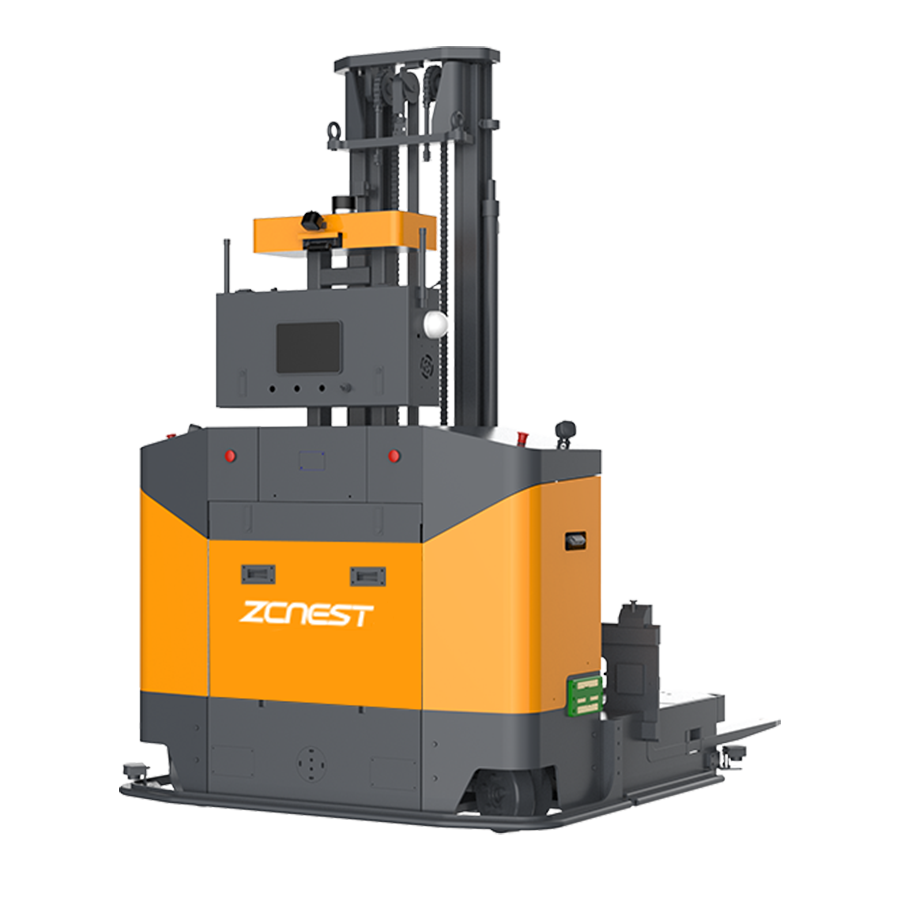
When companies purchase autonomous forklifts or AGV systems from China, many customers initially select a standard model. However, during the detailed engineering process, warehouse-specific requirements often appear.
Examples include:
Different pallet dimensions
Special fork lengths
Narrow aisle requirements
Custom lifting heights
Unique warehouse traffic rules
Integration with existing software systems
The key question for international buyers is not simply whether a Chinese manufacturer can customize an AGV.
The more important question is:
Does the supplier have a professional engineering change process to control quality, cost and delivery risk?
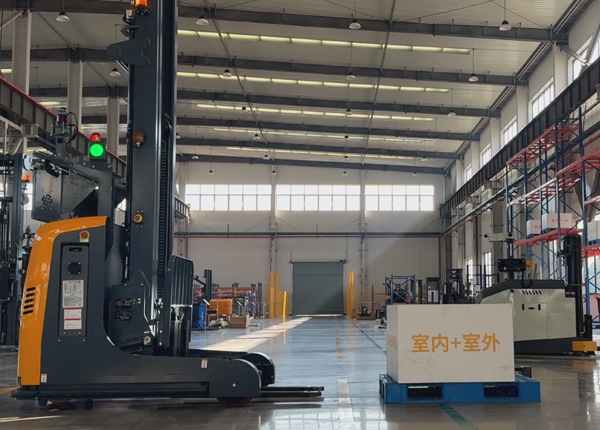
Unlike standard consumer products, industrial AGV systems operate inside unique warehouse environments.
Every facility has different:
Rack layouts
Pallet standards
Operating workflows
Safety requirements
Software systems
Therefore, engineering changes are normal during automation projects.
A mature AGV supplier should expect technical discussions before final production rather than treating every modification as an unexpected problem.
Technically, chassis modifications are possible, but the timing of the request is extremely important.
A chassis change may affect:
Vehicle structural strength
Load capacity calculation
Center of gravity
Turning radius
Navigation performance
Safety certification requirements
For example, reducing the width of an autonomous forklift may help it enter narrower aisles, but engineers must verify whether the stability, battery layout and mechanical structure remain suitable.
If a modification is requested before production drawings are frozen, the impact is usually manageable.
However, changes after welding, assembly or software testing have started may create additional engineering work and possible delays.
Software customization is often more complex than mechanical changes because it affects the entire automation workflow.
Typical software modifications may include:
New traffic rules
Custom pallet pickup logic
ERP/WMS communication changes
Different charging strategies
Special safety zones
A professional supplier should validate software changes through several stages:
Simulation testing before deployment
Testing with a virtual warehouse model
Factory testing with actual equipment
Customer acceptance testing before shipment
The goal is to prevent software modifications from creating unexpected problems after installation at the customer's warehouse.
Yes, customization can affect delivery time, but the impact depends on the complexity of the modification.
| Modification Type | Typical Impact |
|---|---|
| Software parameter adjustment | Usually small impact |
| Navigation map customization | Requires testing time |
| Fork modification | Mechanical validation required |
| Chassis redesign | May significantly affect schedule |
The best approach is to complete engineering confirmation before production begins.
For custom AGV projects, customers should request appropriate technical documentation.
Common documents include:
Mechanical drawings
Electrical diagrams
Interface specifications
Software communication protocols
Safety documentation
Factory acceptance test reports
User manuals
Maintenance documents
These documents help the customer's engineering team understand the system and support long-term operation.
A professional change management process normally includes:
Change Request:Customer explains the required modification.
Engineering Review:Supplier evaluates technical feasibility.
Impact Analysis:Both sides confirm cost, schedule and performance impact.
Approval:Final specifications are confirmed before production.
Validation:Modified equipment is tested before shipment.
One common mistake is requesting modifications after production has already started.
Another mistake is focusing only on the requested function while ignoring the system impact.
For example, changing forklift dimensions may influence:
Navigation accuracy
Safety distance
Load stability
Battery capacity
Software parameters
A professional automation project evaluates the complete system instead of modifying only one component.
From my experience with industrial automation projects, the difference between an equipment seller and a real automation partner is often visible during engineering changes.
Selling a standard AGV model is relatively simple. The real challenge appears when the equipment must fit into a customer's existing warehouse environment.
A mature Chinese AGV manufacturer should not simply say:
"Yes, we can customize it."
They should explain:
What can be changed
What impact the change creates
How the modification will be tested
How quality will be maintained
In my view, customization ability is not about making unlimited modifications. It is about having a disciplined engineering process that allows flexibility without sacrificing reliability.
The best AGV projects are usually not the ones with the most customization. They are the ones where the supplier and customer define requirements clearly, control engineering changes carefully and validate every important modification before the equipment reaches the warehouse.
FREE ENGINEERING SUPPORT Stop Gambling on Generic Platforms. Get an AGV/AMR Tailored to Your Warehouse.Buying automated guided vehicles involves complex safety standards (CE/ANSI), navigation setups (Laser SLAM), and ERP system integration. Don't risk your factory safety with middle-men. ✓ 100% Direct Factory: Customized payload up to 5 Tons. ✓ Free CAD Simulation: Send us your layout, and our engineers will simulate the optimal AGV routes. ✓ Global Support: Overseas installation guidance & local maintenance partners. |





 Chinese
 English