


Warehouse square footage is a strategic resource, not just a fixed cost. ZCNEST analyzes how autonomous forklift precision redefines warehouse geometry to unlock hidden storage capacity.
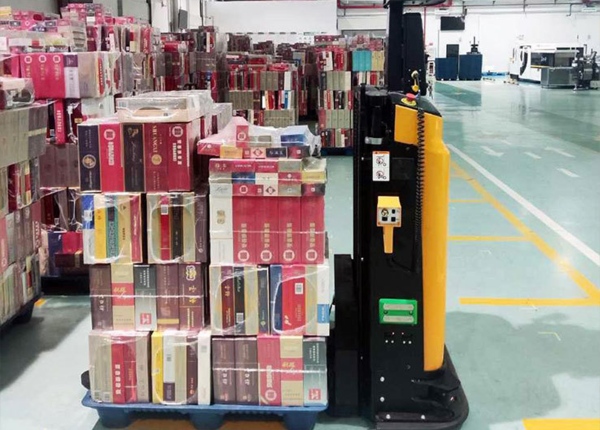
Narrower Aisles
Sub-centimeter navigation accuracy allows for tighter aisle tolerances, effectively converting transit space into additional storage racks.
Accurate Placement
Eliminates "shadow space" caused by manual positioning errors, ensuring every pallet is flush and optimally indexed.
Structured Design
Automation enables high-density layout planning (e.g., double-deep racking) that would be inefficient or risky for manual operators.
[Image: Warehouse floor plan comparison showing manual vs. autonomous aisle width efficiency]
↑ Storage Density: Maximize SKU count per square foot.
↑ Traffic Flow: Predictable movement reduces bottleneck formation.
↓ Congestion: System-level coordination prevents aisle idling.
Requires upfront layout redesign and relies heavily on the integration quality of the navigation system.
"Space optimization is not just about storage capacity—it is about the Efficiency of Movement within that space."
Q: Can automation truly increase total storage capacity?
Yes. By reducing aisle widths to the absolute physical minimum of the machine, facilities can often reclaim 10-15% of floor space for additional racks.
Q: Is a complete layout redesign necessary?
To reach maximum ROI, a layout audit is essential. However, incremental benefits can be achieved in existing setups through improved placement logic.
📖 AGV Forklift Guide — Essential manual for selection and safety.
⚙️ How AGV Systems Work — A deep dive into navigation and logic.
⚖️ AGV vs. AMR Comparison — Choosing the right technology for your facility.
💰 AGV Cost and ROI — Evaluating investment and payback periods.





 Chinese
 English