


Guessing your fleet size leads to two disasters: bottlenecks or wasted CAPEX. In 2026, precision is the only path to ROI. ZCNEST provides the industrial-grade framework to calculate your exact AGV requirement.
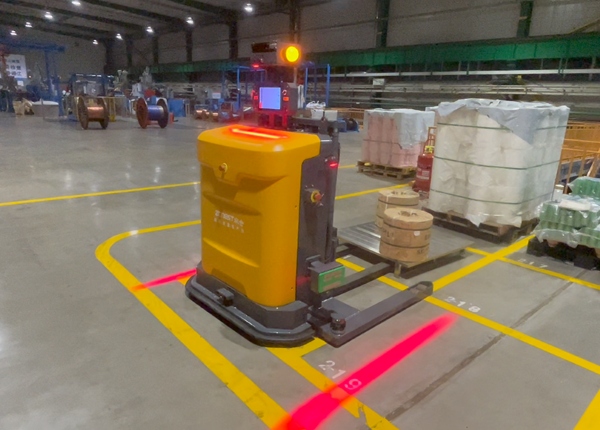
Throughput (λ)
Total pallets/tasks required per hour during Peak Demand, not just the daily average.
Cycle Time (Tc)
Includes travel (empty/loaded), load pickup, drop-off, and unavoidable intersection delays.
Availability (A)
The percentage of time an AGV is operational (accounting for charging and maintenance).
N = (λ × Tc) / (60 × A × E)
E = Efficiency Factor (typically 0.85). This accounts for traffic congestion, fleet software processing time, and human-robot interference.
Scenario: High-throughput distribution center.
• Throughput: 120 Pallets/Hour
• Average Cycle: 4 Minutes (Full Circuit)
• Availability: 90% (Fast Charging)
• Traffic Efficiency: 85%
Required Fleet Size:
10.45 → 11 AGVs
*Always round up to ensure peak performance capacity.
A formula gives you a baseline, but Operational Reality requires a buffer:
Peak Surge Factor
If your 4 PM surge is 2x the average, your fleet must be sized for the 4 PM load, not the 24-hour mean.
Battery Rotation
Account for "Opportunity Charging" gaps. If 2 robots are charging simultaneously, they are effectively invisible to the fleet.
"Never rely on vendor estimates alone. Trust the Data, then add the buffer."
📖 AGV Forklift Guide — Essential manual for selection and safety.
⚙️ How AGV Systems Work — A deep dive into navigation and logic.
⚖️ AGV vs. AMR Comparison — Choosing the right technology for your facility.
💰 AGV Cost and ROI — Evaluating investment and payback periods.





 Chinese
 English