


Navigation isn't just about how a robot moves; it's about how your warehouse breathes. Choosing the wrong method creates a rigid bottleneck. ZCNEST decodes the three pillars of modern AGV guidance to help you find the perfect balance between cost and flexibility.
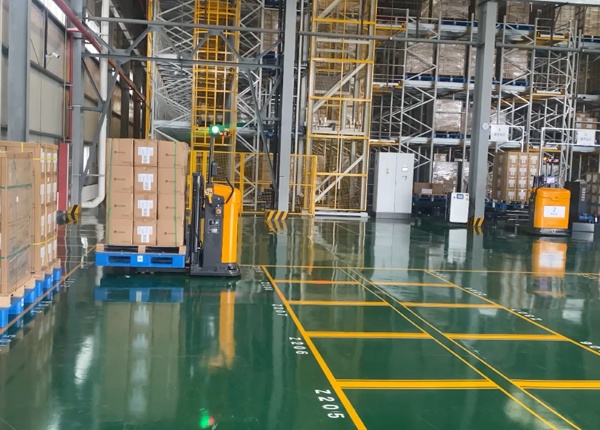
Utilizes magnetic tape or embedded wires on the floor. It’s the "railway" of AGV systems—predictable, cost-effective, but physically permanent.
PROS: Highly stable, immune to lighting/dust, lowest upfront hardware cost.
CONS: Zero flexibility. Path changes require floor construction. Tape wear is common in high-traffic zones.
The robot uses a rotating laser to triangulate its position via reflectors mounted on walls or racks. This is the industry standard for high-reach AGV forklifts.
PROS: Millimeter precision (±5mm), no floor modification, path updates are purely software-based.
CONS: Medium cost, requires clear line-of-sight to reflectors, reflectors must be kept clean.
Simultaneous Localization and Mapping. The robot builds its own map using natural features (pillars, racks, equipment). No external markers required.
PROS: Infinite flexibility, fastest deployment, ideal for AMR (Autonomous Mobile Robots).
CONS: Highest computational/hardware cost, precision can fluctuate in highly dynamic/empty areas.
| Scenario | Best Choice | Why? |
|---|---|---|
| Assembly Lines | Magnetic | Fixed routes, low complexity, high stability. |
| High-Rack Storage | Laser | Precision pick/place at height requires triangulation. |
| E-commerce Picking | SLAM | Dynamic environment with obstacles and changing paths. |
"Navigation isn't just about 'Finding the Path'—it's about Future-Proofing your investment."
📖 AGV Forklift Guide — Essential manual for selection and safety.
⚙️ How AGV Systems Work — A deep dive into navigation and logic.
⚖️ AGV vs. AMR Comparison — Choosing the right technology for your facility.
💰 AGV Cost and ROI — Evaluating investment and payback periods.





 Chinese
 English