


A blueprint for transitioning from manual chaos to robotic precision.
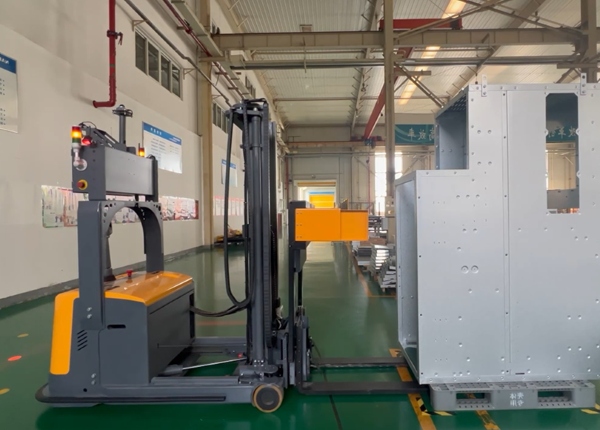
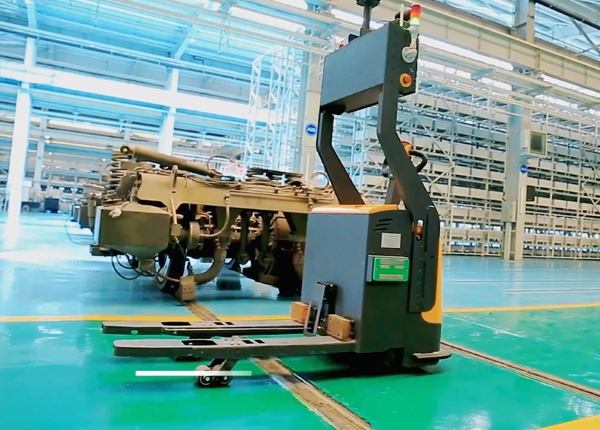
Ten years ago, an automated forklift warehouse required super-flat floors and magnetic strips. Today, ZCNEST’s 3D-perception technology handles standard industrial concrete with minor cracks or slight gradients (up to 5%).
Network Connectivity
Industrial Wi-Fi 6 or 5G Private Network. Latency must be<100ms for="" real-time="" fleet="" coordination.="">
Pallet Standardization
While our vision systems can detect damaged pallets, consistent dimensions (e.g., EU or US Standard) increase mission success rates to 99.9%.
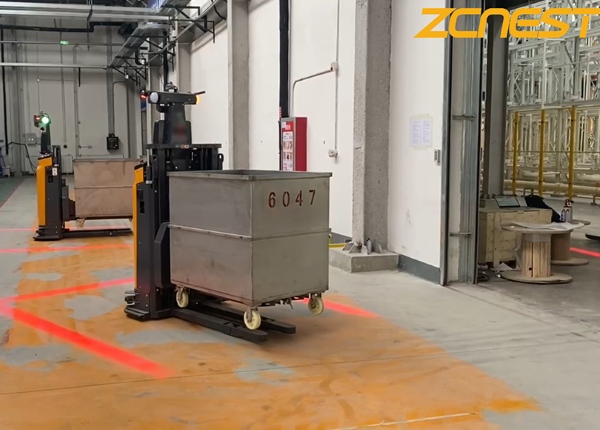
The biggest challenge in an automated forklift system is not the robot—it's the humans. ZCNEST implementation experts design "Traffic Logic" that separates high-speed robotic zones from pedestrian-heavy packing areas, ensuring safety without sacrificing speed.
Q: Do we need to stop operations during installation?
A: No. Mapping is done "on the fly." We can deploy in phases, starting with one aisle while your team works in the rest of the facility.
📖 AGV Forklift Guide — Essential manual for selection and safety.
⚙️ How AGV Systems Work — A deep dive into navigation and logic.
⚖️ AGV vs. AMR Comparison — Choosing the right technology for your facility.
💰 AGV Cost and ROI — Evaluating investment and payback periods.
FREE ENGINEERING SUPPORT Stop Gambling on Generic Platforms. Get an AGV/AMR Tailored to Your Warehouse.Buying automated guided vehicles involves complex safety standards (CE/ANSI), navigation setups (Laser SLAM), and ERP system integration. Don't risk your factory safety with middle-men. ✓ 100% Direct Factory: Customized payload up to 5 Tons. ✓ Free CAD Simulation: Send us your layout, and our engineers will simulate the optimal AGV routes. ✓ Global Support: Overseas installation guidance & local maintenance partners. |





 Chinese
 English