


For high-bay warehouse automation, positioning repeatability is critical when an automated forklift must pick up or deposit pallets at elevated rack positions. The required performance depends on the vehicle's navigation system, steering accuracy, fork positioning, rack geometry, pallet tolerances and floor conditions.
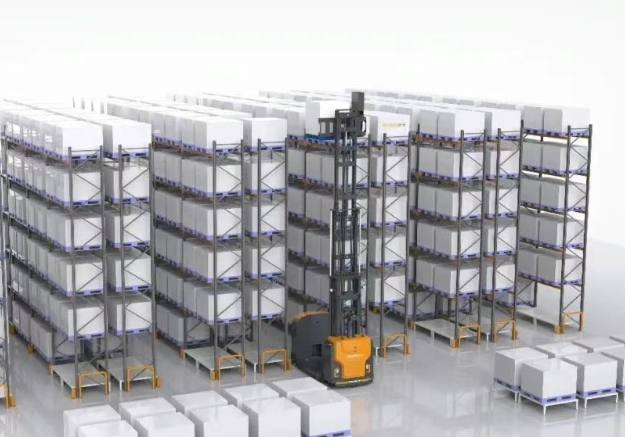
For buyers evaluating high-lift AGVs from China, the right question is not simply how many millimeters of accuracy a vehicle claims. The complete system should be evaluated under the actual load, lifting height, aisle width and rack configuration used in the warehouse.
Placement repeatability for a high-lift AGV is influenced by navigation accuracy, steering control, mast behavior, fork positioning and the tolerances of the pallet and rack system. For a VNA application, buyers should request the manufacturer's measured positioning and placement tolerance under representative operating conditions rather than relying on a single laboratory accuracy figure.
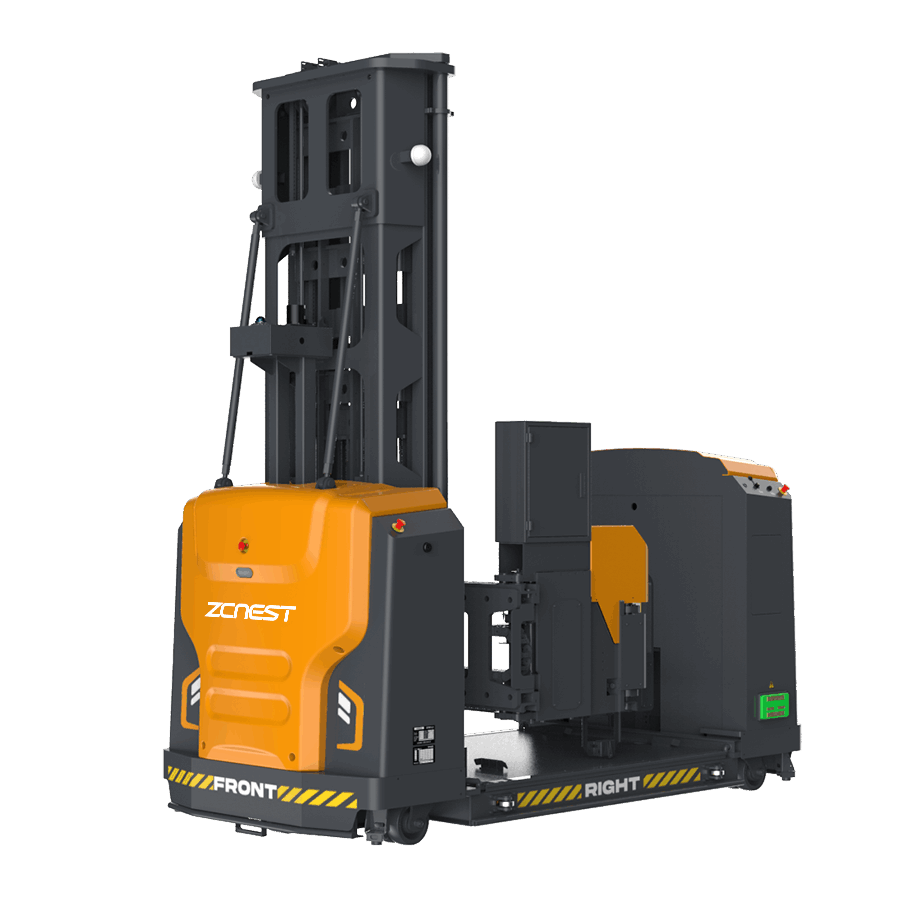
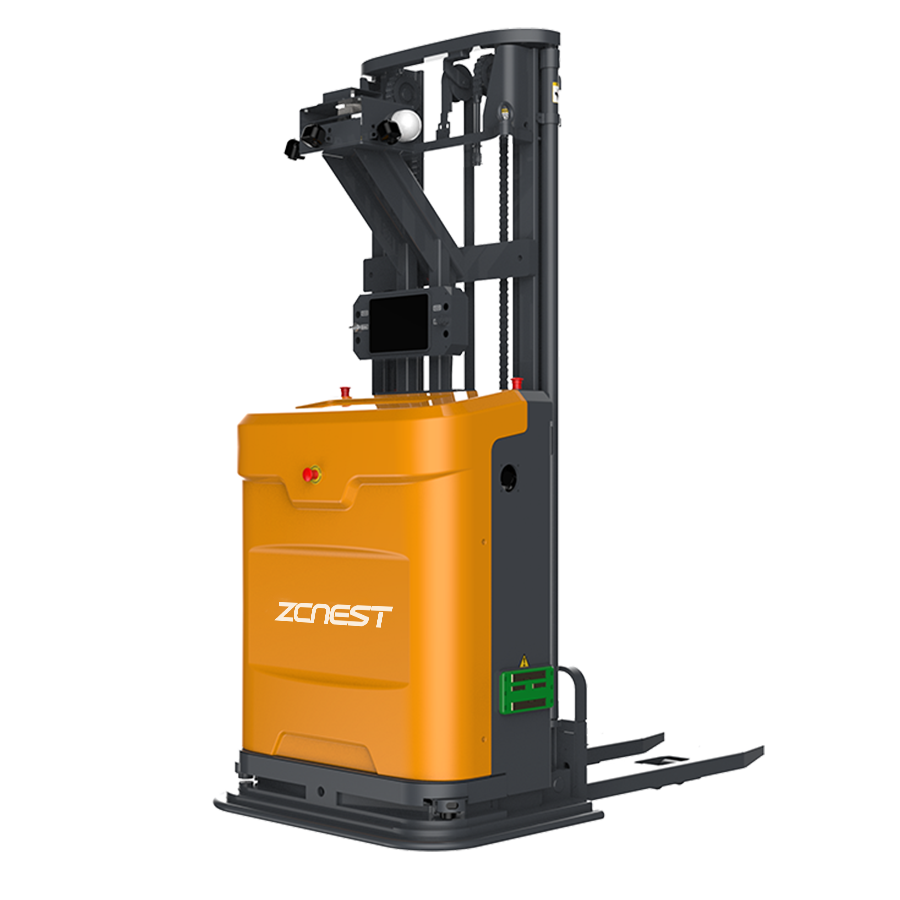
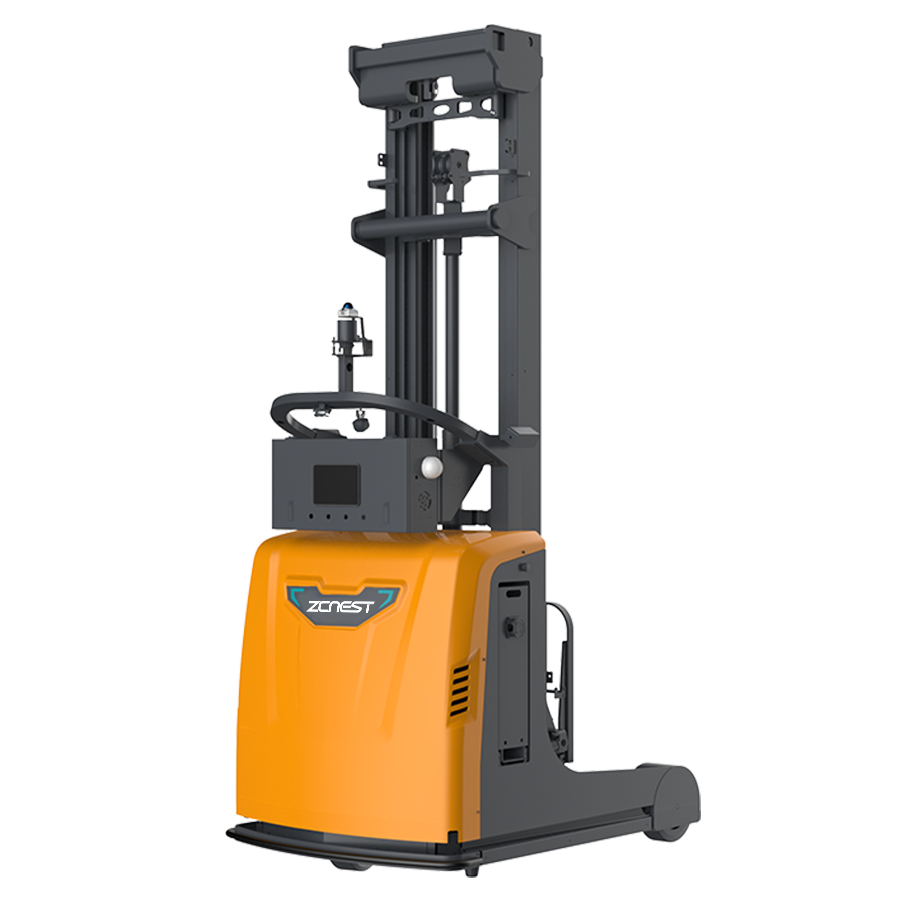
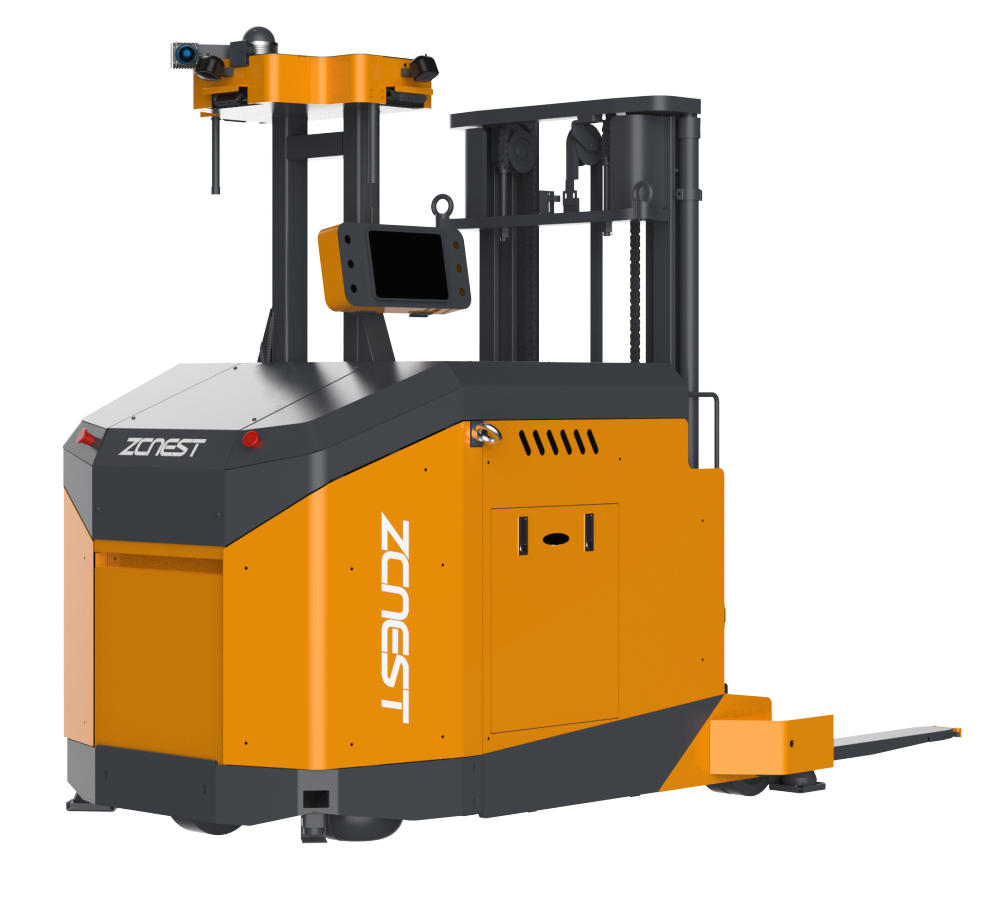
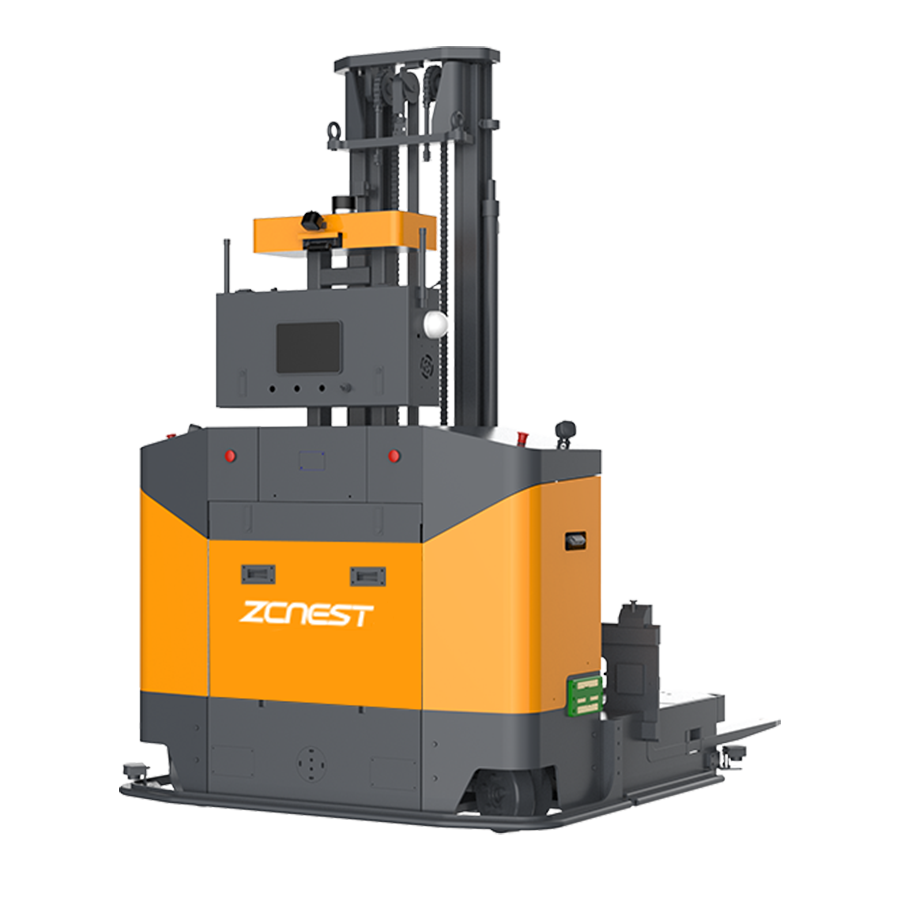
ZCNest's VNA AMR is designed for high-density warehouse applications where aisle space and lifting height are important design constraints.
1.65 m
Working Aisle
11 m
Lift Height
1.5 t
Rated Load
At this operating range, placement accuracy should be evaluated together with rack clearances, pallet dimensions, floor flatness, load stability and the vehicle's positioning and fork-control functions.
A pallet does not reach its final rack position through navigation alone. Several control layers work together during a typical storage operation.
Navigation
Determines the vehicle's position relative to the mapped warehouse environment.
Steering
Controls vehicle alignment as it approaches the rack or storage position.
Fork Position
Controls the final position of the forks during pallet insertion and withdrawal.
Load Position
Pallet dimensions, load overhang and load placement can affect the final clearance.
There is no universal millimeter value that applies to every 11-meter high-lift AGV. The measured result depends on the vehicle design, mast configuration, payload, rack geometry, navigation method and operating environment.
A more useful procurement specification is to define an acceptance tolerance for the actual storage task. For example, the customer and supplier can agree on the allowable horizontal, longitudinal and vertical positioning deviations at the required rack height.
Ask for Measured Data at the Required Lift Height
If your project requires pallet placement at 11 meters, request test results collected at or near the required lifting height and payload. A positioning figure measured at floor level should not automatically be treated as the placement accuracy at maximum lift height.
A tall mast can experience small mechanical movements under load. These movements can become more important as the fork carriage rises, particularly when handling heavier pallets.
An automated forklift can address this through a combination of mechanical design, position feedback and control logic. The exact compensation method depends on the vehicle architecture.
Mast or lift-position feedback
Fork height information
Steering position feedback
Vehicle odometry
Navigation position
Load and fork-position information
Rack or pallet detection information where supported
For a 1.5-ton load at high lifting height, the engineering validation should consider the combined effect of vehicle positioning, mast behavior and pallet geometry instead of evaluating steering accuracy independently.
Some automated forklift configurations can use sensors positioned around the fork or load-handling area to obtain additional information during pallet approach and insertion. The exact sensor type and data available to the host system vary by vehicle configuration.
Depending on the system architecture, the information may be used locally by the vehicle controller or transmitted to the fleet management or supervisory system.
Distance
Measure available clearance or distance near the fork and load-handling area.
Alignment
Provide information that can assist final pallet alignment.
Obstacle Detection
Help identify unexpected objects within the sensing field where supported.
Host Data
Confirm whether sensor measurements are available to the vehicle controller, fleet system or external interface.
VNA operations require the vehicle to maintain controlled clearances around rack uprights, beams and other fixed structures. Collision prevention is normally achieved through a combination of accurate navigation, vehicle geometry, safety sensing and controlled movement.
| Risk Area | What Should Be Evaluated |
|---|---|
| Rack Uprights | Minimum side clearance between the vehicle, load and rack structure. |
| Rear Bracing | Clearance between the vehicle or load and rear rack components. |
| Overhead Beams | Available clearance at the required lifting height. |
| Pallet Overhang | Actual load dimensions rather than nominal pallet dimensions. |
| Turning Areas | Vehicle envelope and steering behavior during aisle entry and exit. |
A 1.65-meter aisle creates a relatively constrained operating envelope. The vehicle must be evaluated together with the pallet, load and rack structure rather than simply comparing the aisle width with the AGV chassis width.
Before ordering a high-lift VNA AMR, the warehouse should provide accurate measurements of rack uprights, beam positions, pallet dimensions, aisle width and any rear bracing that extends into the operating envelope.
Actual clear aisle width
Rack upright dimensions
Rack beam height and depth
Rear bracing position
Pallet dimensions and tolerances
Maximum load dimensions
Maximum load weight
Floor flatness and levelness along the AGV route
For a high-lift warehouse project, acceptance testing should reproduce the actual operating conditions as closely as possible. Testing only an empty vehicle at low lifting height does not provide enough information about high-level pallet placement.
1. Test Load
Use a representative pallet and load.
2. Test Height
Test at the required storage elevation.
3. Test Location
Use representative rack positions.
4. Repeat Cycles
Repeat pickup and placement cycles to evaluate consistency.
5. Record Position
Measure the resulting pallet position against the agreed reference point.
6. Check Clearance
Confirm that the vehicle and load maintain the required rack clearance.
Instead of asking only for a headline positioning accuracy number, an international buyer should request a complete set of performance parameters relevant to the intended application.
| Parameter | Why It Matters |
|---|---|
| Rated Load | Defines the load condition under which performance should be evaluated. |
| Lift Height | High-level placement can involve different mechanical behavior from floor-level travel. |
| Positioning Repeatability | Provides a basis for evaluating repeated pickup and placement performance. |
| Fork Position Accuracy | Important for precise pallet entry and placement. |
| Minimum Aisle Width | Determines whether the vehicle can operate within the planned rack configuration. |
| Floor Requirements | Floor conditions can influence vehicle stability and positioning performance. |
| Rack Clearance | Defines the practical operating margin around fixed rack structures. |
For a high-bay VNA application, placement repeatability should be evaluated together with lift height, payload, aisle width, rack geometry and floor conditions.
The ZCNest VNA AMR is configured for applications requiring a 1.65-meter working aisle, up to 11-meter lift height and 1.5-ton rated load. For a project-specific evaluation, the warehouse layout, pallet specifications and operating requirements should be reviewed before the final vehicle configuration is confirmed.
FREE ENGINEERING SUPPORT Stop Gambling on Generic Platforms. Get an AGV/AMR Tailored to Your Warehouse.Buying automated guided vehicles involves complex safety standards (CE/ANSI), navigation setups (Laser SLAM), and ERP system integration. Don't risk your factory safety with middle-men. ✓ 100% Direct Factory: Customized payload up to 5 Tons. ✓ Free CAD Simulation: Send us your layout, and our engineers will simulate the optimal AGV routes. ✓ Global Support: Overseas installation guidance & local maintenance partners. |
📖 AGV Forklift Guide — Essential manual for selection and safety.
⚙️ How AGV Systems Work — A deep dive into navigation and logic.
⚖️ AGV vs. AMR Comparison — Choosing the right technology for your facility.
💰 AGV Cost and ROI — Evaluating investment and payback periods.





 Chinese
 English