

Replacing traditional forklifts with autonomous guided vehicles does not eliminate the need for warehouse personnel. It changes what those employees do.
A forklift operator who previously spent most of the shift driving, positioning forks and handling pallets may instead become an AGV operator, fleet monitor, exception handler or material-flow supervisor.
For a warehouse importing AGVs from China, the key question is therefore not simply how long the manufacturer provides training. The more important question is whether the local workforce can independently operate the system after the Chinese engineering team leaves.
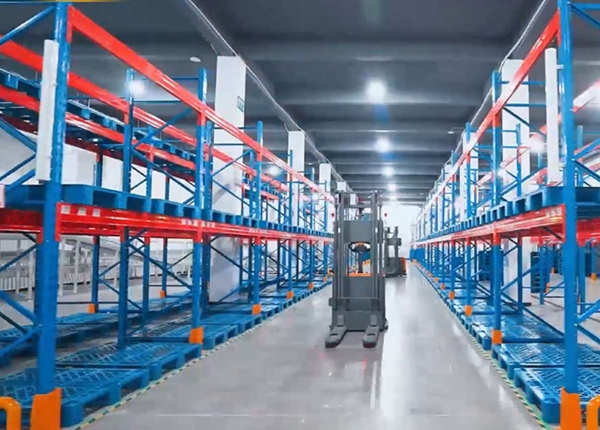
Traditional forklift experience provides a useful foundation because employees already understand pallet dimensions, rack locations, load stability, warehouse traffic and basic material-handling safety.
However, autonomous forklifts introduce several new concepts.
Operators should understand:
How autonomous navigation works
How the AGV receives transport missions
How pallets are detected and positioned
How the vehicle communicates with the fleet-management system
What happens when the AGV encounters an obstacle
How automatic charging works
When human intervention is required
Employees do not necessarily need to become robotics engineers. They need enough technical knowledge to understand what the AGV is doing and recognize when normal autonomous operation has stopped.
This is usually the largest learning curve for traditional forklift operators.
Instead of controlling one vehicle directly, an employee may interact with a fleet-management interface showing:
Vehicle locations
Current missions
Charging status
Fault alarms
Waiting vehicles
Blocked routes
Battery status
Completed tasks
Manual intervention requests
The training should therefore include hands-on exercises rather than only classroom presentations.
Employees should know what to do when:
A pedestrian enters an AGV route
A pallet is incorrectly positioned
A vehicle stops unexpectedly
A safety sensor is triggered
A route becomes blocked
A pallet cannot be picked up
Wireless communication is interrupted
An emergency stop is activated
The objective is not to teach workers to bypass safety functions. It is to ensure they know when to stop, isolate, inspect and escalate a problem.
There is no universal number because the complexity of the fleet-management platform varies considerably between suppliers.
For a typical warehouse deployment, training can be divided into several stages.
| Training Stage | Typical Focus |
|---|---|
| Basic orientation | AGV components, operating principles and safety |
| Operator training | Starting, stopping, monitoring and exception handling |
| Software training | Missions, vehicle status, alarms and maps |
| Supervisor training | Task priorities, traffic management and reports |
| Maintenance training | Diagnostics, sensors, batteries and basic troubleshooting |
| Advanced training | Fleet optimization and system configuration |
A practical deployment should include hands-on training using the actual AGVs and software installed at the customer's facility.
A short classroom presentation followed by a handover is usually insufficient for a large fleet.
The supplier should ideally train several employees in each shift rather than only one or two key users.
This reduces the risk of losing operational knowledge when a trained employee leaves the company.
This depends on the permissions and functions provided by the Chinese fleet-management software.
A well-designed system may allow authorized supervisors to modify or prioritize missions without manually driving individual AGVs.
For example, a supervisor might need to prioritize:
Receiving → Storage → Picking → Shipping
during one operating period, while later changing the priority to:
Picking → Shipping → Empty pallet return
The important issue is whether the software supports this type of task management without requiring intervention from the manufacturer's engineers.
Before purchasing the system, ask the supplier to demonstrate:
Creating a new transport mission
Cancelling a mission
Pausing a mission
Changing task priority
Assigning a task to a vehicle or fleet
Releasing a blocked task
Viewing failed missions
Handling an emergency transport request
The demonstration should be performed using the actual software version proposed for the project.
No.
A better approach is to create different training levels based on job responsibilities.
Operators should learn:
Basic AGV operation
Safety procedures
Alarm recognition
Obstacle handling
Pallet exceptions
Charging procedures
Emergency-stop procedures
Basic software monitoring
They do not necessarily need access to advanced configuration functions.
Supervisors should additionally learn:
Mission management
Task prioritization
Fleet status monitoring
Traffic problems
Vehicle allocation
Performance reports
Basic map management
Escalation procedures
Maintenance personnel require deeper technical knowledge, including:
Sensor inspection
Drive-system diagnostics
Battery troubleshooting
Error-code interpretation
Safety-device checks
Network troubleshooting
Component replacement
Software diagnostic procedures
For larger deployments, one or more employees should understand:
Fleet configuration
User permissions
Map management
Integration interfaces
Backup procedures
Database management
Network configuration
System recovery
This layered approach prevents ordinary operators from accidentally changing critical fleet parameters while still giving supervisors enough control to manage daily operations.
Many automation suppliers can provide some form of remote technical support or online training, but the exact scope should be written into the purchase agreement.
Remote training is particularly useful when:
A new maintenance employee joins
The warehouse adds another shift
A software update changes the interface
A supervisor needs additional instruction
A troubleshooting procedure needs to be demonstrated
However, remote training should supplement—not replace—initial on-site commissioning and practical training.
A useful arrangement is to request:
Initial on-site training + training documentation + recorded sessions + remote refresher training.
This creates a reusable training resource for future employees.
When purchasing an AGV fleet from China, training should be treated as a deliverable rather than an informal service.
Ask the manufacturer to provide:
AGV operating manual
Safety instructions
Daily inspection checklist
Charging procedure
Emergency procedure
Basic fault-handling guide
Fleet-management user manual
Mission-management instructions
User-permission guide
Map-operation instructions
Alarm-code reference
Reporting instructions
Electrical schematics
Mechanical drawings where applicable
Sensor replacement procedures
Battery maintenance instructions
Troubleshooting procedures
Recommended spare-parts list
Training slides
Video tutorials
Quick-reference guides
Software demonstrations
Maintenance training materials
New-employee onboarding materials
Having these documents in English is particularly important for a US warehouse because the system may need to be operated and maintained long after the original Chinese commissioning engineers have left.
The best solution is to create an internal AGV training ladder.
For example:
New Employee
↓
Basic AGV safety training
↓
Software monitoring training
↓
Supervised operation
↓
Exception-handling assessment
↓
Independent operation
↓
Advanced supervisor or maintenance training
This makes AGV knowledge transferable rather than dependent on a single employee.
A warehouse can also designate experienced AGV operators as internal trainers.
This becomes especially important when the facility operates multiple shifts.
Training requirements should be included in the RFQ and final contract.
Ask the supplier to specify:
How many days of on-site training are included?
How many employees can participate?
Is training provided in English?
Is training available for every operating shift?
Is maintenance training included?
Are software administrator accounts included?
Are training videos provided?
Are software manuals supplied in English?
Are remote refresher sessions included after commissioning?
How long is remote technical support available?
Can new employees receive remote onboarding later?
Is advanced fleet-management training included?
These details can have a significant effect on the long-term operating cost of an imported AGV fleet.
The strongest AGV deployment is not one where the Chinese engineering team can operate the system perfectly.
It is one where the local warehouse team can operate, monitor and troubleshoot the fleet without depending on overseas engineers for routine tasks.
Before the AGVs arrive, identify your operators, supervisors, maintenance technicians and system administrators. Give each group the appropriate level of training and require practical demonstrations using the actual fleet-management platform.
That approach turns the transition from manual forklifts to autonomous material handling into a workforce upgrade—not simply an equipment purchase.
FREE ENGINEERING SUPPORT Stop Gambling on Generic Platforms. Get an AGV/AMR Tailored to Your Warehouse.Buying automated guided vehicles involves complex safety standards (CE/ANSI), navigation setups (Laser SLAM), and ERP system integration. Don't risk your factory safety with middle-men. ✓ 100% Direct Factory: Customized payload up to 5 Tons. ✓ Free CAD Simulation: Send us your layout, and our engineers will simulate the optimal AGV routes. ✓ Global Support: Overseas installation guidance & local maintenance partners. |
📖 AGV Forklift Guide — Essential manual for selection and safety.
⚙️ How AGV Systems Work — A deep dive into navigation and logic.
⚖️ AGV vs. AMR Comparison — Choosing the right technology for your facility.
💰 AGV Cost and ROI — Evaluating investment and payback periods.





 Chinese
 English